
Hanania Travel Victims Appeal to DPR: We Only Want Our Rights Back
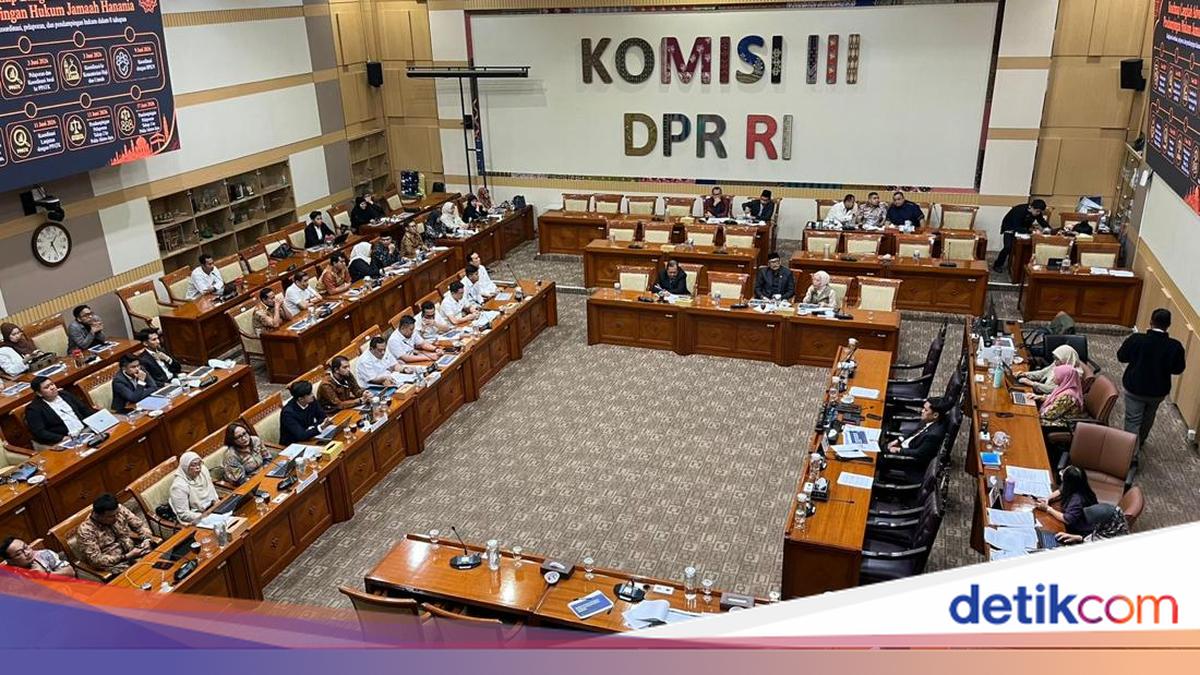
Representatives of the victims of Hanania Travel, including Uli Amelia Septriani, have voiced the grievances of thousands of defrauded umrah pilgrims to the House of Representatives (DPR). During a hearing with Commission III and Polda Metro Jaya at the parliament complex in Senayan on Thursday (18/6/2026), Uli stated that the number of victims is approximately 3,000 people. “Based on our independent data collection, there are roughly 3,000 pilgrims. For the Syawal departure period alone, there were about 1,500 people, and for June-July, around 1,400. There are also other groups scheduled for August, September, and October,” she explained. She added that some pilgrims had paid deposits or saved funds for departures up to December, including several Haji Plus pilgrims whose fees had not been remitted.
She explained that the cancellations initially affected non-direct flights using Emirates and Etihad airways, with the company citing force majeure due to the situation in the Middle East. However, the problem escalated when direct flights with Garuda Indonesia were also cancelled on 25 March. “On that date, the direct flights using Garuda were also cancelled, even though there was no force majeure element involved,” she stated. At that time, Hanania Travel blamed poor company management, claiming they could not issue the tickets. “That was the beginning of our problems as Syawal pilgrims. Many pilgrims went to their office demanding a meeting and solutions, asking what mitigation steps had been taken. To this day, we have received no evidence of any mitigation. This is not just about force majeure; this is pure mismanagement,” she asserted.
The victims attempted to resolve the issue through communication with the Ministry of Hajj and Umrah. On 14 April, the pilgrims finally met with Farhan, the owner of Hanania Travel who is now a suspect, and his wife, a company commissioner. Uli noted that from 18 March to 14 April, they received no official apology or any sign of good faith until they sought help from the ministry on 7 April. The 14 April meeting resulted in an official agreement mediated by the ministry, which stipulated a refund to be paid in three instalments: 30 percent by 29 May 2026, 40 percent by 31 July, and the final 30 percent by the end of August. A rescheduling option was also offered for pilgrims still willing to travel with Hanania. “That day, our hopes were high. We tried to trust them because the agreement stated the ministry would evaluate and monitor the process, with written warnings for failure at the first term, suspension of the Siskopatuh system at the second, and licence revocation at the third. To this day, we have not seen any of these actions taken,” Uli said.
The situation reached a peak on 26 May when Hanania Travel admitted it no longer had operational funds to meet its obligations to the pilgrims. Uli stated that the victims, spread across various regions in Indonesia, never imagined their pilgrimage funds would end up as a suspected criminal case. She alleged there are indications of money laundering (TPPU). “If we had known from the start that this was fraud with indications of TPPU, we would never have chosen Hanania,” she said. She also highlighted the severe impact on victims, including a cancellation that occurred just six hours before departure, leaving some pilgrims already at the airport in their travel attire. Uli stressed that the issue is not solely about money, noting that many elderly pilgrims fell ill upon hearing of the cancellations and some children had to lie to their parents to prevent them from becoming sick with disappointment. She called on the state to provide protection and solutions, asserting that the right to worship is a fundamental constitutional right of every citizen. “Behind every delayed departure, there is hope, prayer, and the rights of pilgrims that must be protected. If not to the state, to whom else can we turn for protection, assistance, and our rights?” she asked, expressing hope that the Hanania Travel case would be the last of its kind to afflict umrah pilgrims in Indonesia.