
Hamdan Zoelva Says Deliberation Should Be Prioritised in Vice-Presidential Selection
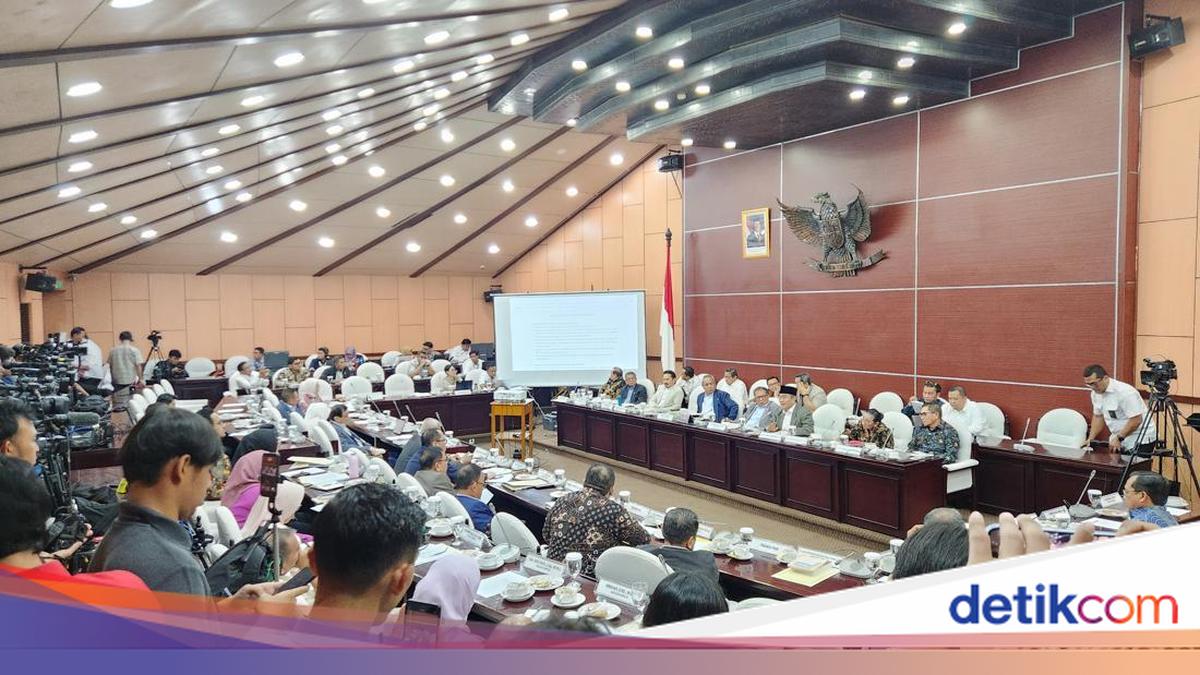
The MPR’s Ad Hoc Committee (PAH) held a meeting with experts to discuss filling the post of Vice-President of the Republic of Indonesia for the remainder of the 2024–2029 term. One issue under discussion was whether the vice-president should be selected through deliberation or a vote.
The meeting was held in the GBHN meeting room at Nusantara V, in the parliamentary complex in Senayan, Jakarta, on Wednesday (25 November 2026). One of the experts invited, former Constitutional Court chief Hamdan Zoelva, said selection through deliberation would be preferable.
“Of course, in our constitutional tradition and in the established order for decision-making in the MPR and DPR, deliberation is the primary approach. Reaching agreement through deliberation would be more fitting and better,” Hamdan said.
He acknowledged that deliberation could take a long time, but stressed that Indonesia had long relied on it for decision-making.
“Deciding matters involving people is often difficult, and we often find it hard to reach a decision through deliberation. But that does not mean it should not be attempted. Since the past, the first approach we have always taken in decision-making is to decide through deliberation,” he said.
“If it cannot be used—if agreement cannot be reached—then it cannot be achieved, because deliberation must produce unanimity; it cannot be partial,” he added.
If consensus proves impossible, the selection can proceed by vote, which could be conducted by secret ballot.
“But if not, the decision must then be made through voting. Under the MPR’s rules of procedure, as well as in our tradition, elections or decisions involving people that are made by majority vote are conducted by secret ballot,” he said.
The previous day, the MPR’s Ad Hoc Committee also held a meeting. At the time, committee member Utut Adianto asked how the vice-presidential candidates would be selected at the forthcoming plenary session.
“We agree on the timeline and on inviting experts; we agree that the work should be done carefully. There is just one thing I would like to ask for approval on: do we want a vote or consensus through deliberation?” Utut said at the committee meeting in the parliamentary complex in Senayan, Jakarta, on Tuesday (24 November).
Utut said a vote would make the process quicker and easier. At the same time, he referred to the fourth principle of Pancasila, which emphasises deliberation to reach consensus.
“If we vote, the process can actually be made quicker and easier. The fourth principle of Pancasila teaches us deliberation to reach consensus. This is a golden opportunity to show that Pancasila is still alive—not merely words to be memorised by primary-school children,” he said.
If consensus is chosen, Utut said, the two vice-presidential candidates could be invited to discuss the matter together. He said deliberation could also give both candidates room to accept the outcome graciously.
“If this can work, we can invite the two candidates to discuss which one is considered the most suitable, and there can be gracious acceptance. A tally would show who had lost. This would be beneficial, since the end user will be the President,” Utut said.
In response, MPR Ad Hoc Committee executive chairman Benny K Harman said the proposals on the selection mechanism had been noted and would be discussed further, alongside other suggestions.
“These are options to take to the working meeting. If I am not mistaken, under the rules of procedure the committee does not make any decisions. If there is a consensus, we will present it; if there are options, we will submit them for the plenary session to decide,” Benny said.
Source: jawawa.id (https://jawawa.id/newsitem/hamdan-zoelva-says-deliberation-should-be-prioritised-in-vice-presidential-selection-1795586076)
Originally published by detikcom (https://news.detik.com/berita/d-8769011/hamdan-zoelva-nilai-musyawarah-harus-diutamakan-di-pemilihan-cawapres), translated from Indonesian