
Hambalang in the Spotlight as Prabowo Discusses Rp2,000 Trillion in Investment with Kadin
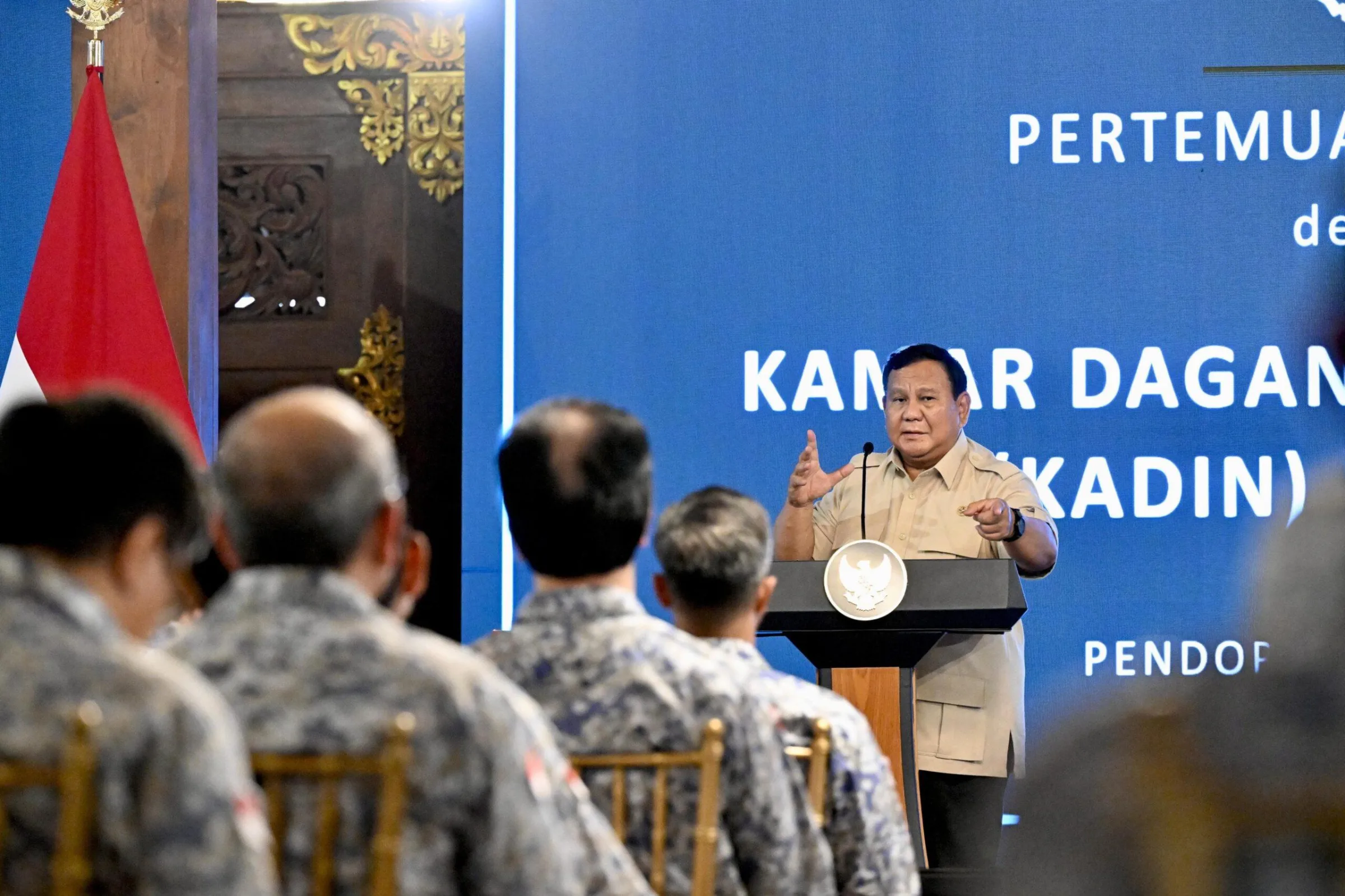
BOGOR, Suaratimur.com — Hambalang, in Bogor Regency, West Java, has again become the focus of attention after President Prabowo Subianto met hundreds of participants in a leadership programme and members of the national business community.
The meeting, held at Prabowo’s private residence on Saturday, 31 October 2026, addressed a number of strategic issues, from domestic investment developments and strengthening future industries to preparing Indonesia’s next generation of leaders.
Around 650 people attended: 400 participants in Batch 1 of the 2026 Presidential Programme for Future Indonesian Leaders (P3MDI), and 250 members of the Indonesian Chamber of Commerce and Industry (Kadin) from various regions.
One of the main topics at the meeting in Hambalang was a report that domestic investment had approached Rp2,000 trillion during the first two years of Prabowo’s administration.
The figure was a significant point of discussion as the government seeks to strengthen economic growth through investment, industrialisation and the involvement of Indonesian businesspeople.
Kadin reports investment of nearly Rp2,000 trillion
Kadin Indonesia chairman Anindya Bakrie presented an update on business developments at the meeting.
Anindya said domestic investment (PMDN) had made a substantial contribution to national investment realisation over the past two years.
According to data from the Ministry of Investment and Downstreaming/Investment Coordinating Board (BKPM), total realised investment from October 2024 to September 2026 reached Rp3,923.2 trillion.
Of this amount, domestic investment stood at Rp1,998.7 trillion, or 50.9 per cent. Foreign investment (PMA) reached Rp1,924.5 trillion, or 49.1 per cent.
This breakdown shows that investment from Indonesian businesses was slightly higher than foreign investment.
Anindya said the involvement of domestic entrepreneurs, including medium-sized businesses, played an important role in strengthening economic resilience.
“When you look at domestic investment, it also involves our friends in the middle class. We believe this can, once again, make our resilience even stronger,” Anindya said at the meeting in Hambalang.
However, a large investment figure does not automatically mean that all sections of society have shared equally in the economic benefits.
Investment realisation still needs to be assessed in terms of the quality of jobs created, the geographical distribution of projects and the involvement of local industries in production.
Electric vehicles and data centres among industries in focus
The discussions in Hambalang also covered industrial sectors expected to play an increasingly important role in Indonesia’s economy.
Kadin said businesses were committed to strengthening the development of electric vehicles, renewable energy and data centres.
These sectors are seen as offering significant opportunities to attract investment while increasing the use of domestically produced components.
The development of electric vehicles, for example, could expand industrial activity from battery-material processing to the manufacture of vehicle components.
Meanwhile, investment in renewable energy and data centres could give Indonesian companies opportunities to take part in infrastructure construction, equipment supply and support services.
However, these industries also face challenges. The availability of skilled workers, energy supplies, regulatory certainty and the ability of local industry to meet technological requirements all need attention.
Without adequate preparation, some of the benefits of investment risk being concentrated among large companies and in particular regions.
BKPM data shows 5.49 million jobs recorded
The investment developments discussed in Hambalang relate to an official BKPM report issued on 19 October 2026.
In its report on the first two years of Prabowo’s administration, BKPM recorded Rp3,923.2 trillion in realised investment and reported that 5,485,944 people had been employed.
Investment and Downstreaming Minister and BKPM head Rosan Perkasa Roeslani said investment should be directed towards strengthening national industrial activity.
“What we want from investment and downstreaming is, ultimately, industrialisation,” Rosan said.
From January to September 2026, national investment realisation reached Rp1,539.2 trillion, up 7.3 per cent on the same period a year earlier.
BKPM also recorded that investment outside Java accounted for 50.6 per cent of the total realised during the first nine months of 2026.
This figure highlights the importance of distributing investment more evenly. Even so, successful development ultimately depends on the economic benefits received by communities near project sites.
Prabowo gives guidance to future leaders
Alongside investment, the meeting in Hambalang gave Prabowo an opportunity to offer guidance to P3MDI participants.
The programme is intended to prepare human resources and prospective leaders expected to take on Indonesia’s development challenges.
Bringing programme participants together with national businesspeople brought two key elements of development into the same forum: leadership development and economic activity.
Kadin Indonesia member James Riyadi praised Prabowo’s attention to education and the character development of future leaders.
James said a country seeking progress needed high-quality human resources and leaders with strong character.
The meeting also showed that human development and economic strengthening are being considered together as part of the development agenda.
The programme’s results, however, will ultimately need to be assessed through its implementation, including the quality of its training and participants’ contributions after completing it.
Hambalang and the government’s economic agenda
The late-October event once again made Hambalang an important venue for meetings under Prabowo’s administration.
The President’s private residence has been used to receive reports, hold discussions with the business community and give direction on the national development agenda.
For businesses, meeting directly with the President provides an opportunity to present investment developments and the needs of growing industries.
For the government, reports from businesspeople can inform its assessment of the economic policies currently being implemented.
Nevertheless, communication at high-level meetings needs to be followed by concrete action on the ground.
Easier licensing, business certainty, a more even distribution of investment opportunities and improvements in workforce skills are among the issues that will determine the success of the national economic agenda.
The meeting in Hambalang leaves an important question: to what extent can investment worth thousands of trillions of rupiah expand employment opportunities, strengthen regional businesses and improve people’s welfare?
The answer will depend not only on the scale of investment, but also on the quality and distribution of development outcomes experienced by the public.
Source: jawawa.id (https://jawawa.id/newsitem/hambalang-in-the-spotlight-as-prabowo-discusses-rp2-000-trillion-in-investment-with-kadin-1793721043)
Originally published by suaratimur.com (https://suaratimur.com/nasional/hambalang-prabowo-bahas-investasi-2000-triliun-kadin), translated from Indonesian