
Halmahera and the Final Rung of Downstream Processing
Downstream processing at Weda Bay does not stop at sending products overseas. The industrial complex is beginning to produce components for the domestic energy transition: glass for solar panels, batteries also being developed for energy-storage systems, and trucks.
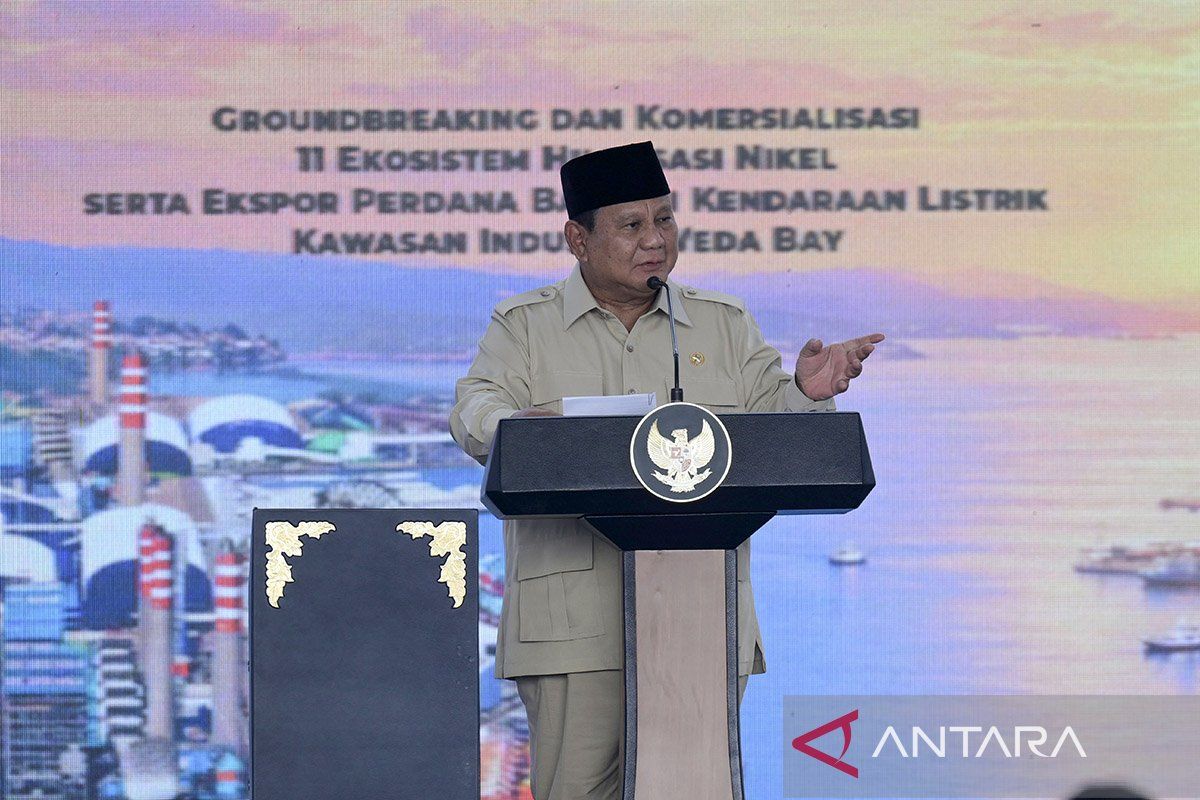
Jakarta (ANTARA) — The sound of a siren at the Indonesia Weda Bay Industrial Park (IWIP) in Central Halmahera on Thursday, 8 October 2026, marked something that for years had existed only in planning documents. Electric-vehicle batteries made at the heart of Indonesia’s nickel region were being dispatched to export markets.
President Prabowo Subianto sounded the siren. He also inaugurated the commercial operations of four industrial projects and launched construction of seven new projects, with a combined value of US$10.2 billion, or around Rp180 trillion.
The investment figure is substantial, but the composition of the projects is more noteworthy. The four projects starting commercial operations are Blue Sparking Energy, REPT Battero Indonesia, Pioneer Aluminium Industries and XCMG Indonesia Manufacturing.
The seven projects beginning construction include nickel-based battery materials, battery separators and electrolytes, electrolytic aluminium, electric trucks for mining and industry, and photovoltaic glass for solar panels. Taken together, the list forms an almost complete production chain, from battery chemicals to the vehicles that use them.
The significance of the Weda Bay event becomes clearer when viewed in retrospect. Before the ban on nickel ore exports took effect in 2020, Indonesia sold most of its nickel wealth as raw ore. The Energy and Mineral Resources Ministry recorded exports of nickel and its derivatives worth just US$3.3 billion in 2017. By 2024, the figure had reached US$33.9 billion, more than ten times higher. The surge has taken place in a country that holds about 42 per cent of the world’s nickel reserves.
That growth did not happen in a single step. The first rung was smelters processing ore into ferronickel and nickel pig iron for the stainless-steel industry. The next was intermediate products such as nickel matte, mixed hydroxide precipitate, nickel sulphate and cobalt, which now account for most of North Maluku’s trade surplus.
Battery materials came next. Batteries are the final rung before the vehicle itself.
Each rung changes what is being sold. Ore is sold by tonnage and grade, at prices set by overseas metal exchanges. Batteries are sold according to specifications: energy density, cycle life, safety and the confidence of vehicle manufacturers.
At the final rung, product prices are no longer determined entirely by commodity fluctuations. Technology and a factory’s reputation also begin to matter. This shift in bargaining power is the biggest stake in downstream processing.
The separator and electrolyte project, described by Investment and Downstreaming Minister Rosan Roeslani as Indonesia’s first separator facility, fills a gap often cited as evidence that the country’s battery ecosystem remains incomplete. Neither component is as large as a smelter, but battery cells cannot be assembled without them. Rosan said a complete ecosystem, including battery recycling, would place Indonesia inside the global supply chain rather than on its margins.