
Halida Hatta Urges Public to Revive the Spirit of Independent Thinking
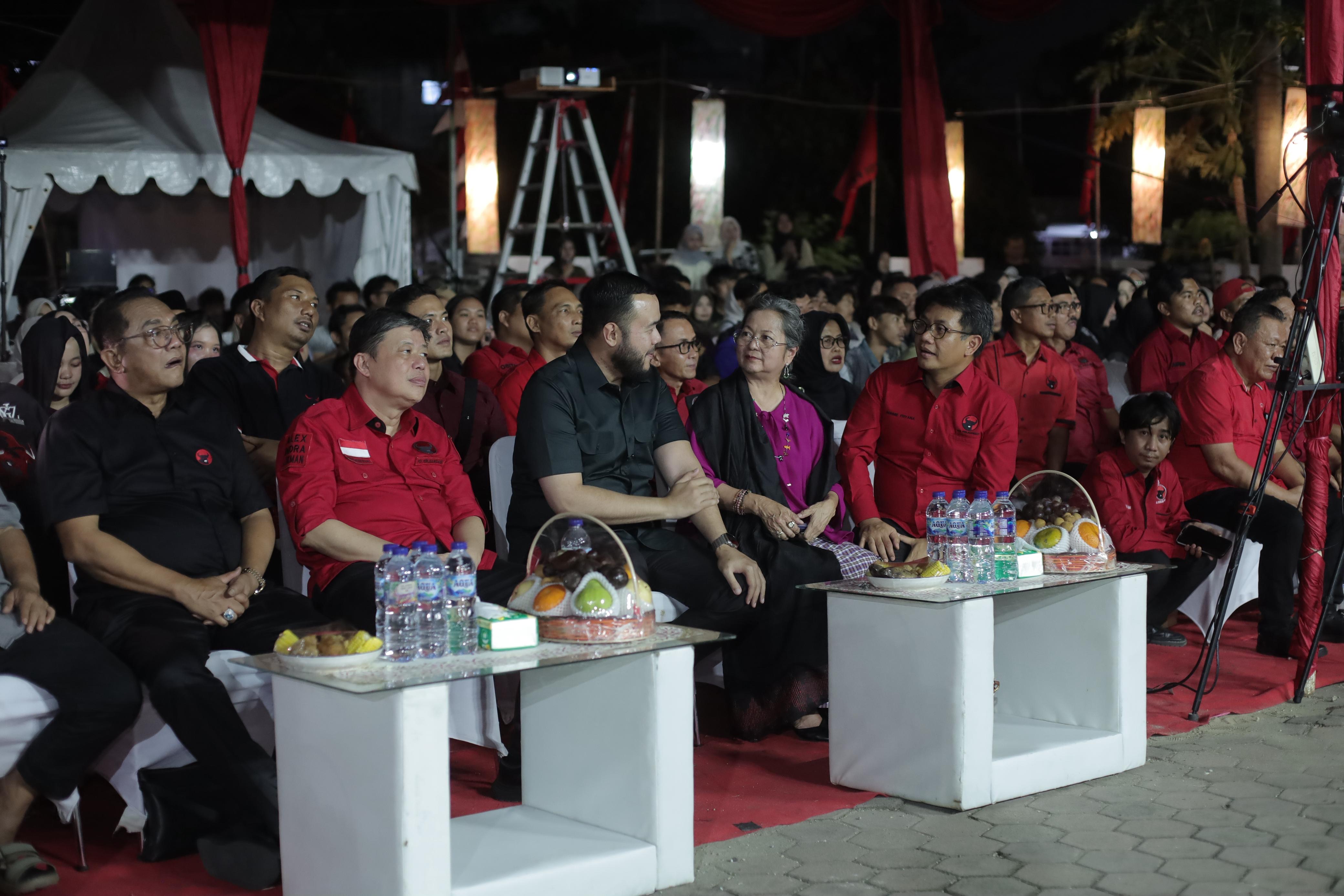
Halida Hatta, daughter of Proclamator Mohammad Hatta, has reminded the public that the meaning of Indonesian independence does not stop at freedom from physical colonisation alone. True independence must be realised through freedom of thought, national self-reliance, and the ability to determine its own future without external intervention.
“Indonesia is independent, but we must also be able to guarantee that we are independent in thinking,” Halida said in a political speech at a narrative-musical performance themed “Reading Bung Hatta: Re-reading the Minangkabau National Journey” at the PDI Perjuangan Padang City DPC office on Sunday evening (30/8).
Halida explained that this idea is in line with the aspirations of the nation’s founders as enshrined in the Preamble to the 1945 Constitution. According to her, independence must continue to be filled with concrete work and the strengthening of domestic competitiveness so that Indonesia is not merely formally independent, but also self-reliant in determining its development direction.
“Bung Hatta said that after independence we must fill that independence with good work,” she said.
Halida also reminded the public not to lose the ability to think critically amid the development of digital technology and artificial intelligence (AI).
According to her, technological developments have made access to information increasingly easy. However, this ease also brings challenges because the public can quickly receive information that is not necessarily complete and responsible.
“Let us not be eroded into only believing short, fragmented information, and also information that may be less responsible in its dissemination,” Halida said.
She therefore encouraged the public to read more widely and consult more references, and to accustom themselves to viewing an issue from various perspectives.
Halida considers the habit of reading and learning to be one of Bung Hatta’s important legacies. According to her, Bung Hatta and Bung Karno did not only read political and ideological theory, but also delved into philosophy, literature, and various world thought.
“Both Bung Karno and Bung Hatta spoke about humanism, about humanity. That Indonesia must be happy,” she said.
In her speech, Halida also invited the public to re-read the works of Bung Karno and Bung Hatta to understand the national ideas of the two figures more fully.
She cited “Indonesia Menggugat” (Indonesia Accuses), Bung Karno’s defence speech at the Landraad Bandung court in 1930, as well as “Indonesia Merdeka” (Indonesia Free), Bung Hatta’s defence speech in the Netherlands.
Halida said both works show how Bung Karno and Bung Hatta, from a young age, had already been thinking about the injustices experienced by the Indonesian people as a result of colonialism, capitalism, and imperialism.
Halida also stressed the importance of understanding Bung Karno and Bung Hatta as a dwitunggal (duumvirate) who complemented each other in the struggle towards independence.
“One had charisma, the other had a depth in managing governance and strategy so as not to conflict, but so that shared aspirations were achieved one by one,” she said.
According to Halida, Bung Karno and Bung Hatta had different capacities, but these were built on mutual trust. Therefore, various narratives that pit the two against each other need to be re-read through historical literacy.
“The two trusted each other’s capacities and the two complemented each other,” Halida said.
Halida explained that after the Proclamation of Independence on 17 August 1945, the struggle was not over. Indonesia still had to defend its independence and fight for recognition of its sovereignty in the international world.
In that context, according to Halida, Bung Karno and Bung Hatta played complementary roles. Bung Karno built unity through travels to various regions, while Bung Hatta managed government administration and political strategy.
“What existed was that we struggled together, that dwitunggal based on mutual trust,” she said.
Halida also linked Bung Hatta’s thinking to the values of Pancasila. She said that in the final period of his life, Bung Hatta wrote extensively and provided explanations about Pancasila so that these values would not stop as dogma, but become a guide in daily life.
“Pancasila is a way of life or the foundation of our lives that has existed within us, but which we have not realised for centuries,” Halida said.
Halida considers the spirit of gotong royong (mutual cooperation), musyawarah (deliberation), helping one another, and maintaining harmony to be values that have lived in Indonesian society and need to continue to be kept alive.
Meanwhile, Chairman of the PDI Perjuangan West Sumatra Regional Leadership Council (DPD) Alex Indra Lukman said the Bung Hatta Month commemoration should also be a space to nurture democratic traditions and respect differences.
Alex considers that differences in political choices should not sever friendships and social ties.
“We may differ in principles. We may differ in ideas. We may differ in concepts. But emotional relationships and social ties should remain maintained,” Alex said.
Alex said this message is also part of his experience in politics. He noted that political differences with a number of friends do not mean personal relationships must end.
According to him, democracy requires the ability to accept differences without making differences a reason to sever social relations.
“Hopefully this event can be a trigger for democratic values, the values of deliberation, and the values of difference to grow, especially in West Sumatra and generally throughout Indonesia,” he said.
Head of the History Agency of the PDI Perjuangan Central Leadership Council (DPP) Bonnie Triyana said this activity is part of the Bung Hatta Week series held to commemorate Bung Hatta’s birth on 12 August 1902.
Bonnie reaffirmed the importance of placing Bung Karno and Bung Hatta as a dwitunggal in the history of Indonesia’s independence struggle.
“Bung Hatta and Bung Karno are a dwitunggal and a single unity,” Bonnie said.
Bonnie considers various assumptions that portray the relationship between Bung Karno and Bung Hatta as one of constant opposition need to be viewed more proportionally.
According to Bonnie, the two had different roles and capacities, but both fought to achieve the ideals of Indonesian independence.
Bonnie also appreciated the PDI Perjuangan West Sumatra DPD for holding the event. He said the activity in Padang is an important momentum to reintroduce Bung Hatta’s thinking to the public.
“We will remember and we will celebrate together so that his thinking will continue to live,” he said.
Padang Mayor Fadli Amran, who also attended the event, said Bung Hatta has a strong historical connection with the city of Padang and West Sumatra. According to him, Bung Hatta’s legacy remains part of the region’s historical identity.
Fadli noted that Bung Hatta’s name is even mentioned in the Padang City March.
“Bung Hatta was born in this city. A city of education, where Bung Hatta studied. It is truly visible written there, in the March,” Fadli said.
Source: jawawa.id (https://jawawa.id/newsitem/halida-hatta-urges-public-to-revive-the-spirit-of-independent-thinking-1788141030)
Originally published by Media Indonesia (https://mediaindonesia.com/politik-dan-hukum/927807/halida-hatta-ajak-masyarakat-hidupkan-semangat-merdeka-berpikir), translated from Indonesian