
Halfway Through Iran-US MOU: Hormuz Pushes Conflict into a New Phase
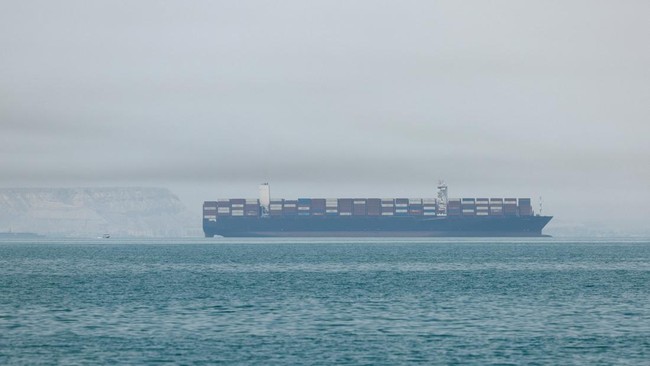
The Islamabad Memorandum between Iran and the United States, mediated by Pakistan and signed on 17 June 2026, is now halfway through its two-month pause in an increasingly fragile state. Formally, the agreement remains in effect, but its effectiveness continues to decline. In recent days, the United States launched two waves of strikes against Iranian territory—approximately 140 targets on 11 July and dozens more on 13 July—while the IRGC retaliated by attacking US-linked installations in Kuwait and Bahrain. Iran subsequently declared the Strait of Hormuz closed, causing shipping traffic to fall to its lowest level in five weeks. Markets reacted immediately. After briefly touching US$70.5 per barrel on 3 July, Brent crude prices climbed back to around US$80 per barrel by 13 July, an increase of roughly 13 per cent in just ten trading days. The core problem is no longer whether the MOU formally holds, but that military dynamics are developing far faster than the diplomatic mechanisms established by the Islamabad Memorandum. As warned in an analysis on 2 June 2026, Hormuz has become an arena for contesting the permanent security architecture of the Middle East, rather than merely a point of tactical tension. Many analyses still place the ceasefire at the heart of the Islamabad Memorandum, yet the real issue is Hormuz. For Washington, the principle of freedom of navigation requires the strait to remain open without any single state controlling access. Conversely, for Tehran, Hormuz is a strategic asset that provides bargaining power. Iran does not need to close the strait completely; limited disruption to shipping is sufficient to raise costs, insurance premiums, and political pressure. What is being contested is no longer just shipping access, but who has the right to set the rules for security, navigation, and governance of one of the world’s most strategic energy chokepoints. Recent developments have sharpened this shift. After Iran again declared Hormuz closed, the United States reimposed a blockade on shipping to or from Iran, while continuing to guarantee international navigation under US Navy protection. President Donald Trump also announced plans to impose a 20 per cent levy on vessels transiting the strait. Both sides are now not only defending their political claims but have begun enforcing their own versions of the rules over Hormuz. For Tehran, any settlement must recognise its strategic interests in Hormuz. Its minimum position includes no hindrance to Iranian oil exports, a halt to US offensive operations during the MOU period, and de facto acknowledgement that security arrangements for Hormuz cannot be made without considering Iran’s interests. Conversely, President Trump must balance two conflicting interests: avoiding a protracted war that could trigger an energy price spike and inflation ahead of the November 2026 midterm elections, while demonstrating that the United States remains the primary guarantor of international freedom of navigation. Washington’s progression from limited strikes to a maritime blockade of Iran indicates that the space for compromise is narrowing on both sides. Three scenarios exist approaching mid-August. A technical compromise, where both parties reach an understanding on Hormuz management through operational mechanisms or regional mediation, shows no signs of materialising. An armed deadlock, where the MOU survives legally but loses influence over the parties’ behaviour while clashes continue without escalating into direct confrontation, has already been surpassed. The reciprocal attacks of 11 and 13 July demonstrate that the conflict has entered a phase of direct military engagement. The third scenario, open escalation, sees each side unilaterally imposing security rules in Hormuz. Iran’s closure of the strait, followed by the US maritime blockade of Iranian shipping and the planned transit levy, indicates that dynamics on the ground have already moved towards this scenario. The question is no longer whether a transition to open escalation will occur, but whether the current escalation is temporary—designed to strengthen bargaining positions—or marks the end of the Islamabad Memorandum’s effectiveness. The conflict has not returned to pre-MOU conditions. Instead, the centre of the dispute has shifted from halting the war to a contest over authority for the security, navigation, and governance of the Strait of Hormuz. This rivalry is now being conducted through the use of military force, control of shipping lanes, and economic pressure. The rebound in oil prices to around US$80 per barrel indicates that markets are beginning to view the Hormuz dispute as a structural issue with the potential to disrupt global energy stability, rather than merely a series of temporary military incidents.