
Half Open, Half Uncertain: Traversing Oman's Side of the Strait of Hormuz
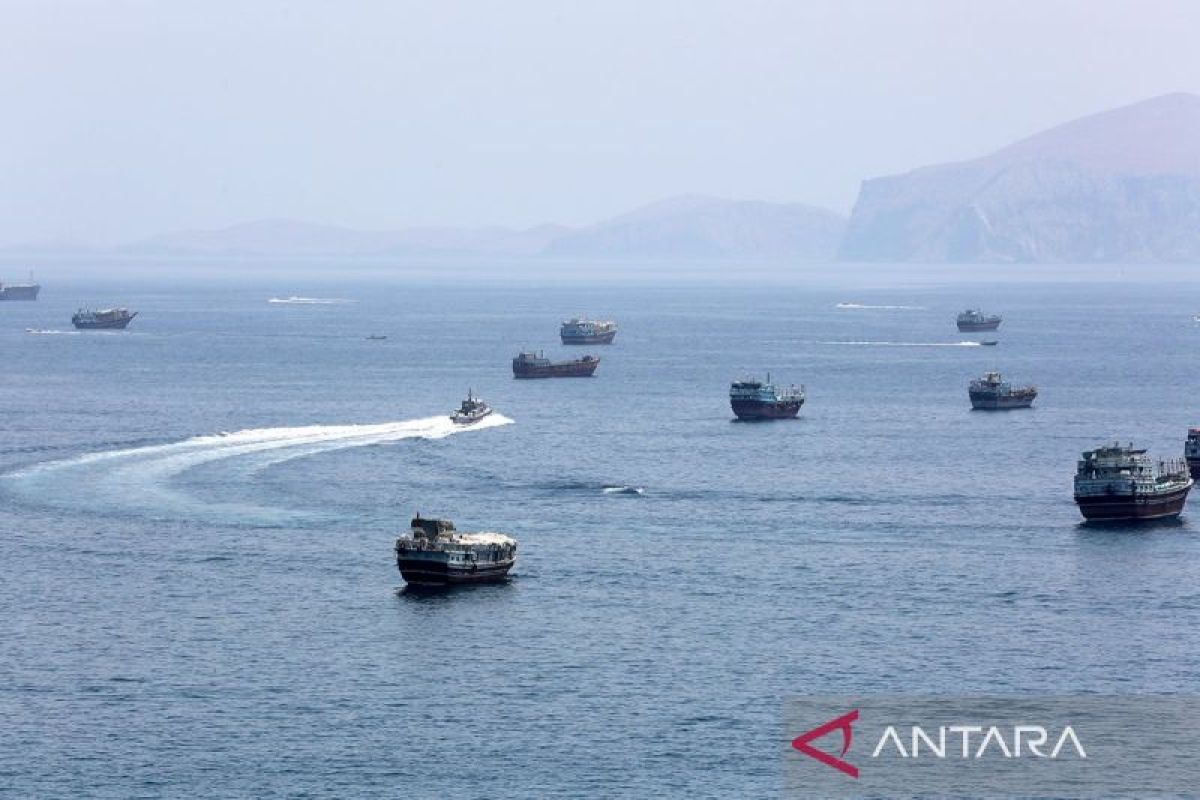
Khasab (ANTARA) - Amid the prolonged deadlock between the United States and Iran over the reopening of the Strait of Hormuz, I travelled to Khasab, a coastal town in Oman located on the southern shore of the strait. The journey took place on the second day after Washington and Tehran reached a memorandum of understanding (MoU) and committed to reopening the strait. However, uncertainty surrounding the fate of the strategic shipping lane resurfaced the following day when the Iranian military, citing Israel’s violation of the ceasefire in Lebanon, declared it was closing the strait again. Meanwhile, US Central Command (CENTCOM) stated that ship traffic through the strait was continuing.
As we drove out of Dubai, crossing the northern territory of the United Arab Emirates (UAE) and entering Oman’s Musandam Governorate, the coastal road wound through limestone mountains before finally opening up to the sea. After nearly four hours, we arrived in Khasab. Summer enveloped the small town in quiet. With temperatures exceeding 40 degrees Celsius, most streets appeared deserted, save for the occasional container truck lumbering slowly along the coastal route. From a high vantage point, the waters south of the Strait of Hormuz stretched to the horizon. To the north, across the strait, lay Iranian territory. Even on clear days, a thin veil of haze often shrouded the strait, blurring the view of the opposite shore.
In a small bay along the Khasab coast, dozens of small cargo ships were still anchored offshore, though fewer than the number recorded by colleagues who visited in late May. “Most of the ships here carry cargo between the UAE and Iran,” said Bader, a local resident. Some had resumed operations in recent days, while others were still awaiting signals from Iranian ports. However, the recovery remains fragile. Larger vessels sail further north, closer to the main shipping lane and well out of public view, Bader added.
As a strategic yet narrow shipping lane through which about a fifth of the world’s daily oil and liquefied natural gas shipments pass, the Strait of Hormuz is at the centre of ongoing tensions in the Middle East. Iran effectively blocked the Strait of Hormuz after the US and Israel launched a joint attack on the country on 28 February. Washington imposed a naval blockade on Iran from 13 April to pressure Tehran into reopening the waterway. Before the crisis, around 130 ships transited the strait daily, according to maritime tracking data. During the conflict, traffic plummeted to fewer than 10 ships per day. The disruption caused global oil prices to spike, further exacerbating the economic and political pressures facing the US administration domestically.
For residents on the Omani side of the strait, the impact is felt in their daily earnings. Famous for its stunning deserts, Musandam has long attracted visitors seeking a quieter atmosphere in the Gulf region. Tourists typically explore its coves aboard traditional wooden dhow boats and sail into open waters to watch dolphins. A boat captain told me the conflict has dealt a severe blow to local tourism. “Everyone hopes stability will return and tourists will come back,” he said.
Over time, signs of recovery have begun to appear. Shipping data showed an increase in traffic through the strait since the signing of the US-Iran MoU, although it remains far below pre-conflict levels. Maritime tracking firm Kpler recorded at least 36 commodity-carrying vessels on Monday (22/6). Yet the recovery is fragile. Iranian media, quoting sources close to the country’s negotiating team, reported on Sunday (21/6) that Iran would not reopen the Strait of Hormuz unless the war in Lebanon ends. That same Sunday, US and Iranian representatives held their latest round of negotiations in Switzerland, with Pakistan and Qatar acting as mediators. After lengthy talks, mediators described encouraging progress, including the establishment of a communication channel to guarantee safe passage for commercial ships through the strait and deconfliction to end military operations in Lebanon. At the White House, President Donald Trump stated on Monday that the Strait of Hormuz was fully open, though this claim was not confirmed by Iran.
As I left the coast after nightfall, the waters off Khasab were dotted with the lights of anchored ships. Their glow seemed to hang between the sea and the sky. Across the misty waters, the shipping lane in the distance began to come into view, though it remained faint.