
Halal MSMEs and the Challenge of Breaking into Global Markets
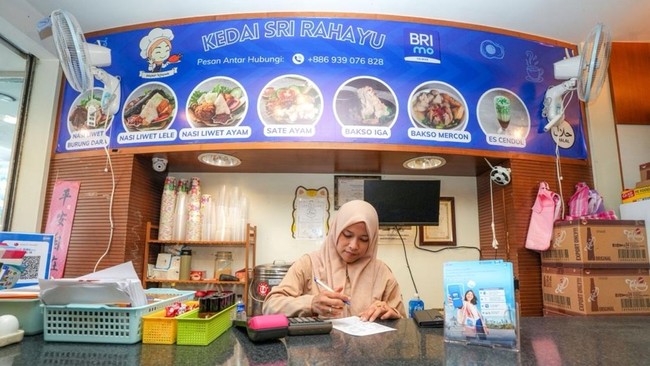
Indonesia has substantial potential to become one of the world’s halal-industry hubs. Its large Muslim population, abundant natural resources, diverse food products and millions of micro, small and medium-sized enterprises (MSMEs) provide a foundation that should make the country a major player in the global halal economy.
Yet this potential has not been matched by the ability of Indonesian halal products to penetrate international markets. The issue is not simply the ability to produce halal goods, but also competitiveness, quality, innovation, production capacity, financing and access to global distribution networks.
Halal MSMEs occupy a strategic position in this context. They are not only the backbone of the national economy, but can also drive the development of Indonesia’s halal industry.
Unfortunately, the development of halal MSMEs has often been viewed too narrowly as a matter of obtaining halal certification. Certification is only an entry point. The real challenge is to use it to improve productivity, expand market access, strengthen supply chains and build the trust of international consumers.
The fundamental question is whether Indonesia’s halal MSMEs are being prepared to become global players, or are still being guided only towards meeting domestic market demand.
Today’s global halal market extends well beyond meeting the consumption needs of Muslim communities. Halal has become part of a worldwide economic trend associated with product quality, food safety, health, hygiene, transparency in production, environmental sustainability and business ethics.
In other words, halal is no longer merely a symbol of compliance with religious teachings. It has also become a marker of trust and product differentiation in international trade.
The State of the Global Islamic Economy Report 2025/2026, published by DinarStandard, shows that Muslim consumer spending across six halal real-economy sectors reached US$2.60 trillion in 2024 and is projected to rise to US$3.56 trillion by 2029.
The halal food sector alone was worth US$1.53 trillion in 2024 and is expected to grow to US$2.06 trillion by 2029. These figures show that the halal industry is one of the largest consumer markets, with strong medium-term growth prospects.
This vast market should represent a strategic opportunity for Indonesia. As the world’s most populous Muslim-majority country, Indonesia has the advantage of a large domestic market and the potential to become a production base for a range of halal commodities. Food and beverages, Muslim fashion, cosmetics, pharmaceuticals and agriculture-based products could all be developed into value-added exports.
Indonesia’s position in the Global Islamic Economy Indicator 2026 also demonstrates this potential. The country ranked fourth globally, after Malaysia and Saudi Arabia. It ranked first in Muslim fashion, second in halal pharmaceuticals and cosmetics, and fourth in halal food and beverages.
However, these rankings should not lead to complacency. A strong position in a global Islamic-economy indicator does not automatically reflect the ability of all domestic businesses to capture international markets. There is a fundamental difference between building a halal-economy ecosystem and developing companies and halal products capable of competing globally.
This is where the challenges facing Indonesia’s halal MSMEs become relevant. The country has millions of MSMEs, but not all have the production capacity, quality standards, marketing networks or management capabilities needed to enter international trade.
OECD data in Financing SMEs and Entrepreneurs 2026 put the number of MSMEs in Indonesia at about 56.14 million in 2024, or 99.90 per cent of all business units. They contributed 59.64 per cent of gross domestic product (GDP). Meanwhile, figures published by the Ministry of MSMEs in September 2026 estimate that MSMEs contributed Rp14,523.54 trillion, or about 60.05 per cent, of GDP in 2025. The 2025 figure remains highly provisional.
Their substantial contribution shows that MSMEs are not merely an adjunct to the national economy: they are its popular-economy foundation. Developing halal MSMEs should therefore be an integral part of Indonesia’s national industrialisation strategy, the strengthening of the people’s economy and efforts to improve export competitiveness.
One important development in Indonesia’s halal industry has been growing awareness of, and uptake of, halal certification among businesses. The government, through the Halal Product Assurance Organising Agency (BPJPH), continues to expand support for certification, particularly for micro and small enterprises.
Figures published in October 2026 show that BPJPH had issued about 4.45 million halal certificates from 2021 to 14 October 2026. Around 3.52 million business operators had received certification over that period. From 1 January to 14 October 2026 alone, about 1.14 million certificates were issued, most through the self-declaration mechanism.
This achievement deserves recognition. Under Government Regulation No. 42 of 2024, mandatory halal certification for food and drink products, slaughtered products and slaughtering services provided by micro and small businesses is due to take effect on 17 October 2026. Bank Indonesia has also reported that the government plans to provide 1.35 million free halal certificates to micro and small businesses during 2026.
However, a fundamental issue requires attention. Halal certification is still often treated as the end goal in developing halal MSMEs. Once certified, a business is considered to have successfully entered the halal-industry ecosystem. Yet a halal certificate does not automatically ensure good product quality, competitive prices, attractive packaging, adequate production capacity or access to international markets.
Halal certification guarantees a product’s halal status under applicable rules. Global consumers, however, also consider food safety, nutritional content, consistent quality, traceability of raw materials, production processes and brand reputation.
The approach to developing halal MSMEs must therefore change. The government cannot focus solely on increasing the number of halal certificates; it must ensure that certification contributes to improvements in business quality and productivity.
Halal certification should be integrated with food-safety certification, product standardisation, stronger quality-management systems and export support. This would enable MSMEs not only to comply with halal requirements, but also to become producers capable of meeting global market standards.
The biggest challenge for Indonesia’s halal MSMEs is not a lack of market opportunities, but the gap between production potential and the capacity to meet international demand. At least five strategic challenges require attention.
First, production capacity and consistency of quality are limited. International markets require reliable supplies in specified volumes, uniform quality and on-time delivery. Yet many MSMEs still operate on a limited scale, using basic technology and production management that is not standardised.
This points to the need to move MSMEs from traditional production towards methods that are more modern, efficient, measurable and geared to international standards. Digitalising production processes, using packaging technology, improving the quality of raw materials and introducing inventory management are now essential.
Second, halal standards and certification recognition need to be harmonised across countries. International trade in halal products involves not only tariffs, but also technical standards, product-safety regulations and certification requirements in destination markets.
Although Indonesia has developed halal-certification recognition arrangements with several countries, MSMEs still need information and guidance on the specific requirements in each market. A product that can be sold in one country may not be permitted in another without meeting additional requirements.
In January 2026, the Ministry of Trade said Indonesia had secured recognition through Mutual Recognition Agreements (MRAs) with several countries, including Malaysia, Thailand, the United States, China, India, Japan, South Korea and Canada, among others. This is an important asset for expanding the reach of Indonesian halal products.
However, MRAs will not be enough without outreach and technical support for MSMEs. The government must ensure that businesses understand how to use these arrangements to enter partner markets. International cooperation must not remain a diplomatic achievement that brings no tangible benefits to businesses at grassroots level.
Third, access to finance is limited. Halal MSMEs need capital to expand production, buy machinery, improve packaging, obtain additional certifications and fund export promotion and distribution. Access to finance remains a longstanding problem for MSMEs.
Islamic banks have a strategic opportunity to become partners in developing halal MSMEs. Financing based on murabaha, musharakah and mudarabah can be tailored to the characteristics and needs of businesses. Financing should not stop at providing working capital; it should also support investment in technology, stronger supply chains and market expansion.
Islamic social-finance instruments such as zakat, infaq, sadaqah and waqf can also be integrated into programmes to empower halal MSMEs. Productive zakat, for example, can strengthen microbusinesses with limited capital. Productive waqf could support infrastructure for the halal industry, including shared production facilities, packaging centres, testing laboratories and storage facilities.
Fourth, global branding and marketing remain weak. Many Indonesian MSMEs make quality products but have yet to build strong brands with international appeal. Products are often marketed on price rather than on their strengths, differentiation and added value.
Global consumers, however, buy not only products but also experiences, reputation and confidence in a brand. Indonesian halal food, for example, should be promoted not simply as halal, but as offering excellent taste, high-quality ingredients, cultural distinctiveness and responsible production.
This is where digital marketing matters. Cross-border e-commerce platforms, social media, content marketing and the use of consumer data can help MSMEs reach markets that were previously difficult to access.
Digitalisation, however, must not be understood merely as opening a social-media account or listing products on an online marketplace. MSMEs need a more comprehensive marketing strategy, covering market research, consumer segmentation, brand positioning, packaging development and international customer service.
Fifth, halal supply chains are poorly integrated. A product’s halal status depends not only on its ingredients and production process, but also on the integrity of the entire supply chain, from procurement and storage of raw materials through processing, packaging and distribution to the consumer.
An MSME with halal certification may still face difficulties if its raw-material suppliers do not meet the necessary requirements. The same applies if distribution and storage fail to safeguard halal integrity.
The development of halal MSMEs therefore requires an ecosystem-based approach. MSMEs need to be connected with farmers, livestock producers, cooperatives, raw-material suppliers, processors, certification bodies, financial institutions, logistics companies and distribution networks.
Turning halal MSMEs into a global economic force will require a change in policy approach. Support for MSMEs must go beyond grants, one-off training and assistance with certification. The focus must be on building business capacity, creating added value and capturing markets.
First, develop halal MSMEs through industrial clusters and ecosystems. The government should encourage clusters based on the strengths of individual regions. Coffee-producing areas could develop halal coffee clusters, fishing regions could build clusters for processed halal fish, and areas with strong spice production could develop halal food industries and halal cosmetic ingredients.
These clusters should be supported by shared production facilities, packaging facilities, testing laboratories, distribution centres and assistance with product standardisation. Cooperatives and regionally owned enterprises could also act as aggregators, consolidating MSME output so that businesses can fulfil larger orders.
This model matters because production is fragmented among MSMEs. Each business operates independently, making it difficult to meet large-scale demand. By consolidating production, MSMEs can retain their small-business character while benefiting from economies of scale.
Second, integrate Islamic finance with the development of halal value chains.
Islamic banks should play a larger role in developing the halal industry, rather than acting only as deposit-taking and lending institutions. They should become strategic partners to MSMEs from production and processing through certification and marketing.
Financing arrangements can be tailored to the stage of business development. Start-ups need funding for equipment and working capital, while growing MSMEs need investment finance to increase production capacity and meet export demand.
Integrated financing models involving Islamic banks, guarantee institutions, cooperatives and offtakers should also be developed. Securing a buyer would make financing risks easier to manage. MSMEs would also have more certainty about demand, enabling them to increase production without having to face market uncertainty alone.
Third, strengthen halal diplomacy and access to international markets. The government should make the most of trade agreements and halal-certification recognition arrangements to open international markets to Indonesian MSME products.
The Middle East, South-east Asia, South Asia, Africa, Europe and North America each have distinct market characteristics. Export strategies therefore cannot take a one-size-fits-all approach.
MSMEs need information about consumer preferences
Source: jawawa.id (https://jawawa.id/newsitem/halal-msmes-and-the-challenge-of-breaking-into-global-markets-1793591462)
Originally published by CNBC Indonesia (https://www.cnbcindonesia.com/opini/20261102100832-14-781427/umkm-halal-dan-tantangan-menembus-pasar-global), translated from Indonesian