
Halal Certification Mandatory from 18 October: The Fate of Pork-Containing Products
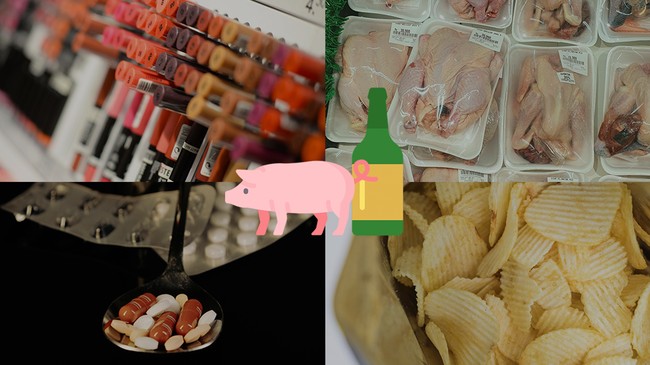
Mandatory halal certification for products sold in Indonesia, including both local and imported goods, will come into effect on 18 October 2026. The implementation of this mandatory halal requirement is a mandate of Law Number 33 of 2014 concerning Halal Product Assurance (UU JPH).
To date, there have been no signals from the government regarding any potential delays in the implementation of this mandatory certification. Under the upcoming regulations, seven categories of products will be required to hold halal certification.
Referring to Government Regulation (PP) No 42/2024 regarding the Implementation of Halal Product Assurance, the products required to be halal-certified starting 18 October 2026 are:
Food and beverage products
Slaughter products and slaughtering services
Cosmetics
Chemical products and genetically engineered products
Natural medicines, quasi-drugs, and health supplements
Raw materials, food additives, and processing aids for food and beverage products
Consumer goods, including apparel and accessories, household health supplies, household equipment, prayer equipment, stationery, office supplies, and Class A medical devices.
This raises the question: what happens to products that do not meet the requirements to be called halal, such as those containing pork or alcohol?
Article 2 of PP No 42/2024 stipulates that products entering, circulating, and traded within Indonesian territory must be halal-certified. However, paragraph (2) further regulates that products derived from prohibited ingredients are exempt from the obligation to obtain halal certification. Paragraph (3) specifies that such products must be clearly labelled as ‘non-halal’.
Furthermore, Article 110 of the regulation states:
Business actors producing products derived from prohibited ingredients are obliged to include a ‘non-halal’ description.
The inclusion of the ‘non-halal’ description must be clearly visible, legible, and not easily erased, removed, or damaged.
The form and procedures for including the ‘non-halal’ description shall be determined by the Head of the Agency after coordination with relevant ministries/institutions.
Based on the provisions in Article 110, the government has issued the Halal Product Assurance Agency Regulation (Perbadan) No 3/2026 regarding the Form and Procedures for Including Non-Halal Descriptions. The criteria for ‘non-halal’ are detailed in this regulation, divided into two categories based on ingredients and production processes.
Regarding the implementation for non-halal products circulating in Indonesia, the regulation sets specific rules for labelling. Article 27 of the regulation states: “In the case of food and beverage provision products involving processing that use a trade name containing the word ‘pork’, it is deemed to have fulfilled the obligation to include a Non-Halal Description in accordance with this Agency Regulation.”
This means all products using a brand name containing the word ‘pork’ must include a ‘Non-Halal’ notice on the product label. The regulation, established by the Head of BPJPH, Ahmad Haikal Hasan, on 13 July 2026, came into force on its promulgation date, 23 July 2026.
Article 28 of the regulation stipulates: “Products that have entered, circulated, and are traded within the territory of Indonesia before this Agency Regulation was promulgated must adjust to the provisions of this Agency Regulation within a maximum of 12 (twelve) months from the date of its promulgation.”