
Halal Certification for Cosmetics Mandatory from October 2026
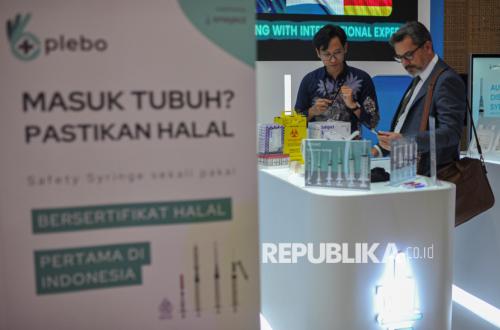
The mandatory halal certification for all cosmetic products circulating in Indonesia will come into effect in October 2026. This policy is considered a significant momentum to strengthen the competitiveness of the national halal cosmetics industry, which continues to grow on a global scale.
Murniati Mukhlisin, a researcher at the Centre of Sharia Economic Development (CSED) INDEF, stated that halal certification should not be viewed as an additional burden for businesses. Instead, certification can serve as an instrument to increase consumer confidence and expand market access.
“After obtaining halal certification, many MSMEs gain wider market access and higher consumer trust. Therefore, halal certification should be viewed as an investment to increase business competitiveness,” Murniati said during a CSED INDEF public discussion themed ‘SGIE Indonesia Declining: Evaluation of National Halal Policy and Industry’ on Monday night.
According to her, the government has also provided various support schemes, one of which is the Free Halal Certification (SEHATI) programme. This programme is expected to assist micro and small enterprises in meeting certification requirements without being burdened by significant costs.
Nevertheless, Murniati warned that halal certification alone is insufficient to make the national cosmetics industry more competitive. Businesses also require support in aspects such as product development, packaging, digital marketing, and access to financing.
Based on the State of the Global Islamic Economy (SGIE) Report 2025/2026, the global halal cosmetics market value reached US$92 billion in 2024 and is projected to increase to US$124 billion by 2029, with an average annual growth of 6.3 per cent. Indonesia currently ranks fourth in the world in the halal cosmetics sector, behind Malaysia, the United Arab Emirates, and Singapore.