
Halal Certification Deadline Is Today: How Businesses Are Responding
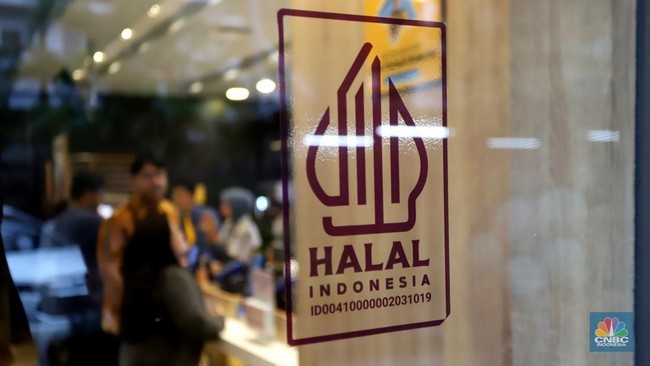
Jakarta, CNBC Indonesia – The mandatory halal certification requirement taking effect on 18 October 2026 is considered to have been implemented unevenly. The Indonesian Chamber of Commerce and Industry (Kadin) says some businesses, particularly micro, small and medium-sized enterprises (MSMEs), importers and sellers of non-food goods, are still facing various obstacles.
Erwin Aksa, Kadin Indonesia’s Deputy Chair for Organisation, Communications and Regional Empowerment, said larger industries were relatively better prepared because they already had quality-control systems, raw-material traceability and certification experience.
“Large industries, particularly in food and beverages, are generally relatively better prepared because they already have quality-control systems, raw-material traceability and certification experience,” Erwin told CNBC Indonesia on Friday (16 October 2026).
By contrast, some MSMEs, importers and sellers of non-food goods are still facing administrative, technical and cost-related challenges in meeting the requirements.
Kadin nevertheless said it did not yet have representative national data to establish the overall readiness of businesses.
“However, Kadin does not yet have sufficiently representative national data to say that the readiness of all businesses has reached a particular percentage,” he said.
Erwin said the government, through the Halal Product Assurance Agency (BPJPH), should publish data on the numbers of businesses and products that have been certified, are still being processed, or have not yet applied for certification.
He said the data should be broken down by sector and business size so that support and oversight policies could be properly targeted.
“What is more important is for the government, through BPJPH, to publish data on the numbers of businesses and products that have been certified, are still being processed, or have not yet applied for certification, broken down by sector and business size,” Erwin said.
In addition to businesses’ readiness, Kadin highlighted the need for certification services to have sufficient capacity to handle the large number of products and businesses subject to the requirements.
Erwin said inspections, testing, assistance and the issuance of certificates needed to proceed quickly so they would not become an obstacle for businesses.
Other challenges include the cost of compliance and supply-chain readiness. Halal certification covers not only finished products but also raw materials, additives, production processes and supplier traceability.
“For industries that use imported raw materials or have complex supply chains, these adjustments require additional time and costs,” he explained.
Kadin called on the government to ensure that certification services were sufficiently available, with processes that were fast, transparent and affordable, particularly for MSMEs.
Erwin also stressed the importance of clear transition rules for companies that had applied for certification but were still waiting for administrative processing to be completed.
Coordination between BPJPH, technical ministries and customs authorities also needs to be strengthened so that implementation of the policy does not disrupt business activity.
“Third, ensure that coordination between BPJPH, technical ministries and customs authorities works well, so there are no obstacles to importing raw materials, disruptions to distribution, or congestion at ports caused by inconsistent procedures,” Erwin said.
For Kadin, the success of mandatory halal certification should not be measured solely by the number of certificates issued. The policy should also build consumer confidence, strengthen industrial competitiveness and open up export-market access without jeopardising business continuity.
“Indonesia has a major opportunity to become a global halal industry hub. Halal certification should therefore be an instrument for increasing added value and competitiveness, not merely an additional administrative burden for businesses,” he concluded.