
Hajj Ticket Auction and the Return of the Isthi'thoah Principle
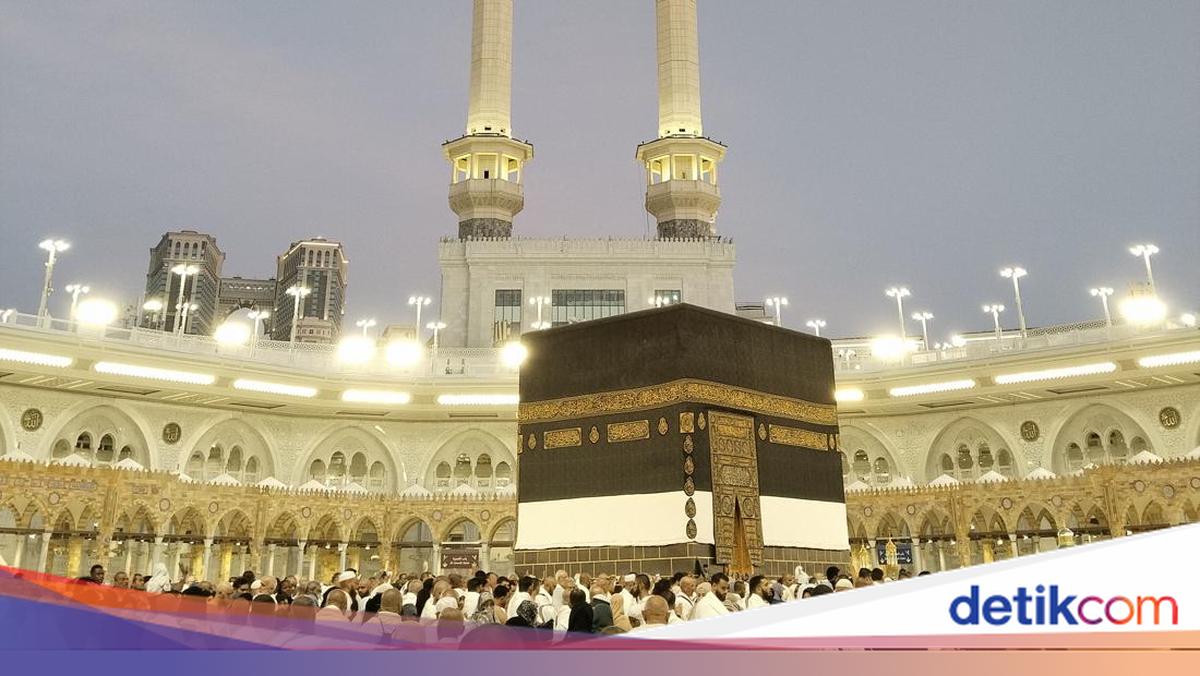
The discourse on the ‘hajj ticket auction’ initiated by the Ministry of Hajj and Umrah has ignited widespread debate. Some consider the idea too liberal, as it places hajj access on the logic of speed and ability to pay. Others see it as a realistic breakthrough amid increasingly long waiting lists.
This debate should not stop at agreeing or rejecting the hajj ticket auction. More importantly, it is to revisit whether Indonesia’s current hajj governance still aligns with the basic principle of hajj worship, namely istitha’ah or capability in both financial and physical terms.
If the real hajj cost continues to rise, queues grow longer, and funding needs become greater, the simple question is whether it is time to redesign Indonesia’s hajj management system?
The Shifting Meaning of Istitha’ah
In sharia, hajj is obligatory only for Muslims who are capable in physical, financial, and safe travel terms. This means economic capability is not an additional element but an inherent part of the fifth pillar of Islam itself. Therefore, ideal hajj policy design should serve as an instrument to select readiness, not merely record registration order.
However, in practice, this meaning has gradually faded. Findings from the author’s paper, which won the ‘Call for Paper: International Hajj Fund Forum 2025’, show that the initial deposit of Rp25 million to obtain a portion number has not changed since 2010, while the Hajj Implementation Cost (BPIH) has increased significantly.
This creates a widening gap between pilgrims’ deposits and actual hajj costs, which must be covered by the investment benefits of hajj funds managed by BPKH. Unfortunately, the public perceives that hajj is secured merely with a ‘portion number’, while actual financing will be settled later by the system.
From an economic perspective, this condition breeds excess demand, where demand grows far beyond available capacity. The low initial deposit encourages people to register as early as possible, even if actual financial readiness is not yet possible.
The impact is evident in the extremely long waiting periods. Even before the current uniform queue policy, some provinces had queues exceeding 40 years. This problem is no longer just about quotas but a signal that the current policy design is no longer proportional.
Hajj Ticket Auction as a Correction
From the root problems outlined, the hajj ticket auction need not be read as a threat. If designed limited to additional quotas or certain segments, this scheme can actually serve as a correction instrument. Those truly ready to pay the real costs are given space to depart without adding to regular subsidy burdens. The state still maintains the usual queue path while opening a new channel more aligned with the istitha’ah principle.
Fiscally, the benefits are also very tangible. Dependence on hajj fund investment benefits can be reduced, making managed funds much healthier and more sustainable. In the author’s research, without structural reform, the reserve of benefits managed by BPKH has the potential to face serious pressure in the coming years.
A simulation using the Monte Carlo method also shows more extreme scenarios. If two hajj implementations occur in one year, subsidy needs would double, putting BPKH’s financial position at risk of entering a deficit zone much faster. These findings affirm that the current financing structure is highly vulnerable to operational shocks or sudden policy changes.
Thus, the hajj ticket auction discourse is not merely an option for accelerating departure but part of efforts to reduce pressure on hajj fund management. Of course, the hajj ticket auction must be run with a transparent system, free from bots, anti-brokering, and open to public oversight. Without credible governance, even good policies can lose legitimacy.
The Middle Path of Hajj Financial Governance Reform
Fair hajj management reform must not only benefit those already established. Therefore, transitional solutions that can be implemented include combining capability principles and facilitating those not fully ready.
First, the Rp25 million initial deposit is overdue for adjustment. Portion numbers can only be given to prospective pilgrims who have met at least 80 percent of the current year’s BPIH or another percentage set by the government. With this scheme, the waiting list will be filled by those truly ready to depart. This will automatically filter registrations more healthily while shortening long-term queues.
Second, a top-up scheme for prospective pilgrims with limited financial capability. People unable to meet BPIH are not closed off but facilitated with phased savings through virtual accounts, auto-debit, or integrated hajj savings. Only when the balance reaches the determined minimum threshold is the portion number given. This model will maintain justice principles while giving broad opportunities for the public to prepare responsibly.
Third, in the long term, a more targeted cross-subsidy scheme needs consideration. Subsidies from benefits are no longer distributed evenly but focused on groups truly in need based on socio-economic data, as done by Malaysia’s Lembaga Tabung Haji. This model will be fairer and far more efficient than mass subsidies, as collective funds are directed to those who truly need them. Although this requires reliable support from the National Socio-Economic Single Data (DTSEN).
Fourth, the government needs to separate costs whose benefits are not directly received by pilgrims from the Hajj Travel Cost (Bipih) components. Costs such as diplomacy, general services, education p
Source: jawawa.id (https://jawawa.id/newsitem/hajj-ticket-auction-and-the-return-of-the-isthithoah-principle-1776318650)
Originally published by detikcom (https://news.detik.com/kolom/d-8446709/war-tiket-haji-dan-kembalinya-prinsip-isthithoah), translated from Indonesian