
Hajj Supervisor Asrorun Niam Sholeh urges pilgrims to increase devotional acts during Arafah standing
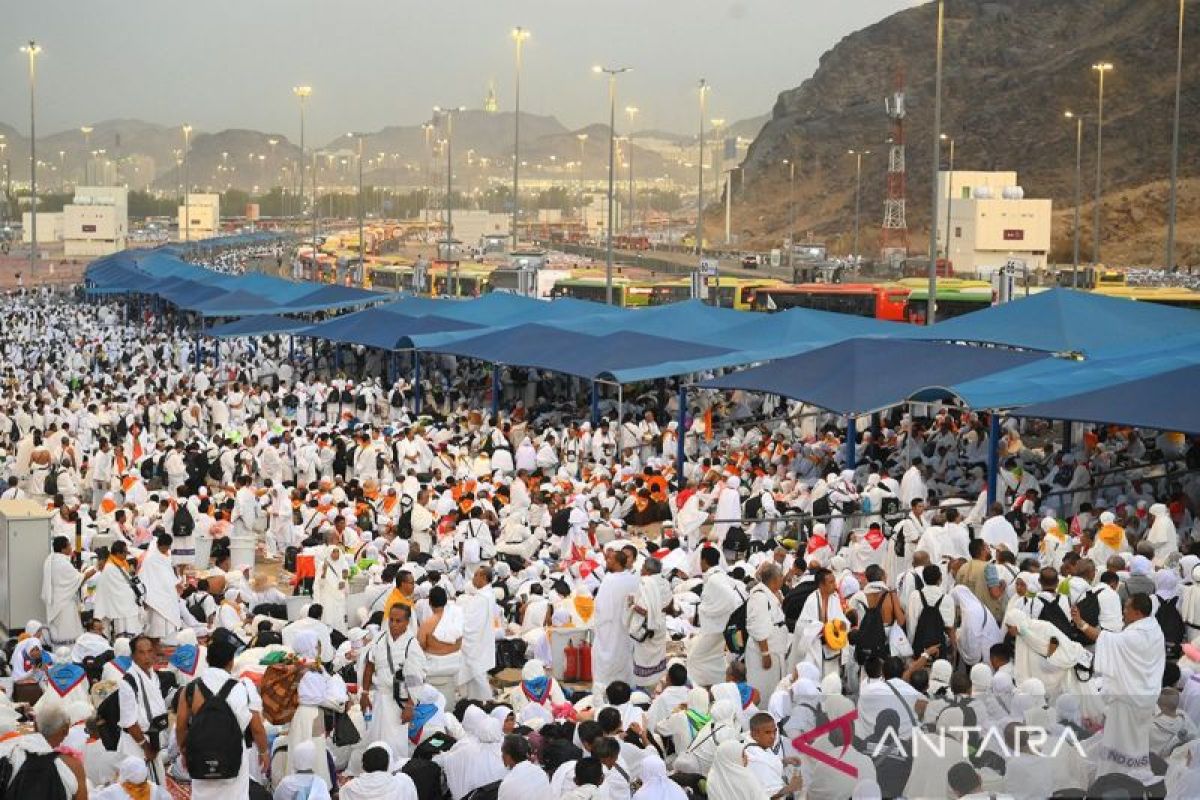
Jakarta (ANTARA) - Hajj Supervisor Asrorun Niam Sholeh has urged pilgrims to optimally prepare for the peak of the Hajj pilgrimage, the standing at Arafah on 9 Zulhijjah, by increasing acts of worship such as prayer, remembrance of Allah, and Quran recitation.
‘Friday Arafah is a time when supplications are most likely to be answered in the most auspicious place. The best prayers are those offered on the Day of Arafah. Use this time to draw closer to Allah and seek forgiveness for sins, both towards Him and fellow humans,’ Sholeh stated in a Jakarta press release on Monday.
He explained that today, 8 Zulhijjah, pilgrims will gradually move towards Arafah. The Indonesian Ministry of Hajj and Umrah has organised staggered departures to ensure timely arrival without anyone being left behind.
He added that standing at Arafah is a fundamental pillar of Hajj; without physical presence there on that date, the Hajj is invalid. Therefore, thorough physical and mental preparation is essential.
After Arafah, pilgrims will proceed to Muzdalifah for overnight stay, then move to Mina to perform the stoning of the Jamarat al-Aqabah and stay for two or three days, including the stoning of the three Jamarat (ula, wustha, and aqabah).
Sholeh specifically praised the revised movement scheme for Hajj pilgrims post-Arafah, which aligns with Islamic principles by safeguarding religion (hifzhud din) and life (hifzhun nafs).
Pilgrims departing from Arafah at 7:00 pm (Saudi Arabia Time) towards Muzdalifah will disembark and remain there until midnight for overnight stay before proceeding to Mina by bus.
Secondly, those departing from Mina at 11:00 pm (Saudi Arabia Time) and arriving at Muzdalifah after midnight will stay on the bus for overnight stay before continuing to Mina.
‘Thirdly, pilgrims with valid religious excuses, such as illness, will travel directly from Arafah to Mina. This arrangement adheres to the principle of public welfare within the bounds of Islamic law,’ said the Professor of Fiqh.
Additionally, Sholeh reminded pilgrims about the correct timing for stoning the Jamarat during the Days of Tashriq in accordance with Islamic law. He confirmed that the permissible time for stoning begins after Subuh prayer.
‘Although the preferred time is after midday (zuhr), this period is extremely crowded and hot. Therefore, it is better to follow the schedule set by the travel agencies and companies for pilgrims’ safety and comfort,’ he said.
Nevertheless, pilgrims should not push themselves if their physical condition does not permit, in pursuit of the best timing.
‘Compliance with the scheduled arrangements is part of ensuring pilgrim safety while remaining within the bounds of Islamic law,’ Niam added.