
Hajj, Quotas, and Power: The Other Side of the Sacred Journey to Mecca
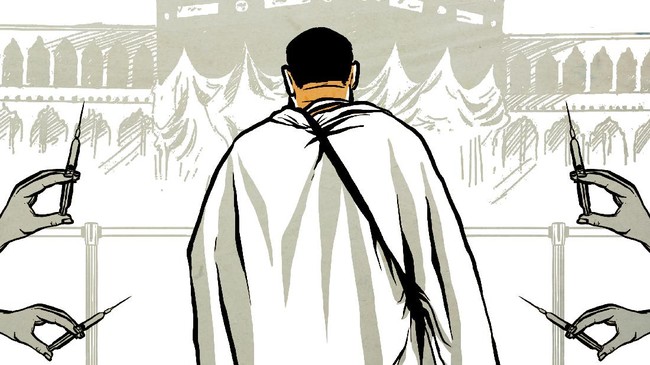
Hajj represents one of the world’s largest religious journeys. Each year, millions of Muslims from various countries gather in Mecca to fulfil the fifth pillar of Islam.
However, behind the massive flow of pilgrims, the Hajj quota system has come under scrutiny, viewed not merely as a technical matter but as possessing strong political dimensions.
Since the late 1980s, Hajj organisation has undergone significant changes. Advances in mass transportation, global population growth, and the development of travel agencies have made access to Mecca increasingly easier.
The impact has been profound. The number of Hajj pilgrims surged from around 60,000 in 1946 to a peak of 3.2 million in 2012.
This surge prompted Saudi Arabia to implement a strict quota system in 1989. Muslim countries were allocated one pilgrim for every 1,000 residents, while non-Muslim countries have no fixed quota. This policy is described as a measure to manage pilgrim density and support infrastructure development in the holy sites.
With limited capacity in Mecca, restricting the number of pilgrims is considered essential to ensure the safety and order of the pilgrimage.
Hajj quotas have continued to evolve and are now allocated based on the Muslim population in each country, approximately 1,000 pilgrims per 1 million Muslim residents.
Over time, this system has functioned not only as a technical management tool but has also intersected with global economic and political interests.
Hajj Quotas: From Management Instrument to Political Tool
Initially, Hajj quotas were designed as a solution to address infrastructure limitations and risks of overcrowding. However, in practice, the system is also seen as an instrument that can influence inter-state relations.
Several observers assess that access to Hajj quotas can be influenced by political dynamics between a country and Saudi Arabia. Countries or groups with political tensions with Riyadh have reportedly faced obstacles in obtaining pilgrimage access.
A prominent example is the conflict between Iran and Saudi Arabia. Following the 2015 Hajj tragedy that killed hundreds of Iranian pilgrims, relations between the two countries deteriorated further. In 2016, Iran even decided not to send its pilgrims to Saudi Arabia.
This phenomenon demonstrates that Hajj is not entirely detached from geopolitics. In certain contexts, Hajj quotas can become part of a “soft power” instrument used to influence other Muslim countries.
Business and Controversy: From Intermediaries to Alleged Corruption
The quota system is often criticised for shifting the responsibility of managing waiting lists and capacity limitations to the sending countries. As a result, governments in the pilgrims’ home countries often bear public pressure, even though the final quota decisions lie with Saudi authorities.
This situation has sparked criticism of Saudi Arabia’s status as the custodian of Islam’s two holy cities, Mecca and Medina. Some parties have even called for the internationalisation of the management of these sacred sites or the involvement of collective mechanisms from the Muslim world.
For countries with large Muslim populations like Indonesia, the Hajj quota issue has very tangible impacts. Limited quotas lead to long waiting lists and continuously rising costs. Therefore, changes in Saudi policy always garner significant attention from millions of prospective pilgrims in the country.
On the other hand, quota limitations amid high demand have also spurred complex economic activities. Intermediary practices have become common, where unofficial agents buy visas from official agents and resell Hajj packages at higher prices.
This phenomenon, for instance, occurs in France, where non-accredited agents exploit system loopholes for profit. Although illegal, limited oversight allows it to persist.
In line with economic law, when demand surges, prices adjust accordingly. The buying and selling of quota visas between agencies has made Hajj packages in France relatively more expensive than in other European countries, estimated at 5,500 euros or around Rp60,500,000 in 2006 (1 Euro = Rp11,000).
Moreover, the quota system is also vulnerable to corruption practices.
Ultimately, a system initially designed to maintain order now faces new challenges. Increasingly expensive costs, long waiting times, and increasingly complex access have become realities faced by many prospective pilgrims.
This transformation affirms that Hajj management now relates not only to worship but is also closely tied to global economic and political dynamics.
Source: jawawa.id (https://jawawa.id/newsitem/hajj-quotas-and-power-the-other-side-of-the-sacred-journey-to-mecca-1776066667)
Originally published by CNBC Indonesia (https://www.cnbcindonesia.com/research/20260413113752-128-726269/haji-kuota-dan-kekuasaan-sisi-lain-perjalanan-suci-ke-mekkah), translated from Indonesian