
Hajj Organising Committee Finalises Arrangements for Peak Hajj Period
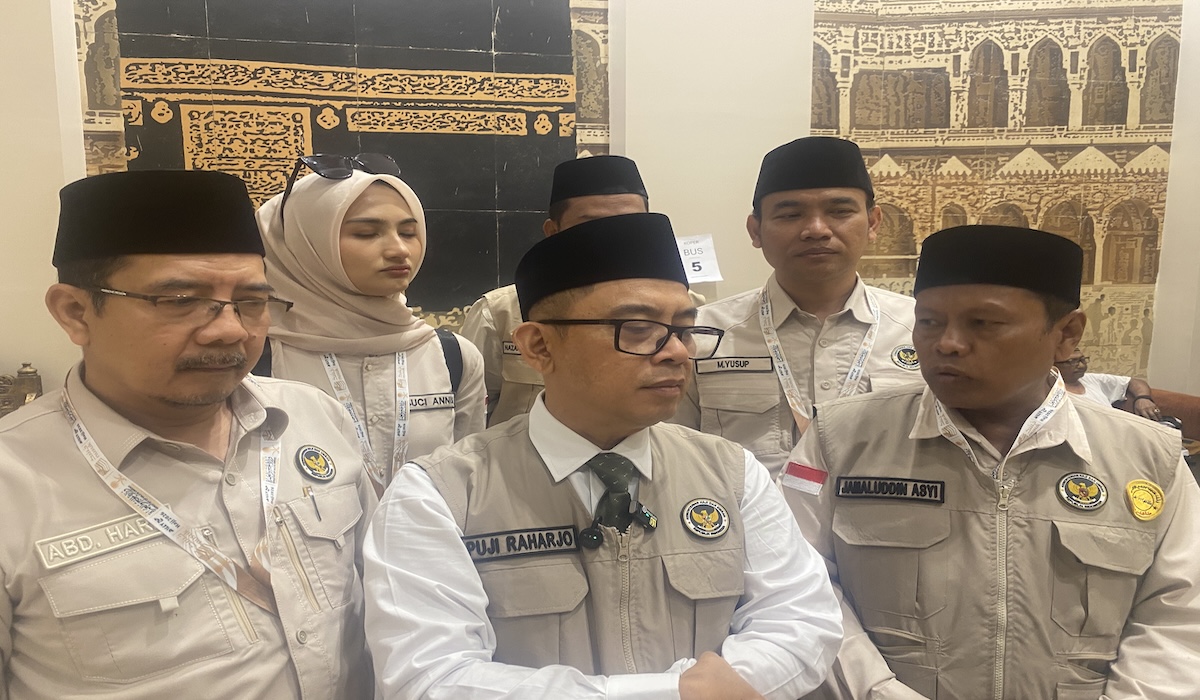
The Hajj Organising Committee (PPIH) of Saudi Arabia continues to refine the ‘murur’ scheme for Indonesian hajj pilgrims in anticipation of the peak hajj period in Arafah, Muzdalifah, and Mina (Armuzna). Through this scheme, high-risk pilgrims, the elderly, and their companions will be immediately transported to Mina without having to descend and stay overnight in Muzdalifah.
The Director General of Hajj and Umrah Organisation at the Ministry of Religious Affairs, Puji Raharjo, explained that this step is taken to reduce congestion in Muzdalifah while also protecting the health of vulnerable pilgrims.
“Due to limited space in Muzdalifah, some of our high-risk pilgrims, the elderly, those with comorbidities, and their companions will be immediately transported to Mina,” said Puji Raharjo during a socialisation event on preparations for the 2026 peak hajj period in Mecca, Friday (16/5).
Technically, pilgrims who fall into the ‘murur’ category will directly board buses from Arafah to Mina after performing the wuquf ritual. With this scheme, they do not need to descend in Muzdalifah or wait until midnight to continue their journey. Meanwhile, pilgrims in good health will still perform the mabit (overnight stay) in Muzdalifah before being transported to Mina after midnight.
According to Puji, who also serves as Deputy Head of PPIH Saudi Arabia, the Saudi Arabian PPIH together with the Armuzna Operations Unit are currently finalising the technical mechanisms, pilgrim allocation, and standard operating procedures (SOPs) for ‘murur’ and ‘tanazul’. Intensive coordination is also ongoing with cluster leaders, religious guides, health workers, and Hajj and Umrah Guidance Groups (KBIHU).
“We hope that all pilgrims can participate in the peak hajj pilgrimage normally, in good health, and without obstacles that hinder their worship,” he said.
Puji emphasised that pilgrims’ compliance with the instructions of officers is an important factor for the success of this year’s Armuzna scheme. The PPIH hopes that problems that occurred in previous hajj seasons will not be repeated.
“We do not want any more pilgrims to leave Muzdalifah late or have to walk due to congestion,” he said.
In addition to preparing the ‘murur’ scheme, the PPIH will also deploy officers earlier in Arafah and Mina. Some officers are even on standby specifically in Mina before the peak hajj begins to assist arriving pilgrims and ensure they can occupy their tents properly. These officers may not perform the hajj themselves because they prioritise serving the pilgrims.
“We have some officers stationed specifically in Mina so that pilgrims do not get lost and can be served well,” said Puji.
On the other hand, the PPIH will also prepare a special safari wuquf service for elderly and disabled pilgrims. However, the number of participants in this year’s safari wuquf is planned to be smaller than in previous years.
“The instructions from the Minister and Deputy Minister are around 300 to 400 people. Last year it was about 525 people,” he said.
According to Puji, this number has decreased because the health screening and monitoring of pilgrims’ conditions before departing for the Holy Land is now carried out more strictly.
In anticipation of the peak hajj period, Puji reminded pilgrims to maintain their physical condition and not force themselves to do strenuous activities before performing wuquf in Arafah.
“The peak of the hajj is in Arafah. Don’t let them run out of energy before it’s time,” he said. (Z-10)
The cluster doctor, Dr. Maulidya Rahmi, said that pilgrims are now being asked to reduce excessive physical activity and conserve energy in preparation for the peak hajj period.
Hajj pilgrims from Indonesia are advised to use official taxis when travelling while in Mecca and to implement a buddy system or travel in groups.
The PPIH Daker Makkah ensures that facilities for washing and drying clothes for hajj pilgrims remain available even though there is a ban on rooftops. Find the solutions and locations here.
The Saudi Arabian PPIH will deploy officers at nine vulnerable points in Masjidil Haram to assist Indonesian hajj pilgrims who are lost and facing hot weather.
In addition to sunnah umrah, KBIHU is prohibited from organising city tours outside of Mecca before the Armuzna phase.
In addition to strengthening dam management, the Ministry of Religious Affairs also reminds the importance of maintaining physical condition in anticipation of the peak hajj period in Arafah, Muzdalifah, and Mina (Armuzna).
Elderly 2026 Hajj pilgrims are at risk of experiencing acute disorientation due to fatigue and extreme weather. Recognise the symptoms and treatment steps according to medical experts.
The Ministry of Religious Affairs advises Indonesian hajj pilgrims to maintain their physical condition in anticipation of the peak hajj period in Armuzna. See the latest data on departures and preparation of facilities.
Hajj pilgrims from Bogor Regency visited the Al Wahyu Museum and the Holy Quran Museum in Mecca to deepen their understanding of the history of the revelation of the Quran.
A total of six 2026 hajj pilgrims from Aceh will not be able to depart for the Holy Land due to illness and death. Five people are confirmed to postpone until next year.