
Hajj Officials 2026 Bear a Great Mandate as Brebes SOC 8 Group Prepares to Deliver Three Hajj Successes
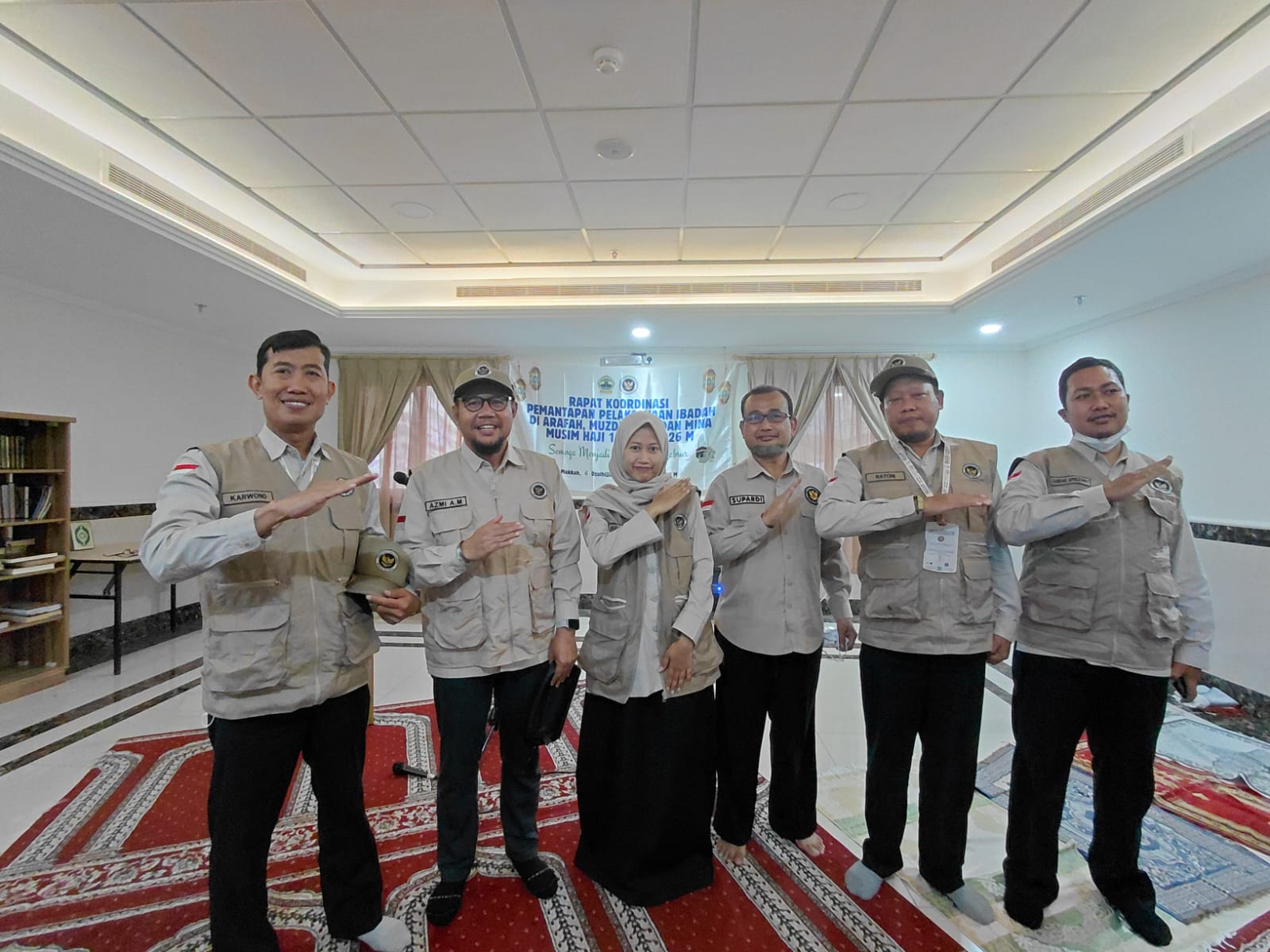
The 2026 Hajj organising year is not merely about moving millions of people from one country to the Holy Land. Behind the spiritual journey lies a large service system that works day and night to ensure every pilgrim can perform the fifth rite of Islam safely, comfortably, healthily, and with a meaningful worship experience.
This was stated by Azmi Asmuni Majid, Head of the General Affairs Division of the Brebes District Hajj Officials in Central Java, in an official release from the Holy City of Mecca, Saudi Arabia, to Media Indonesia on Saturday, 23 May 2026.
‘Hajj is not just about going to Mecca and Medina, but about a great mandate in serving the guests of Allah. 2026 is a crucial momentum for the Indonesian Hajj pilgrimage. The Government through the Indonesian Hajj Organising Committee (PPIH), together with district Hajj officers, health workers, group leaders, and Hajj guides, place pilgrim services as the top priority,’ Azmi Asmuni said.
Azmi said the services provided touch not only administrative aspects but also health, worship formation, psychological support, and comprehensive humanitarian services. For Brebes pilgrims in Cloter SOC 8, the mandate will be carried by a team of officers who will accompany the pilgrims’ journey from departure to return home.
‘Cloter SOC 8 is led by Group Leader Karwono. Meanwhile, the general service team for district Hajj officers is entrusted to Azmi Asmuni Majid; health services to Supardi; the Indonesian Hajj health team consists of Naely Sofia and Gandar Apriliyandi; and the worship guide duties are given to Ratoni. All these elements are an indivisible unit of service,’ Azmi Asmuni explained.
Azmi said the officers work toward one goal: to provide comprehensive service for the pilgrims. In 2026, Hajj services also focus on achieving three pillars of success: ritual success, an economic ecosystem, and success in civilisation and character.
These pillars are not mere slogans; they steer the architecture and philosophy of the Hajj implementation with expected broad impacts not only within the Holy Land but also after pilgrims return to their regions.
According to Azmi, ritual success is the primary objective. The first pillar means that all pilgrims can perform the entire sequence of rites per sharia guidelines correctly, orderly, safely, and achieve a mabrur Hajj. For some pilgrims, Hajj is a journey they have awaited for decades.
‘Some have saved for years, sold crop yields little by little, or queued for a very long time to answer Allah’s call. Worship guidance becomes a very important aspect. The Hajj worship guide Ratoni has a huge task to ensure all pilgrims understand how to perform the rites from pre-departure through all subsequent processes,’ Azmi explained.
He continued that from ihram intention, tawaf, sa’i, wuquf at Arafat, camping at Muzdalifah and Mina, throwing jamrah, to tahallul, all require good understanding. In the field, challenges are not light. Differences in education level, age, physical ability, and religious understanding create their own dynamics.
‘Not a few elderly pilgrims need repeated explanations. The officers are not only giving instructions but acting as spiritual companions. They must also ensure pilgrims do not get confused while performing rituals conducted collectively with millions of people from various countries. When millions of people move toward Arafah, Mina, or the Masjid al-Haram almost simultaneously, fatigue, crowding, and even disorientation can occur,’ he said.
Azmi said intensive guidance is therefore a main requirement. The SOC 8 group leader, Karwono, plays a central coordinating role in service delivery. The group leader is responsible for ensuring the entire system runs smoothly, from information sharing, scheduling, coordination with sector officers, to ensuring no pilgrims are left behind.
‘The group leader is also the main liaison between pilgrims and the Hajj organisers. The task is not simple. In the midst of busy service schedules, the group leader must ensure all elements move in one rhythm,’ Azmi added.
Azmi also admitted his own heavy responsibilities in pilgrims’ services. General services cover various daily pilgrim needs during the Hajj. From ensuring accommodation, meals, transport, administration, to accompanying pilgrims with urgent needs.
‘In practice, general officers are often the first point of contact when pilgrims face problems. Some pilgrims lose identity cards, some become separated from their group, and others require mobility assistance. All of these situations demand a quick response. General officers do not recognise work hours. They must be ready to serve at any time,’ he concluded. (H-2)
Elderly pilgrim Muhammad Firdaus Akhlan, who had been reported missing from his hotel, was found lifeless and is now being prayed for at the Masjid al-Haram. The Indonesian Hajj pilgrim from the JKG 27 group, Muhammad Firdaus Akhlan, 72, who had been reported missing, was to be prayed for at the Masjid al-Haram in Mecca.
Most cases involve using documents other than a Hajj visa to enter Saudi Arabia during the Hajj season.
Kemenhaj tightens tent arrangements in Arafat ahead of the Hajj peak.