
Hajj Officers, the Face of the State in the Holy Land
Every hajj season, millions of Muslims from around the world gather in the Holy Land with one shared purpose: to answer the call of Allah SWT. For many pilgrims, the journey is a long-awaited one that may only occur once in a lifetime.
Indonesia has unique characteristics. Pilgrims come from a vast territory, with diverse social, cultural, educational, age, and physical backgrounds. Amid this diversity, hajj management requires more than just a well-ordered system. It requires people who can ensure that the system truly works when faced with problems on the ground.
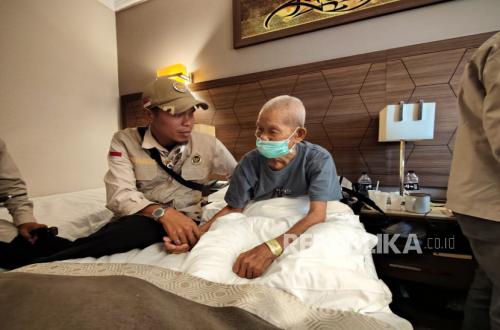
This is where the role of hajj officers becomes crucial. Officers are the closest people to pilgrims when they face difficulties. When a pilgrim gets lost, falls ill, loses belongings, does not understand procedures, or needs assistance, the officer is the first person they seek.
Thus, hajj officers are not merely technical implementers. They are the face of the state before the pilgrims. Policies formulated at the centre will ultimately be judged by the public through the services they experience directly.
For this reason, the improvements made by the Ministry of Hajj to the preparation and selection process for hajj officers deserve appreciation. What is interesting is not only the number of stages that prospective officers must pass, but also a shift in perspective: officers are not enough to be merely selected, but must be prepared.
There is a simple reason why earlier preparation deserves appreciation. Something complex requires time to prepare. Hajj officers will work in a different environment, face high mobility, deal with large numbers of pilgrims, and be required to make decisions in various situations. Therefore, readiness cannot be built in just a matter of days.
By starting preparation earlier, prospective officers gain more room to deepen their knowledge of hajj, understand their duties and responsibilities, and prepare themselves physically and mentally. The longer timeframe also makes the team-building process more mature.
This last point is often overlooked. Yet hajj service is not an individual task. An officer must be able to work with other officers, understand their respective positions, and move in the same rhythm. Bonding among personnel is important because good coordination often emerges from teams that know and trust one another.
Therefore, earlier preparation is not merely about adding training time. It is an effort to ensure that when they arrive in the Holy Land, officers do not come as a collection of individuals, but as a team ready to work together.
Indonesia is too large to be served with a single uniform approach. Pilgrims from different regions bring different habits, dialects, communication styles, and social characteristics. In such conditions, the decision to give greater room to the regions in the selection process for PPIH Saudi Arabia is a strategically meaningful step.
Until now, a selection process more centralised in Jakarta naturally made the process more distant from local contexts. By giving room to the regions, the selection process can be closer to the community while opening opportunities for officers who understand the character of pilgrims from their own regions to emerge.
Knowledge of regional languages or community communication patterns may seem like a simple matter. But on the ground, simple things often determine the quality of service.
Imagine an elderly pilgrim who is confused and panicking. When the person helping them speaks in a familiar language or dialect, trust grows more quickly. Communication barriers are reduced, and problems can be resolved more calmly.
Ultimately, decentralising the selection process does not mean lowering standards. On the contrary, national standards can be maintained while providing room for understanding local realities.
Source: jawawa.id (https://jawawa.id/newsitem/hajj-officers-the-face-of-the-state-in-the-holy-land-1787903538)
Originally published by Republika (https://analisis.republika.co.id/berita/tkgxsh368/petugas-haji-wajah-negara-di-tanah-suci), translated from Indonesian