
Hajj Officers Paid Rp1 Million a Day, Total Duty Lasts 70 Days
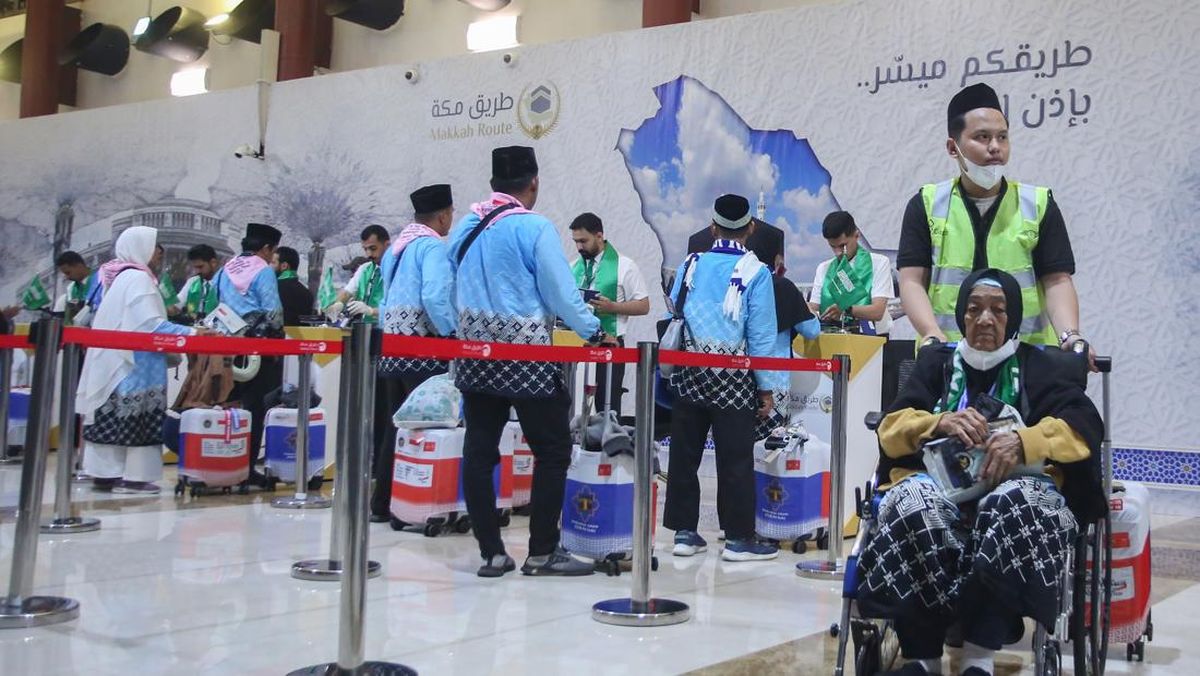
The Ministry of Hajj and Umrah has opened the selection process for Hajj Organising Officers (PPIH) for both the Kloter (flight group) and Saudi Arabia divisions for the 1448 H/2027 M pilgrimage season, with registration commencing on 25 August 2026 at 13.00 WIB.
Director General of Hajj and Umrah Organisation Development Puji Raharjo stated that the selection is conducted transparently and accountably to recruit officers who are professional, competent, have integrity, and are oriented towards serving pilgrims.
“Hajj officers are not merely carrying out administrative duties, but they are the face of the state’s service to pilgrims,” Puji said, as quoted from Antara on Sunday (23/8).
Prospective participants must be Indonesian citizens, Muslim, physically and mentally healthy, have integrity and a good track record, and not be undergoing criminal legal proceedings.
Participants must also possess valid population identification, active BPJS Kesehatan membership, and the ability to operate computers or devices.
The selection process involves document verification, Computer Assisted Test (CAT), Medical Check Up (MCU), and the announcement of participants who will undergo education and training. Registration closes on 31 August 2026 at 23.59 WIB, while the CAT is scheduled for 5 September 2026.
So how much are Hajj officers paid?
Deputy Minister of Hajj and Umrah Dahnil Anzar Simanjuntak previously disclosed the amount of salary received by Hajj officers. In a single day, a Hajj officer’s honorarium can reach Rp1 million.
“What the public should know is that Hajj officers are paid, they receive a salary. When a quota of 1,000 people is opened, applicants can reach 50,000. Why? Because in one day a Hajj officer can receive around Rp900,000 to Rp1 million. They serve for almost 70 days,” Dahnil said after the closing of the 2026 PPIH Training at Galaxy Field, Makoops Udara I, Halim Perdanakusuma, Jakarta, as quoted from Detik.
If that figure is multiplied by 70 days, the estimated income during the assignment period reaches Rp70 million. Although the nominal amount is attractive, Dahnil reminded that the salary is very much commensurate with their workload in the Holy Land.
“So indeed the work is exhausting, in my terms it can be 25 hours. They carry three mandates: the mandate from Allah SWT, the mandate from the Hajj pilgrims, and the mandate from the state. They must dedicate themselves fully to service,” Dahnil said.
Hajj officer salaries are regulated under Law Number 14 of 2025 concerning Amendments to Law Number 8 of 2019 on the Organisation of Hajj and Umrah.
In the amendments to Articles 21 and 22, it is affirmed that Hajj officers are appointed directly by the Minister and all operational costs are charged to the State Revenue and Expenditure Budget (APBN). The detailed technical provisions are further regulated through a Ministerial Regulation.
This means that Hajj officer salaries are part of the Hajj administration system borne by the state, not payments made directly by pilgrims to officers.
Breakdown of Income Components and Facilities for Hajj Officers
Hajj officers do not only receive a basic salary. Financing during the assignment period covers a number of components.
These components include: officer honorarium, operational allowances, accommodation, meals, and transportation during duty.
With the combined scheme of salary and the fulfilment of all living needs during the assignment, the total accumulated value of benefits received by Hajj officers is considered highly adequate to support professional service work.