
Hajj Ministry: Staff Must Prioritise Pilgrims’ Safety and Interests
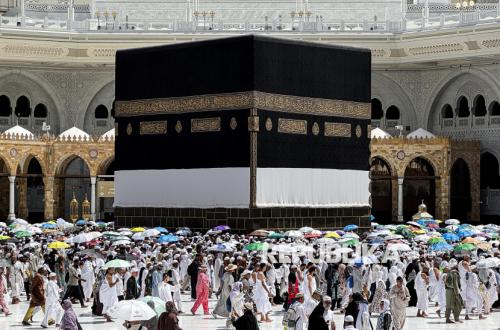
JAKARTA — Indonesia’s Ministry of Hajj and Umrah is finalising preparations for the 1448 H/2027 Hajj through training for the Saudi Arabia Hajj Organising Committee (PPIH). The online training runs from Saturday, 21 November 2026, to Friday, 27 November 2026.
In a presentation on Sunday, 22 November, Afief Mundzir, the ministry’s Director of Regular Hajj Pilgrimage Guidance, underscored a service approach that is adaptive, humane and centred on the preservation of life (hifz al-nafs). He said pilgrim services now require measured crowd management, reflecting the demographic realities on the ground.
Indonesia’s Hajj operations serve more than 200,000 pilgrims across 527 groups. Decades-long waiting times mean that 20 to 30 per cent are aged over 65 — around 45,000 to 65,000 people — while 60 to 75 per cent are classified as medically high-risk, including due to conditions such as hypertension and diabetes.
Most pilgrims have primary-level education, come from rural areas, are travelling abroad for the first time and rely heavily on staff.
“Our services now require an adaptive rather than rigidly textual approach, to achieve the Three Successes of Hajj: successful rites, a successful economic ecosystem and civilisational success, as mandated by Law No. 14/2025. Applying religious concessions (rukhsah), such as the Mabit Murur, Tanazul and Badal arrangements, does not diminish the quality of worship. Rather, it is the highest expression of obedience to Islamic law when it comes to protecting the lives of hundreds of thousands of pilgrims,” Afief said.
Success in the rites means ensuring that worship is valid under Islamic law while prioritising the preservation of life. Civilisational success is reflected in pilgrims who are orderly, demonstrate good character, comply with the host country’s rules and help one another (ta’awun).
The National Hajj Rituals Curriculum Standards (SKMHN) have also been updated, including changes to terminology to make coordination and communication easier. For example, “performing the Arba’in prayers in Medina” has been changed to “performing the five daily prayers at the Prophet’s Mosque”, so older and high-risk pilgrims do not push themselves to complete 40 prayers at the cost of chronic physical exhaustion.
The term “Mina Jadid” has been replaced by “Mina Zones 3, 4 and 5” to align with the government’s official zoning and prevent confusion. The Ministry of Hajj and Umrah has also prepared mitigation scenarios for the peak Hajj period, from the pre-Armuzna phase through to Mina.
Before Armuzna, pilgrims will be advised to limit voluntary Umrah so they do not exhaust their stamina. At Arafat, they will be supported in performing the standing ritual (wukuf) at the prescribed time, while those who are seriously ill or have a valid religious exemption will be offered proxy Hajj (badal haji).
At Muzdalifah, priority pilgrims — older people, those at high medical risk and people with disabilities — will perform mabit murur by remaining on buses as they pass through, without getting off, to prevent congestion and extreme fatigue. In Mina, pilgrims unable to carry out the rites themselves will be offered Tanazul, allowing them to rest at their hotels without invalidating their Hajj, as well as proxy stoning of the Jamarat and carefully managed arrangements for an early or later departure (Nafar Awal or Nafar Tsani).
“The staff’s main priority is Khidmatul Hujjaj, serving the pilgrims. Looking after the community’s welfare has immense religious value and takes precedence over perfecting one’s personal religious observances. Do not let doubts about the perfection of your own rituals obstruct emergency duties to save lives and guide older pilgrims on the ground,” Afief said.
Source: jawawa.id (https://jawawa.id/newsitem/hajj-ministry-staff-must-prioritise-pilgrims-safety-and-interests-1795496020)
Originally published by Republika (https://khazanah.republika.co.id/berita/toznms502/kemenhaj-matangkan-persiapan-petugas-haji-wajib-utamakan-keselamatan-dan-kepentingan-jamaah), translated from Indonesian