
Hajj Funds Reach Rp182 Trillion: A Sacred Trust, Who Is Fit to Safeguard It?
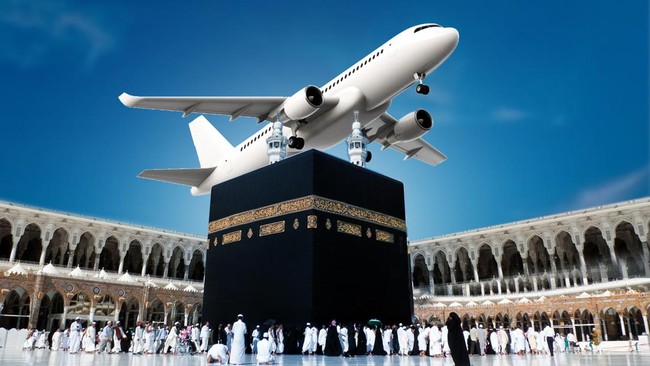
For Indonesian Muslims, the Hajj is not merely a religious journey but one of the highest spiritual achievements. Consequently, the management of Hajj funds demands an extremely high level of prudence, accountability, and public trust.
Many Muslims in Indonesia save for years, even decades, to afford the journey to the Holy Land. Many also endure waiting periods of tens of years due to high demand. For the community, Hajj funds are not just financial savings, but a sacred trust prepared to fulfil the fifth pillar of Islam.
The independence of the Hajj management institution is therefore a fundamental foundation to ensure that every investment decision and asset management is based solely on the interests of the pilgrims, rather than being influenced by political, fiscal, or specific group interests. The more independent the management institution, the stronger the public’s confidence that the trust they have placed will be preserved until it is time to worship in the Holy Land.
In Indonesia, Hajj financial management is carried out by the Hajj Financial Management Agency (BPKH), an independent institution established under Law Number 3 Achieved 2014. BPKH is tasked with managing Hajj deposit funds, developing their benefits through Sharia-compliant investments, and ensuring that the funds are safe, optimal, and capable of supporting the Hajj pilgrimage.
By managing the funds of millions of prospective pilgrims waiting for departure over many years, BPKH holds a massive responsibility to maintain public trust through professional, transparent, and independent governance.
How Large is the Hajj Management Fund?
The total Hajj funds managed by BPKH have reached Rp181.73 trillion as of May 2026. This value is larger than the regional budgets (APBD) of most provinces in Indonesia and continues to grow with new registrants. In the first five months of 2026 alone, 203,452 people registered for Hajj, reaching 118.61% of the target set for the same period.
With the total funds reaching hundreds of trillions of rupiah and being entrusted for decades, who is most fit to manage them? Indonesia is not only the country with the largest number of Hajj pilgrims in the world, but also one of the largest managers of Hajj funds. Currently, there are an estimated 5 million prospective pilgrims on the waiting list. In some regions, the waiting period has reached 20 to 40 years.
To respond to the long Hajj queues, the government and Parliament have agreed on reforms in the national quota distribution scheme, establishing a more uniform waiting period of approximately 26 years across all provinces. This policy is based on changes in the quota distribution method, which now refers to the proportion of the number of pilgrims on the waiting list in each region.
Throughout 2025, new Hajj registrants reached 488,419 people, exceeding the annual target of 422,000. As new registrants continue to arrive, new funds continue to flow in. BPKH recorded managed funds of Rp171.6 trillion in 2024, increasing to Rp180.72 trillion in 2025, and rising again to Rp181.73 trillion as of May 2026. The longer the queue, the larger the fund that must be protected.
Hajj Funds Must Be Managed According to Mandate and Benefit
In Indonesia, Hajj costs are calculated through a combination of pilgrim deposits and the benefits derived from the management of Hajj funds. Prospective pilgrims first open a Hajj savings account and make an initial deposit to obtain a departure portion number. During the waiting period, which can last decades, these funds are managed by BPKH through Sharia-compliant investment instruments to generate benefits.
When it is time for departure, the government sets the total Hajj Organising Cost (BPIH) as the real cost of the pilgrimage, while pilgrims only pay the Hajj Travel Cost (Bipih), which is their portion. The difference between BPIH and Bipih is covered by the benefits from the management of Hajj funds, so the cost paid by pilgrims is lighter than the actual cost of the pilgrimage.
This is why the relationship with Hajj funds lasts so long. For example, a pilgrim who registered in 2023 with an initial deposit of Rp25 million, facing a 20-year wait, will have those funds managed long-term before departure. Conversely, a pilgrim departing this year benefits directly; while they might have expected to pay around Rp28 million, they ultimately only paid approximately Rp25 million.
Hajj funds are not funds that sit idle for a few months. They are entrusted for decades and must be available when the owner is called to the Holy Land. Therefore, the funds must not only be safe but must also grow and be managed with extreme care.
Benefits that Stabilise Hajj Costs
The scale of the managed funds produces benefits felt directly by pilgrims. This year, the Hajj Organising Cost (BPIH) was set at Rp87.4 million per person. However, pilgrims only paid the Hajj Travel Cost (Bipih) of Rp54.19 million. The remainder, approximately Rp33.21 million or 38% of the total cost, comes from the benefits of Hajj fund management.
Hajj funds also grow and help mitigate the increase in costs paid by pilgrims. Throughout 2025, BPKH recorded benefits of Rp12.09 trillion, with an investment return of 6.86%. These benefits are used to: support Hajj costs, increase the virtual account balance of pilgrims, and provide living costs.
Source: jawawa.id (https://jawawa.id/newsitem/hajj-funds-reach-rp182-trillion-a-sacred-trust-who-is-fit-to-safeguard-it-1782798744)
Originally published by CNBC Indonesia (https://www.cnbcindonesia.com/research/20260627060401-128-746135/dana-haji-rp182-t-dititipkan-umat-siapa-yang-pantas-menjaganya), translated from Indonesian