
Hajj Fund Audit Controversy: How the Funds are Actually Managed
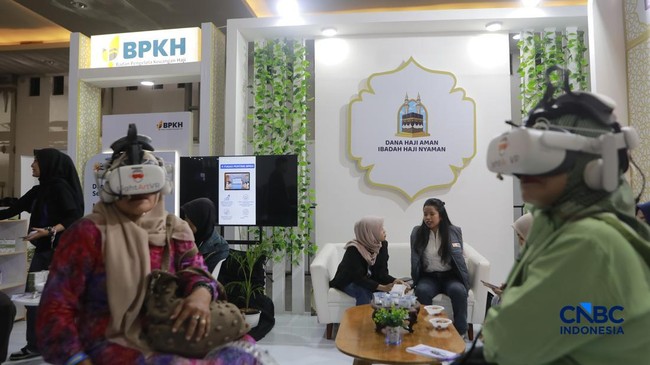
The Hajj Financial Management Agency (BPKH) has emphasised that the Hajj funds managed by the government are not merely stored, but are invested according to Sharia principles to generate benefits.
BPKH ensures that the managed Hajj funds are invested in a safe, prudent, liquid, and Sharia-compliant manner through several instruments, including placements in Sharia banks, investments in Sharia-compliant instruments, State Sharia Securities (SBSN/Sukuk), and other Sharia investment instruments in accordance with regulations.
The Head of the BPKH Executive Body, Fadlul Imanslag, stated that in the current market conditions, fixed-income instruments with relatively low risk, such as State Sharia Securities (SBSN), are the preferred choice for managing Hajj funds.
“Looking at the current economy, the safest option is actually risk-free investment, specifically State Securities. Since we must adhere to Sharia principles, we use SBSN,” Fadlul told CNBC Indonesia.
In terms of proportion, 18.45% is maintained as liquidity through deposits in 30 Sharia banks in Indonesia, while 81.55% is invested in Sukuk, direct investments, and other instruments. This is because the management of Hajj funds considers not only potential profits but also safety by protecting funds from unnecessary risks. Furthermore, the funds are kept liquid to ensure availability when needed and are managed productively to optimise benefits.
BPKH’s strategy and disciplined management of Hajj funds have even proven resilient amidst global economic volatility. According to Fadlul, the available market yields have become attractive for the fund managers.
Fadlul noted that BPKH’s investment management strategy in volatile market conditions can be viewed from a contrarian perspective, as the agency possesses significant bargaining power. When market participants tend to be cautious due to volatility, such conditions can create opportunities to secure instruments with more attractive yields.
“Speaking as a contrarian, time deposits can currently exceed 6%,” said Fadlul. For fund managers with long-term investment horizons and measurable liquidity needs, these conditions provide space to place funds into instruments with more certain income characteristics. The goal is not merely to chase the highest profit, but to optimise benefits while maintaining the security and availability of funds for pilgrims.
The pillars of Hajj fund governance involve not only fund placement but, most importantly, oversight. The management of Hajj funds is subject to both internal and external monitoring mechanisms, involving multi-layered audits.
Firstly, internal oversight is conducted through internal audits and a supervisory board that monitors the governance and internal controls of BPKH.
Meanwhile, external oversight is conducted by Commission VIII of the House of Representatives (DPR RI), which monitors regulatory policy, the interests of pilgrims, and accountability. Additionally, the Audit Board of Indonesia (BPK) routinely conducts examinations of BPKH’s financial management and accountability within its authority.
Since its establishment in 2017, BPKH has consistently received an Unqualified Opinion (WTP) on its financial reports. This remains part of BPKH’s commitment to maintaining accountability and governance in Hajj fund management.
In addition to audits, information regarding financial reports and Hajj fund management can be accessed by the public through the BPKH App, the BPKH WhatsApp contact centre, and the official website.
Source: jawawa.id (https://jawawa.id/newsitem/hajj-fund-audit-controversy-how-the-funds-are-actually-managed-1791273265)
Originally published by CNBC Indonesia (https://www.cnbcindonesia.com/syariah/20261006121047-29-773721/heboh-audit-dana-haji-begini-ternyata-cara-pengelolaannya), translated from Indonesian