
Hajj Flights, Hotels and Catering in Focus as Minister Calls for Transparent Procurement
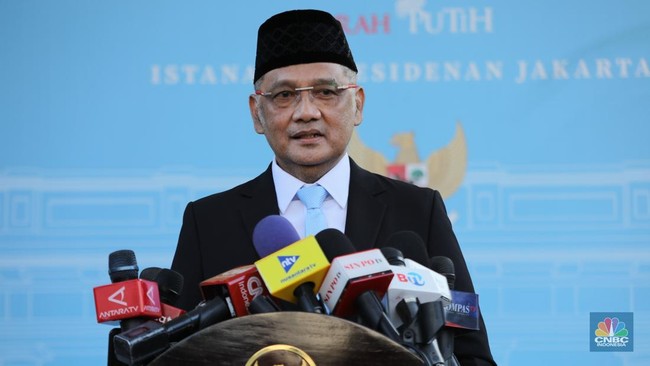
Jakarta, CNBC Indonesia — Procurement of air tickets, hotel accommodation, catering and transport for hajj pilgrims is among the areas highlighted by Hajj and Umrah Minister Irfan Yusuf as part of efforts to build a more efficient and sustainable hajj ecosystem.
Irfan said strategic partnerships with various parties should be directed towards delivering tangible benefits for pilgrims, particularly through procurement mechanisms that are transparent and competitive, and prioritise service quality and cost efficiency.
“We must build economic partnerships that create real value for pilgrims in the procurement of flights, accommodation, catering and transport. We must establish mechanisms that are transparent and competitive, and focus on service quality and cost efficiency,” Irfan said in a presentation at the 2026 Indonesia Sharia Economic Festival (ISEF).
According to Irfan, organising the hajj involves many stakeholders. Strategic partnerships should therefore not be viewed merely as administrative relationships or commercial transactions, but as an important part of global hajj governance.
Co-operation between governments and institutions also needs to be strengthened to align service standards, improve operational co-ordination, facilitate data exchange and strengthen risk management.
For Indonesia, Irfan said, such partnerships could help strengthen institutional capacity, widen access to quality investment opportunities and generate economic benefits that can be accounted for.
Irfan also emphasised that the sustainability of hajj financing must be considered from two perspectives: controlling the costs borne by pilgrims and ensuring that hajj funds are managed to generate investment income sustainably.
In his view, a financing system focused solely on cutting expenditure, without strengthening the capacity to generate returns from assets, risks being insufficiently resilient to rising costs, exchange-rate movements, inflation and growing demand for pilgrim services.
The cost of organising the hajj must therefore remain reasonable, efficient, transparent and fair. At the same time, hajj funds must be managed to generate sustainable returns while taking account of risk and liquidity requirements.
Irfan said investment benefits should also be distributed with consideration for pilgrims’ financial capacity, while safeguarding the interests of prospective pilgrims in the future.
Digitalisation must deliver tangible benefits
Alongside procurement and investment, Irfan highlighted the importance of digitalisation in improving the quality of hajj services. He said digital transformation must involve more than converting manual processes into electronic applications.
“Digitalisation must not simply turn manual processes into electronic applications. Digital transformation must fundamentally improve how we manage information, control risk, make decisions and account for the use of public resources,” he said.
Digitalisation should improve information management, risk control, decision-making and accountability for the use of public resources.
Irfan said its success should be measured by tangible outcomes, such as reducing unnecessary expenditure, speeding up services, improving the accuracy of decisions, preventing irregularities and strengthening public trust.
He also warned that co-ordination across institutions must be accompanied by a clear division of responsibilities, covering policy-setting, implementation, fund management, oversight and accountability for results.
Ultimately, Irfan said, all these efforts must ensure that today’s pilgrims receive quality services without compromising future generations’ ability to undertake the hajj.
Source: jawawa.id (https://jawawa.id/newsitem/hajj-flights-hotels-and-catering-in-focus-as-minister-calls-for-transparent-procurement-1792043442)
Originally published by CNBC Indonesia (https://www.cnbcindonesia.com/news/20261015120218-4-776429/tiket-hotel-katering-haji-disorot-menhaj-minta-pengadaan-transparan), translated from Indonesian