
Hajj Financing Reform 2027: Affirming Istitha'ah, Safeguarding the Trust of the People's Funds
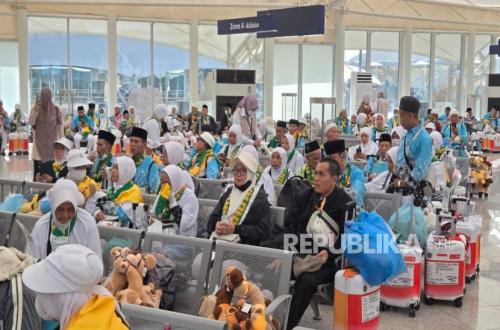
Every time the government and Commission VIII of the House of Representatives (DPR RI) discuss the Cost of Hajj Pilgrimage (BPIH), public attention almost always focuses on one question: how much must prospective pilgrims pay? However, the more fundamental issue is not the amount of the cost, but rather how the financing system is structured to meet the principles of justice, sustainability, and compliance with sharia provisions.
For the 2027 Hajj pilgrimage, the government is proposing a BPIH of approximately Rp 107 million per pilgrim. Of this amount, around Rp 42.94 million is paid directly by the prospective pilgrim through the Hajj Travel Cost (Bipih), while approximately Rp 64.40 million comes from the benefit value generated by the management of Hajj funds by the Hajj Fund Management Agency (BPKH). This means that more than half of the Hajj operational costs are supported by the investment returns of the Hajj funds.
This scheme indeed provides tangible benefits for prospective pilgrims as it reduces the amount they must pay. However, behind these benefits, there are a number of questions that deserve collective evaluation. Does the use of the benefit value in an increasingly large proportion still reflect the principle of istitha’ah (capability), which is a mandatory requirement for the Hajj pilgrimage? Can this type of subsidy pattern be maintained in the long term? And has the use of these funds fully met the principle of justice for the millions of prospective pilgrims still on the waiting list?
Allah SWT has affirmed in His decree: “…And Hajj to the House is a duty that mankind owes to Allah, for those who are able to undertake the journey…” (QS. Ali Imran [3]:97). In both classical and contemporary jurisprudence, scholars explain that financial capability (istitha’ah maliyyah) is one of the main conditions for the obligation of Hajj. Imam An-Nawawi in Al-Majmu’ explains that a person is only obliged to perform Hajj if they have sufficient provisions for themselves and the family they leave behind. Ibn Qudamah in Al-Mughni also emphasises that financial capability is an inseparable condition of the Hajj obligation. This means that the Hajj pilgrimage was originally designed as an act of worship for those who truly possess economic capability.
This is where the discussion arises. When a large portion of the travel costs must be covered by the investment returns of collective funds, the question emerges whether the concept of individual financial capability is still fully met or has shifted into a system of collective subsidy.
Source: jawawa.id (https://jawawa.id/newsitem/hajj-financing-reform-2027-affirming-istithaah-safeguarding-the-trust-of-the-peoples-funds-1785210750)
Originally published by Republika (https://analisis.republika.co.id/berita/tiv84w366/reformasi-pembiayaan-haji-2027-meneguhkan-istithaah-menjaga-amanah-dana-umat), translated from Indonesian