
Hajj Costs Fall, but Who Is Paying?
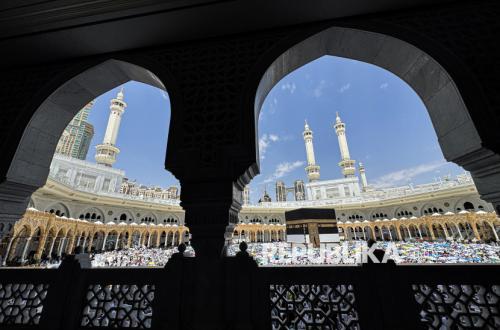
On Wednesday night (7 October 2026), the gavel finally came down. The government and the House of Representatives Commission VIII working group agreed on the cost of the 2027 Hajj, and news quickly spread through pilgrims’ group chats: the cost of the Hajj is falling. The Ministry of Hajj and Umrah said pilgrims would need to prepare around Rp 3.4 million less for their final payment next year than they did last year.
This is, of course, welcome news. Certainty has come in good time, ahead of the deadline for contracts with Saudi parties, and the state is stepping in to cover part of the cost. But precisely because this is good news, it is worth looking at it clearly. Hajj costs are falling — but who is paying?
A lower payment, because it is being supported
On closer inspection, it is not the cost of the Hajj itself that has fallen. The cost of organising the pilgrimage per person has actually risen, from around Rp 87 million last year to about Rp 98 million, amid turmoil in the Middle East and a higher rupiah exchange-rate assumption. The share paid by pilgrims is also almost the same as last year. Three forms of support make the final payment feel lighter: a government subsidy of around Rp 3.2 million per pilgrim; balances in virtual accounts, which are in fact generated from the management of the pilgrims’ own funds; and a growing share of returns from managing Hajj funds.
It is like shopping that feels cheaper, not because the price of the goods has fallen, but because someone else is helping to pay at the till. Last year, returns earned by the Hajj Financial Management Agency (BPKH) covered around a third of the cost for each pilgrim. Next year, that share will approach half. Add the amounts distributed to the virtual accounts of millions of people waiting to go, and almost all of the Hajj fund returns earned over a year will have been used. The reserve available for subsequent years will be very thin.
That is where the problem lies. Those returns come from the initial deposits of around 5.5 million pilgrims who are still waiting. Over the past two seasons, the share drawn from those funds had gradually been reduced, but Wednesday night’s decision reverses that trend. Pilgrims departing next year will benefit, but some of that assistance is being borrowed from people who do not know when their turn will come.
State subsidy needs scrutiny
The state’s contribution towards Hajj costs deserves appreciation. This is what many people have long called for: the shortfall should not fall solely on the funds of pilgrims who are waiting. It has also been proposed that the government take responsibility for any cost increases if aviation fuel prices surge. But this positive step needs a firm foundation so it does not remain a policy for just one season.
There are at least three points to consider. First, the legal basis and budget allocation should be explained to the public. Second, the subsidy is distributed equally to all pilgrims, despite differences in their financial circumstances. State assistance would be fairer if it prioritised those with fewer means. Third, if the subsidy does not continue, the final payment in the following year will jump, leaving pilgrims to feel that costs have ‘risen’ when in fact the support has simply disappeared. Any commitment to cover increases in aviation fuel costs also needs clear limits, and it must be made explicit that these will not be paid from returns on pilgrims’ funds.
The Minister of Hajj and Umrah has stressed that every rupiah of Hajj funds is managed transparently. That promise deserves to be followed up, respectfully. The agreed cost is almost Rp 9 million lower than the government’s initial proposal.
Which budget items have been cut, and will services be affected, particularly in Armuzna, an area that has drawn the most complaints in the past?
The talk of a forensic audit that was prominent last week was also absent from the meeting’s conclusions. Yet the Audit Board of Indonesia (BPK) still records thousands of pilgrims who departed in the 2025 season when they were not yet due to do so, with more than Rp 160 billion in costs charged as a result. Clear figures are not about finding fault; they are about preserving trust.