
Hajj and Umrah Ministry improves governance and services
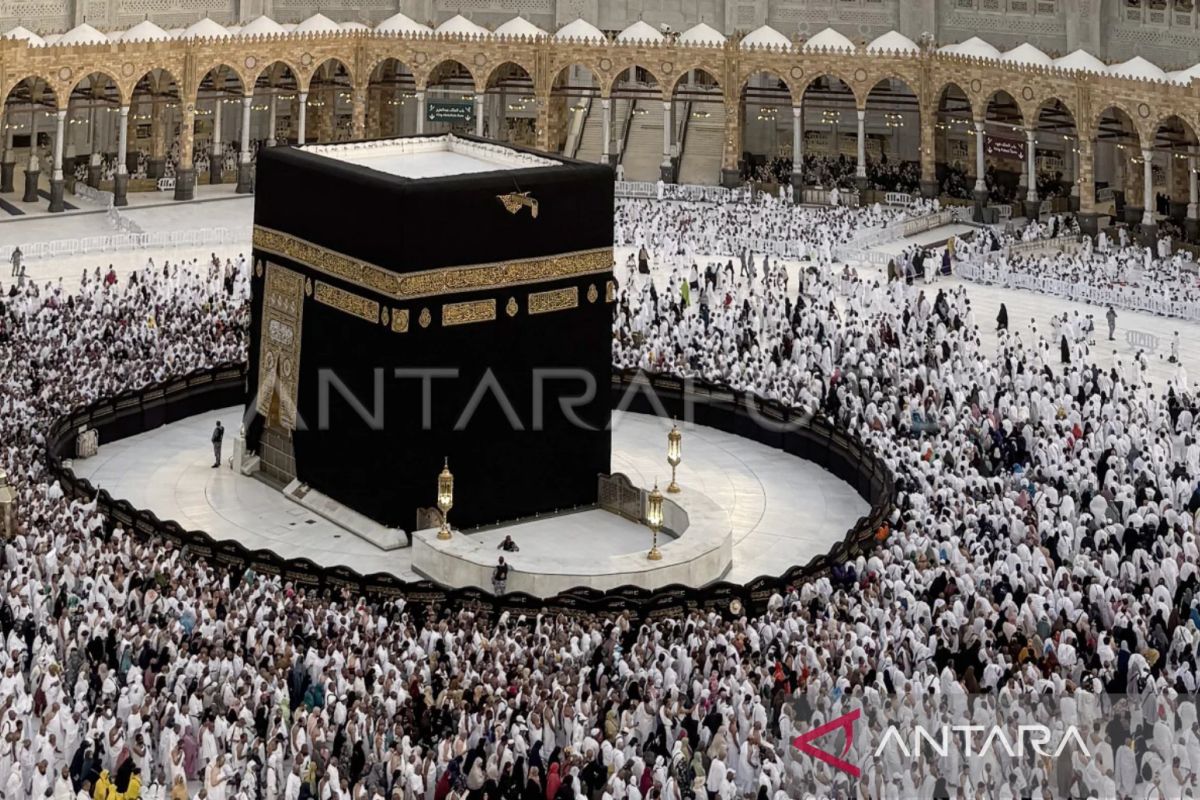
Jakarta (ANTARA) — The Ministry of Hajj and Umrah (Kemenhaj) is continuing to improve governance and strengthen services for prospective Hajj and Umrah pilgrims during the first two years of President Prabowo Subianto and Vice-President Gibran Rakabuming Raka’s administration.
“The transformation of Hajj and Umrah services must not stop at institutional changes. What matters most is that pilgrims feel the impact directly, through easier access to services, certainty in the process, affordable costs and protection while performing their pilgrimage,” Minister of Hajj Mochamad Irfan Yusuf said in Jakarta on Tuesday.
A key milestone in the changes was the enactment of Law No. 14/2025, the third amendment to Law No. 8/2019 on the organisation of Hajj and Umrah. The regulation provides the basis for institutional changes and the restructuring of Hajj and Umrah services through the establishment of Kemenhaj.
“Hajj is a major responsibility. Every policy must therefore put pilgrims’ interests first. We want Hajj services to be better organised, more transparent and of higher quality,” the minister said.
To make access to the pilgrimage more equitable, the government has adjusted the distribution of provincial quotas to take waiting times into account. Figures in an infographic on the transformation show that waiting times, which previously could reach 49 years, are intended to become more evenly distributed, at around 26 years.
The government says fairer quota distribution must go hand in hand with better services. The opportunity to depart is not enough if pilgrims do not receive adequate guidance and protection.
On financing, the government is seeking efficiencies through multi-year service contracts. The scheme is intended to strengthen planning, make procurement more effective and allow services to be prepared earlier.
Hajj costs have fallen by Rp9.4 million compared with the previous period. For the 2027 Hajj, government assistance of Rp3.2 million per participant is also listed.
The transformation also covers the development of the Hajj and Umrah economic ecosystem. The government is developing a dedicated work unit to focus on the sector’s economic potential, including opportunities for micro, small and medium-sized enterprises (MSMEs) to supply pilgrims’ needs.
With proper management, Hajj can be more than a religious service: it can also create business opportunities and extend economic benefits to the wider public.
The government has also initiated plans to build a Hajj village and develop hotel-based embarkation facilities, including in Yogyakarta and Dhoho.
For human resources, the government is strengthening the education and training of Hajj officials through a 30-day programme. Topics include physical and mental preparation, service skills, teamwork, basic knowledge, Hajj jurisprudence and Arabic.
Oversight is being strengthened through a task force to prevent and enforce the law against violations in Hajj and Umrah services, involving Kemenhaj, the police and the prosecutors’ office. The government has also established a 24-hour Hajj and Umrah complaints hotline at 0811 888 5888 and stepped up monitoring of Umrah activities at airports.
Kemenhaj has pledged to take action against Umrah Travel Organisers (PPIU), Special Hajj Organisers (PIHK) and Hajj and Umrah Guidance Groups (KBIHU) that breach the rules. These efforts are intended both to protect the public and to enforce service standards.
Source: jawawa.id (https://jawawa.id/newsitem/hajj-and-umrah-ministry-improves-governance-and-services-1792500775)
Originally published by Antara (Indonesian) (https://www.antaranews.com/berita/5799777/kemenhaj-benahi-tata-kelola-dan-layanan-haji-dan-umrah), translated from Indonesian