
Haji Isam Group's CPO Stocks Surge: Examining Performance Prospects and Valuations
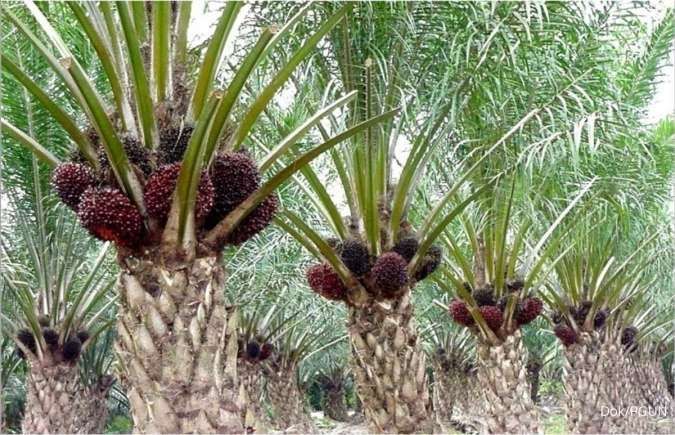
The performance of crude palm oil (CPO) issuers within the Haji Isam group has come under intense scrutiny due to rapid share price movements. Shares of PT Jhonlin Agro Raya Tbk (JARR) have soared by 76.05% over the past month, while its subsidiary, PT Pradiksi Gunatama Tbk (PGUN), recorded an 18.24% increase in the same period.
The volatility of JARR’s share price was significant enough to trigger a trading suspension by the Indonesia Stock Exchange (IDX) last week. JARR maintains strong exposure to the biodiesel, or Fatty Acid Methyl Ester (FAME), business. Consequently, the implementation of the B50 mandate is expected to increase facility utilisation, CPO absorption volumes, and the company’s downstream business prospects.
However, the substantial rise in JARR’s share price reflects a combination of sentiments regarding B50 prospects, CPO price movements, expectations of expansion within the Haji Isam Group, as well as technical factors and trading momentum. Meanwhile, PGUN is primarily driven by expectations of increased domestic CPO demand resulting from the B50 policy.
“Although fundamentally PGUN’s performance remains heavily influenced by plantation productivity, CPO prices, production volumes, and cost efficiency,” an industry source told Kontan on Thursday.
Hendra Wardana, a capital market practitioner and Founder of Republik Investor, noted that the recent surge in JARR and PGUN shares is not solely due to B50 sentiment, even though that policy is a critical fundamental catalyst. “The market is also anticipating volume growth, increased facility utilisation, sustained strong CPO prices, and JARR’s position within the Jhonlin palm oil business ecosystem,” he stated.
Due to the rapid price increase and subsequent suspensions, much of this growth expectation is already reflected in the current share prices. “This means JARR’s challenge is no longer just finding a catalyst, but proving that profit growth can catch up with the rising share price,” Wardana added.
For the prospects of JARR through late 202cap 2026 and 2027, the primary catalysts are the sustained implementation of B50, increased biodiesel facility utilisation, and the company’s ability to secure CPO supplies at competitive costs. An increase in internal CPO contributions could also help reduce reliance on external raw material purchases.
However, an increase in FAME sales volume does not automatically translate to proportional profit growth. Margins remain influenced by CPO feedstock prices, biodiesel pricing formulas, allocation volumes, plant utilisation, operational costs, and working capital requirements. “Thus, B50 is a structural catalyst for JARR, but the company’s ability to convert increased demand into profit growth remains a vital factor,” he noted.
While the B50 policy provides domestic CPO demand support, PGUN faces risks related to crop productivity, weather conditions, maintenance costs, and replanting efforts. If CPO prices remain high, PGUN could benefit in terms of revenue and margins. Conversely, if CPO prices rise too sharply, it could increase raw material costs and working capital needs for JARR.
Compared to other CPO peers, JARR and PGUN possess different characteristics. JARR is better viewed as an issuer with exposure to downstreaming and biodiesel themes, making it more sensitive to government energy policies and FAME distribution volumes. In contrast, PGUN reflects exposure to the upstream plantation business, making its performance more sensitive to CPO prices, plantation productivity, yields, weather, and production costs.
Regarding the Agrinas-Duta Palma issue, the risks must be separated into operational impacts and sentiment impacts. If the issue pertains only to historical transactions and does not disrupt JARR’s raw material supply or production activities, the direct impact on fundamentals may be limited. “If material legal consequences arise, only then could the impact on investor perception and valuation become more significant,” Wardana remarked.
Other headwinds for their performance include potential CPO price corrections, cost pressures, weather conditions, and capital expenditure/working capital needs. Specifically for JARR, there is negative sentiment regarding legal risks related to the Agrinas-Duta Palma matter.
Wardana believes the B50 policy provides a larger, structural market for FAME, potentially boosting JARR’s sales volumes and plant utilisation. PGUN’s benefit is more indirect, stemming from the increased need for CPO as a biodiesel feedstock. While the Jhonlin ecosystem provides a captive market for PGUN, the concentration of sales to group entities remains a risk. Furthermore, the rapid rise in JARR’s share price compared to its fundamentals suggests the market is ‘buying 2027 expectations today.’ If production and profit realisations fail to meet these expectations, the risk of a price correction increases significantly.