
Hajar Aswad Said to Have Fallen from Heaven, Here's the Scientific Explanation
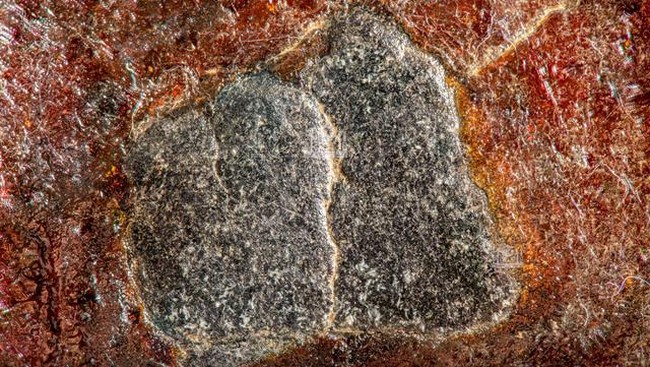
The Hajar Aswad has existed since the time of Prophet Ibrahim and plays an important role in the history of the Islamic world. Religiously, this black stone embedded in the corner of the Kaaba is believed by Muslims to have originated from heaven. However, what if the origins of this sacred stone are examined from a scientific perspective? Scientists around the world have long conducted in-depth studies to uncover the category and origins of the rock. A number of experts are of the opinion that the Hajar Aswad falls into the category of a meteor or meteorite. This conclusion did not emerge without reason, but rather attempts to align with the religious narrative that the stone ‘fell from the sky’ or heaven. Moreover, historical facts indicate traces of meteorites have been found not far from the Kaaba area. In a study titled ‘New Light on the Origin of the Holy Black Stone of the Ka’ba’ (1980), E. Thomsen revealed an interesting fact. He referred to the findings of a researcher named Philby in the Al-Hadidah region in 1932. Philby discovered a meteor impact crater later known as the Wabar crater. The crater was reported to have a diameter of more than 100 metres, with rock fragments scattered around the crater and the surrounding desert area. Scientifically, the rock fragments at the Wabar crater were formed from the fusion of sand and silica mixed with nickel elements. Thomsen explained that this chemical combination created an inner layer that is white, while the outer part is encased in a black shell. The deep black colour on the outer part of the rock comes from the nickel component produced by the explosion of nickel and iron in outer space. Interestingly, Thomsen assessed that the physical characteristics of the Wabar meteorite fragments are very similar to the depiction of the Hajar Aswad. In Islamic history, the Hajar Aswad was originally bright white but gradually turned black because it absorbed the sins of mankind. From a scientific perspective, the white glow that was once visible on the Hajar Aswad possibly originated from exposure to the core or inner part of the rock’s chemical mixture. This white inner layer would not last long against environmental exposure, so over time its position shifted downwards, leaving the dominant black outer layer. The white spots still visible on the Hajar Aswad today are analysed as remnants of glass and sandstone that crystallised due to high-temperature impact. ‘The meteorite is possibly the same rock as the Hajar Aswad,’ Thomsen wrote in his study report. Other research has also attempted to trace the age of the rock. Analysis results show that the geological age of this rock matches the observation timeframe of ancient Arab communities, and there is a possibility the rock was brought to Makkah via an ancient trade route through Oman. Nevertheless, the theory that the Hajar Aswad is a meteorite remains a subject of debate and has weaknesses in the eyes of some scientists. Criticism of this theory arises because the general characteristics of meteor rocks usually do not float in water, do not easily shatter into small fragments, and have different resistance to natural erosion processes when compared to the original physical characteristics of the Hajar Aswad.