
Haier Biomedical Showcases Digital Blood Bank Management Platform at ISBT Congress 2026
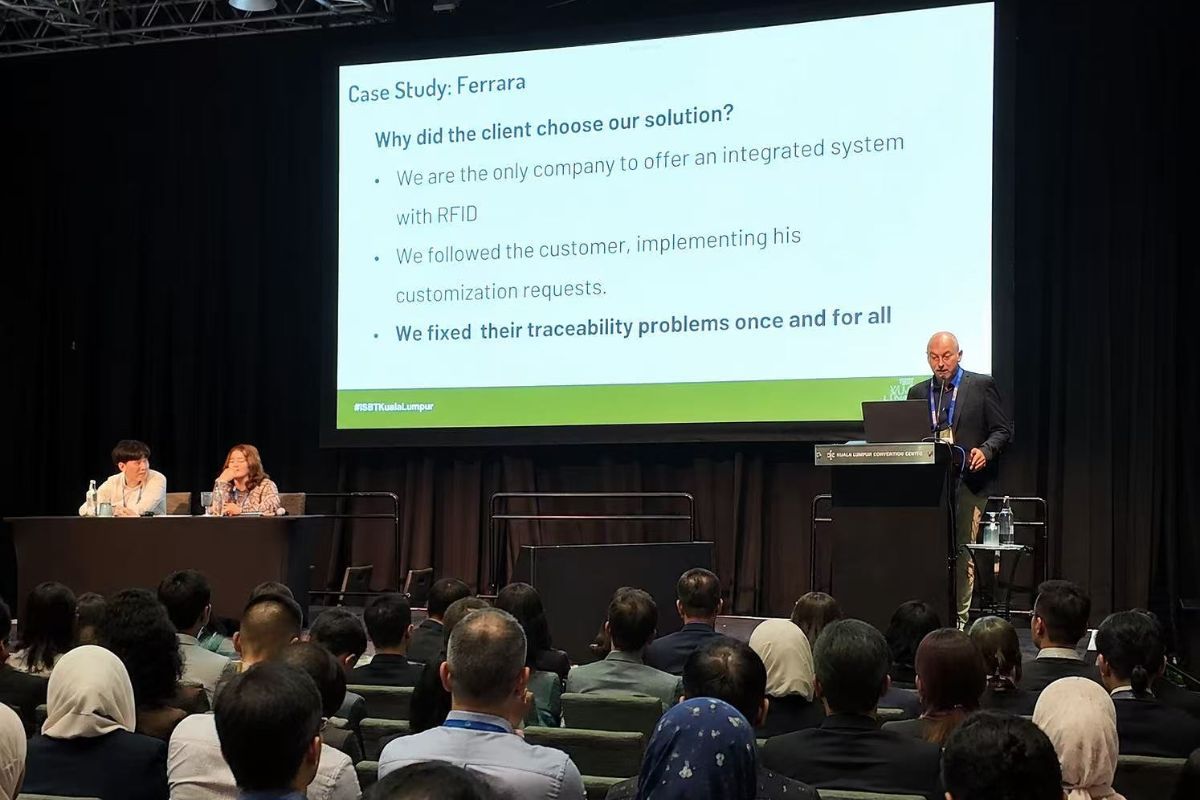
Haier Biomedical has showcased its integrated digital solutions for blood bank management at the ISBT Congress 2026 in Kuala Lumpur, reinforcing its transformation from a product manufacturer to a comprehensive solutions partner. The company presented a portfolio that connects every stage of the blood management process, from collection and component processing to low-temperature storage, intelligent transport, and clinical application.
Among the key products displayed were the EU MDR-certified Plasma Apheresis System, the Automatic Blood Component Separator, the Plasma Contact Shock Freezer, and the Automated Blood Management Refrigerator. These devices are integrated into tailored solutions for plasma collection centres, hospitals, and blood banks, aimed at supporting the development of a higher-quality plasma industry across various regions.
During the event, Automation Solution Specialist Daniele Pericolini detailed the implementation of the R-Series Automated Blood Management Refrigerator at New Arcispedale Sant’Anna Hospital in Ferrara, Italy. The hospital transitioned from paper-based records and manual tracking to a digital system using RFID technology. The solution allows staff to instantly locate any blood bag, perform electronic cross-matching, and send blood requests directly from the patient’s bedside. The system reduced blood bag retrieval time to under one minute, while features such as secure drawers, ozone sterilisation, automatic inventory recording, and alarm systems ensure full traceability and minimise errors and waste. Haier Biomedical is currently the only provider offering RFID tags with customisable integration capabilities.
Blood Chain Product Manager Zhou Weidong also presented case studies from HemoRio Blood Bank in Brazil and the Asia Pacific Medical Center in the Philippines. In both institutions, smart refrigerators enabled digital tracking of every blood bag from the initial stage without requiring additional software.
Beyond the seminars, Haier Biomedical exhibited a full ecosystem of products supporting the entire blood bank workflow. The company highlighted its digital platform for blood bank management, which leverages artificial intelligence, automation, and the Internet of Things. This platform enables real-time monitoring and traceability across every step of the process, from collection and processing to storage, distribution, and clinical use. It extends Haier Biomedical’s technology across the entire blood transfusion service chain and accelerates the shift from centralised blood management systems to digitally interconnected service networks.
As the global blood banking industry moves towards smarter, digitised, and fully traceable systems, Haier Biomedical continues to strengthen its presence in the life sciences and digital health sectors. The company’s U-Blood IoT solution is now deployed in dozens of countries and regions, including Germany, Italy, Thailand, the Philippines, Morocco, Brazil, Zambia, and Kenya. These solutions are driving the sustainable and high-quality development of the blood transfusion sector, paving the way for technology-driven blood bank management to improve healthcare services and quality of life worldwide.