
Haedar outlines three strategic steps to tackle increasingly systemic corruption
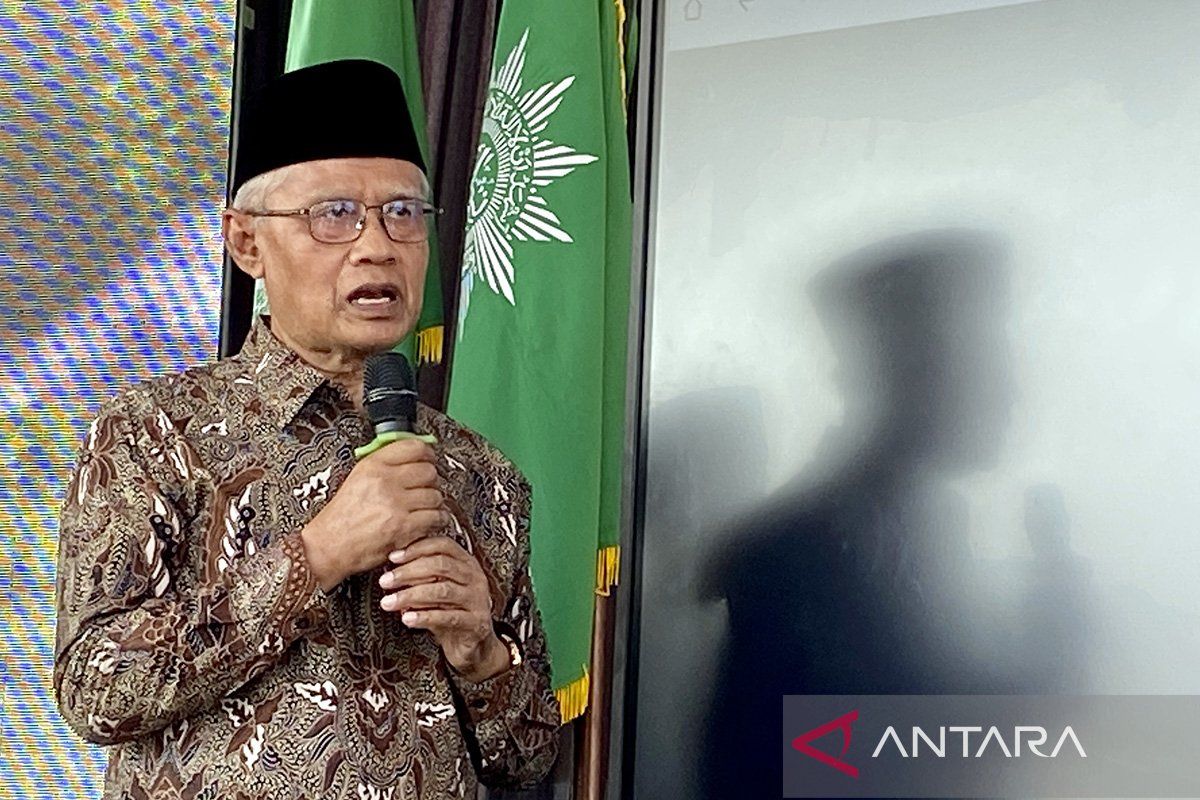
Muhammadiyah Central Board Chairman Haedar Nashir has stated there are three strategic steps the government must focus on to address corruption in Indonesia, which he assesses has reached an emergency, systemic, and massive stage. Speaking in Yogyakarta on Tuesday, Haedar said the first step is for President Prabowo as head of state to directly lead the anti-corruption drive through state institutions. “Because it is already at an emergency stage, the President as head of the executive branch must directly lead the eradication of corruption through the institutions that have been built. This is because the level is already structured, massive, and systemic,” he said. According to Haedar, President Prabowo’s leadership is a crucial factor in building a clean government ecosystem, as firm and consistent law enforcement will serve as the foundation for safeguarding state sovereignty while realising the ideals of an advanced Indonesia. He expressed confidence that if the anti-corruption agenda is pursued seriously by strengthening state institutions, President Prabowo will leave behind a strong leadership legacy for the nation. “I am confident the President will be remembered as a figure and head of state who leaves a solid legacy for the nation because he succeeded in eradicating corruption through existing institutions,” he said. The second step, Haedar continued, is synergy among all law enforcement agencies, including the National Police, the Attorney General’s Office, the Corruption Eradication Commission, the Audit Board, and other oversight bodies, so that corruption eradication can be carried out effectively through an integrated system. “Because only through a system can we eradicate corruption and solve other national problems. Moral appeals alone are not enough; even the power of religion has its limits when facing problems that are already structured within the system,” he said. Therefore, the President must lead with a strong political commitment together with all policymakers and government institutions. “In this context, I am confident there will be no steps that hinder one another because this concerns the interests of the nation and state,” he said. Haedar also reminded that every institution has its limitations, but this should not be used as an excuse to weaken anti-corruption efforts. “With all their shortcomings and weaknesses, we must still try to optimise policy opportunities. What matters is that we are together, we are united, and we have a high political will,” he said. As a third step, Haedar reminded that no institution is completely perfect, so the most important thing is a strong political will to continuously improve the system and optimise anti-corruption measures. “There is no broom that is completely clean. What matters is an optimal political will for all of us to take steps to eradicate corruption,” he said. Haedar also called on all elements of society to continue overseeing the anti-corruption agenda, as the fight against corruption is a long-term effort that requires consistency and acceleration. “Let us continue to speak out and not grow weary, because eradicating corruption and solving various national problems is a long-term task. There must be no slowdown, but rather an acceleration of progress,” he said.