
Haedar Nashir Receives Special Senior Journalist Card After 42 Years in Journalism
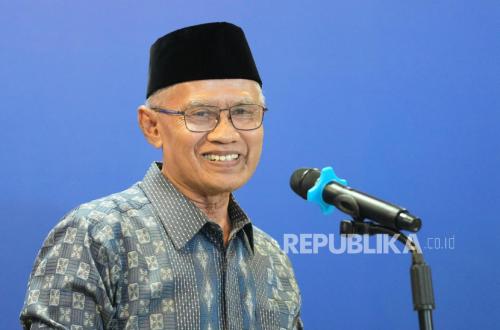
Press Council Chairman Prof Komaruddin Hidayat presented a Special Senior Journalist Card (KWUK) to the General Chairman of the Central Board of Muhammadiyah, Prof Haedar Nashir, at the Cendekia Building of the University of Muhammadiyah Jakarta (UMJ) in South Tangerang on Thursday (13/8/2026). The presentation marked recognition of Haedar Nashir’s career as a journalist who has dedicated himself to the field for more than four decades. Haedar began his journalistic journey as a reporter for Suara Muhammadiyah in 1984.
Komaruddin expressed pride that Haedar Nashir is now officially registered as a senior principal journalist. He noted that the presence of figures like Haedar is crucial at a time when the press world is increasingly losing journalists who are also cultural figures and national thinkers. ‘I am pleased and proud that Mr Haedar is officially registered as a senior principal journalist. At a time when the press world is increasingly losing figures who are both journalists and cultural icons,’ Komaruddin said during his speech at the Muhammadiyah Press Day commemoration.
The former journalist for Panji Masyarakat said that in the past, many journalists not only carried out their journalistic profession but also acted as cultural figures and national thinkers. He contrasted this with the current phenomenon, where the profession of a journalist is sometimes seen merely as a job. He also touched on the phenomenon of ‘Journalists Without Newspapers’ (WTS), or journalists who lack a clear media platform for their work. This phenomenon, he suggested, arises partly from the need to survive economically. Yet, he continued, a responsible journalist must be able to produce quality, selective, and substantial information.
Komaruddin then linked the importance of information quality to Islamic tradition. He argued that society develops because of circulating information, while Islam has a strong tradition of verification, or tabayyun, regarding news. He cited the Islamic scholarly tradition in the science of hadith, which recognises the classification of hadith as sahih (authentic), dhaif (weak), and even fabricated. This tradition demonstrates the importance of verifying the truth of information before believing it. ‘Today, much news is dhaif and fabricated. There is a great deal of disinformation,’ Komaruddin said.
He noted that society’s need for information has become an inseparable part of daily life. The presence of mobile phones allows people to access information almost constantly. ‘Upon waking, what they reach for is not a drink but their handphone. Before sleeping, they are not reaching for a drink either, but their handphone,’ he said. Therefore, Komaruddin assessed that the biggest problem today is not just the abundance of information, but also the quality of the information circulating. He likened the information consumed by the public to having suffered pollution due to the rampant spread of disinformation.
Source: jawawa.id (https://jawawa.id/newsitem/haedar-nashir-receives-special-senior-journalist-card-after-42-years-in-journalism-1786614851)
Originally published by Republika (https://khazanah.republika.co.id/berita/tjpbac483/42-tahun-di-dunia-jurnalistik-haedar-nashir-dapat-kartu-wartawan-utama-dari-dewan-pers), translated from Indonesian