
Habibie's Secret to Taming the Dollar: From Rp16,000 to Rp6,550
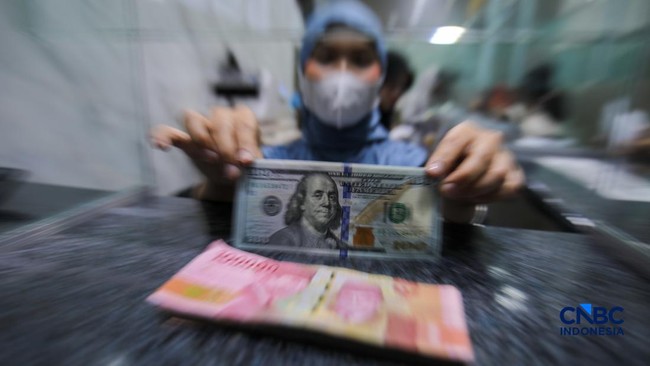
Jakarta, CNBC Indonesia - The exchange rate of the Rupiah against the US dollar experienced pressure, reaching Rp17,600 on Friday (May 15, 2026). This marks a new all-time high.
Two decades ago, in 1998, the US dollar was at a very high level, specifically Rp16,800. In fact, the situation was worse because the dollar’s rise occurred in a relatively short and rapid period. Plus, it also spread to a political crisis.
Everyone knows that this condition caused the end of President Soeharto’s 32-year rule. The sudden change of power did not immediately make the market optimistic. Because, the successor president, B.J. Habibie, was considered unable to solve the economic problems.
He was not an economist, only a technocrat who made airplanes, which critics of the New Order regime considered a wasteful policy. Moreover, at that time he was still considered part of the New Order regime. Even President of Singapore Lee Kuan Yew also thought that Habibie’s rise to the top could make the Rupiah even more powerless.
However, all of that was wrong. In fact, Habibie succeeded in conquering the dollar through these 3 ways:
- Bank restructuring
For the record, during the New Order, the government made it easier to establish banks thanks to the October 1988 Package policy. Unfortunately, the ease of establishing banks was not accompanied by good banking capabilities. As a result, during the crisis, many banks collapsed. Customers then made massive withdrawals of funds.
This problem became the main focus. Habibie carried out bank restructuring while hoping that Bank Indonesia would become stronger. One way is to revoke the regulation and apply it directly to state-owned banks. Four state-owned banks were merged into one bank called Bank Mandiri.
In addition, he also separated BI from the government through Law No. 23 of 1999. In his autobiography, B.J. Habibie: Moments That Determine (2006), Habibie said that this policy was the best step to strengthen the Rupiah. BI must be independent, objective, and free from political intervention.
- Tight monetary policy
Habibie’s monetary policy overcame the crisis through the issuance of Bank Indonesia Certificates (SBI). SBI was issued with high interest rates with the aim of making banks trusted by the public again. If this happens, then the public will return to saving, thus reducing the circulation of money in the community.
The man of Sulawesi descent claimed that this method was successful. Thanks to SBI, interest rates from 60% fell to the teens. Trust in banks also increased again.
- Control of basic necessities prices.
Habibie considered basic necessities to be vital. As a result, he maintained the prices of electricity and subsidized fuel so that they would not increase, so that the prices of basic necessities remained affordable in the midst of the crisis.
On the other hand, this policy also reaped controversy because Habibie made a quirky statement. In one of his speeches, he once asked people to fast during the crisis so that they would be more frugal.
“When the crisis occurred when B.J. Habibie was appointed president, he advised people to fast on Mondays and Thursdays,” said A. Makmur Makka when writing the biography of Habibie, Inspiration Habibie (2020).
In the end, these three ways succeeded in increasing market confidence in the Indonesian economy. The flow of investor funds returned. And most importantly, the US dollar returned to strengthen and be controlled at the level of Rp6,550.