
Habib Idrus Urges Village Cooperative Benefits Must Be Tangible
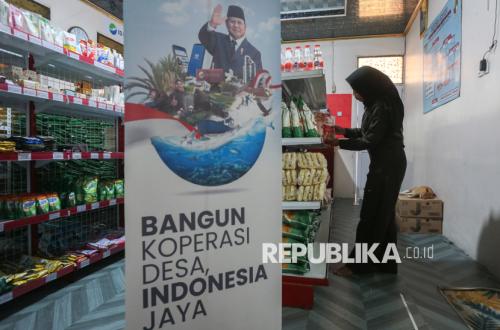
The Koperasi Desa Merah Putih programme needs tighter oversight to ensure it does not merely produce new buildings but also economic benefits for the community. Member of Commission XI of the Indonesian House of Representatives from the PKS faction, Habib Idrus Aljufri, has asked the Finance and Development Supervisory Agency (BPKP) to oversee the programme’s implementation from the planning stage through to impact evaluation, so that the use of the state budget truly yields optimal results.
The statement was made by Habib Idrus during a working meeting of Commission XI with the BPKP and the Government Goods/Services Procurement Policy Institute (LKPP) to discuss the 2025 Fiscal Year Financial Report at the Parliament Complex in Senayan, Jakarta, on Thursday (16/7/2026).
Habib Idrus appreciated the BPKP’s performance in achieving an Unqualified Opinion (WTP) for the 18th consecutive time. He also commended the LKPP for securing a WTP opinion for the 10th consecutive time and for having followed up on all findings of the Supreme Audit Agency (BPK).
Nevertheless, Habib Idrus believes that oversight of the Koperasi Desa Merah Putih programme must be a serious concern. According to him, the programme, which is planned to cover around 83,000 village cooperatives with thousands of units already under construction, requires a monitoring system that is not solely oriented towards the completion of physical development.
“I would like to ask whether the BPKP has formulated success indicators for the development of Koperasi Desa Merah Putih that measure not only physical outputs but also outcomes such as increased cooperative turnover, reduced logistics costs, or even improved welfare of cooperative members,” said Habib Idrus in a press release on Thursday (16/7/2026).
He stressed that the BPKP has a strategic role in overseeing development governance, conducting accountability audits of government assistance, and evaluating the benefits of every programme using state funds. Therefore, oversight of the Koperasi Desa Merah Putih must be carried out comprehensively so that the benefits are genuinely felt by the community.
“I want the public to know that government programmes are truly supervised. Not just building operational structures, but also looking at the quality of human resources, governance, and various other aspects that determine the programme’s success,” he said.
Habib Idrus also highlighted the importance of synergy between the BPKP and LKPP from the planning stage, through procurement of goods and services, to programme implementation. He believes a clear division of roles will strengthen efforts to prevent potential irregularities before they occur.
“We must prevent potential irregularities from the outset. There should be no loopholes that are only realised once the programme is underway. Supervision must begin at the planning stage so that implementation remains accountable,” he said.
Addressing the LKPP, Habib Idrus encouraged the institution to have more measurable performance indicators so that its contribution can be clearly seen. He considers the LKPP to have a highly strategic function in improving the governance of government procurement of goods and services, but its work results need to be translated into performance measures that the public can understand.
“For example, how much state budget has been saved or potential state losses prevented. With such indicators, the public can clearly see the LKPP’s contribution to improving state spending efficiency,” said Habib Idrus.
In closing, Habib Idrus expressed support for the BPKP and LKPP to continue strengthening oversight and state financial governance. He believes both institutions have competent resources to ensure every government programme runs accountably, effectively, and provides maximum benefit to the community.
“I fully support the BPKP and LKPP. What we hope for is stronger oversight so that every government programme truly delivers greater benefits to the community,” said Habib Idrus.