
Guwosari builds a circular economy from piles of rubbish
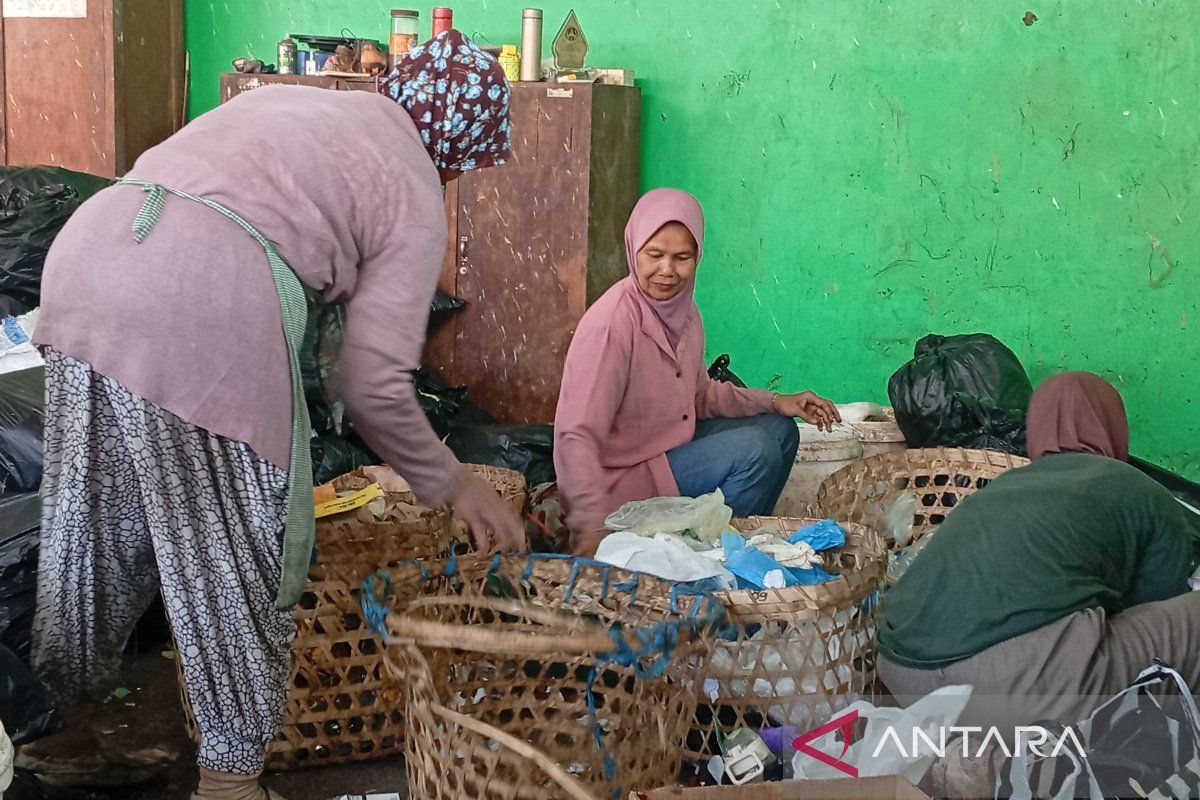
The presence of Go-Sari shows that waste management is not merely an environmental or technological issue.
Bantul (ANTARA) – Piles of rubbish, long regarded as a source of problems, are gradually becoming a source of livelihood for residents of Guwosari Village, Bantul Regency, Special Region of Yogyakarta.
Through the Go-Sari Reduce, Reuse, Recycle (TPS3R) waste-processing facility, the village government and local community turn rubbish into products with economic value while creating jobs.
The effort requires bold decision-making, changes in community habits and collaboration among various parties. Waste is no longer simply moved to a disposal site; it is sorted and processed so that it can once again serve as a resource for the environment and residents’ welfare.
Guwosari village head Masduki Rahmad is one of the drivers of waste management at village level. Masduki, who is also head of the Bantul Regency Youth Organisation, believes the problem must be addressed in the immediate community, with residents directly involved.
“Don’t try to solve the waste problem at national level first. We have to solve it at village level,” Masduki said.
Guwosari covers about 830 hectares and has a population of around 13,000, spread across 15 hamlets and 79 neighbourhood units. Kalurahan is the term for a village under Law No. 13/2012 on the Special Status of Yogyakarta.
These circumstances call for a planned and sustainable waste-management system.
Go-Sari was established in 2019 and continued to be developed through 2021. The facility is located in Bungsing Hamlet, on 24,383 square metres of village-owned land.
Staff sort waste by type to determine the appropriate processing and reuse methods. Plastic, for example, is processed into raw material for new products, while organic waste is used for maggot cultivation and compost production.
Go-Sari’s growth has also created employment opportunities. What began with just two people has expanded to employ 27, including young people who did not continue their education and older residents.
The village government is also encouraging changes in public behaviour by promoting waste sorting at home. These efforts are supported by Guwosari Village Regulation No. 9/2019, which provides a basis for waste management.
At the facility, high-density polyethylene (HDPE) plastic is processed into boards that can be used to make tables and other products. The operators also produce handicrafts such as plaques, medals and key rings.
Organic waste, meanwhile, is used to cultivate maggots, or black soldier fly (BSF) larvae, which help break down waste and could be used as animal feed. The operators are also developing compost and exploring links with chicken farming and egg production.
The results are reflected in the rising number of Go-Sari customers. The facility had around 480 customers in 2023, a figure that later grew to approximately 1,545.
The volume of waste processed has also risen from about 1.7 tonnes to around five tonnes a day. However, this remains below the estimated eight tonnes of waste generated daily across Guwosari.
Masduki said Go-Sari’s monthly revenue had increased from about Rp27 million to around Rp97 million. The growth demonstrates the potential for waste management to become an economic activity that supports operating costs while benefiting the community.
The programme’s sustainability depends not only on facilities but also on passing knowledge on to the next generation.
“What we pass on is not only land. Knowledge must also be passed on,” Masduki said.
Source: jawawa.id (https://jawawa.id/newsitem/guwosari-builds-a-circular-economy-from-piles-of-rubbish-1791550416)
Originally published by Antara (Indonesian) (https://www.antaranews.com/berita/5779009/guwosari-merajut-ekonomi-sirkular-dari-tumpukan-sampah), translated from Indonesian