
Gus Kikin and the Three Paths of NU's Service
Leading Nahdlatul Ulama is not simply a matter of filling a post. Behind the position of General Chairman of the NU Executive Board lies a mandate to safeguard a tradition that has traversed a long journey, whilst at the same time ensuring that this tradition remains capable of answering the ever-changing problems of the age. For this reason, the important question following the birth of NU’s new leadership is not merely who leads, but where NU is to be directed and to what purpose the organisation’s greatness is to be devoted.
That question becomes all the more significant as NU enters its second century. NU today is no longer an organisation dealing only with religious matters in a narrow sense. It confronts extremely rapid technological change, social transformation, the economic problems of the community, identity politics, environmental crisis, shifting geopolitics, and increasingly complex internal organisational dynamics. In such a situation, NU requires leadership that is not only capable of managing the organisation, but also understands the spirit that led this organisation to choose the path of service from the outset.
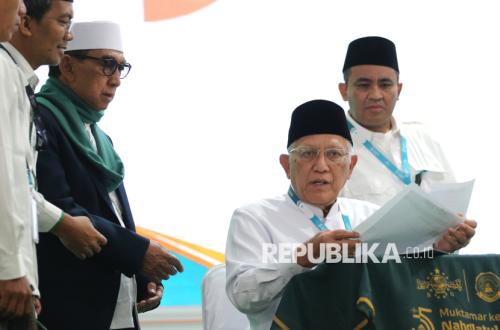
It is in this context that the presence of KH Abdul Hakim Mahfudz, or Gus Kikin, as General Chairman of the NU Executive Board for the 2026–2031 term merits attention. His background brings together the world of the pesantren with the professional and business worlds. He was born into a scholarly environment, grew up within the pesantren tradition, later came into contact with the modern world, before returning to devote himself to the pesantren and to NU.
That experience provides significant capital for reading NU as it stands today, caught between the demand to preserve tradition and the need to effect change. Personal capital alone, of course, is not enough. In the end, a leader will be judged by what he does with the mandate he has received.
NU does not need a leader who is merely able to make the organisation administratively larger. NU needs leadership capable of turning that greatness into a means of service.
In my view, there are at least three paths of service (tsulatsiyatul khidmah) that should become important concerns for NU going forward: ri’ayatul ummah, shadiqul hukumah, and bina’ul hadlarah. These three are not separate agendas standing on their own, but three directions of service that are mutually interconnected.