
Gus Ipul Urges Public to Actively Correct Social Assistance Recipient Data
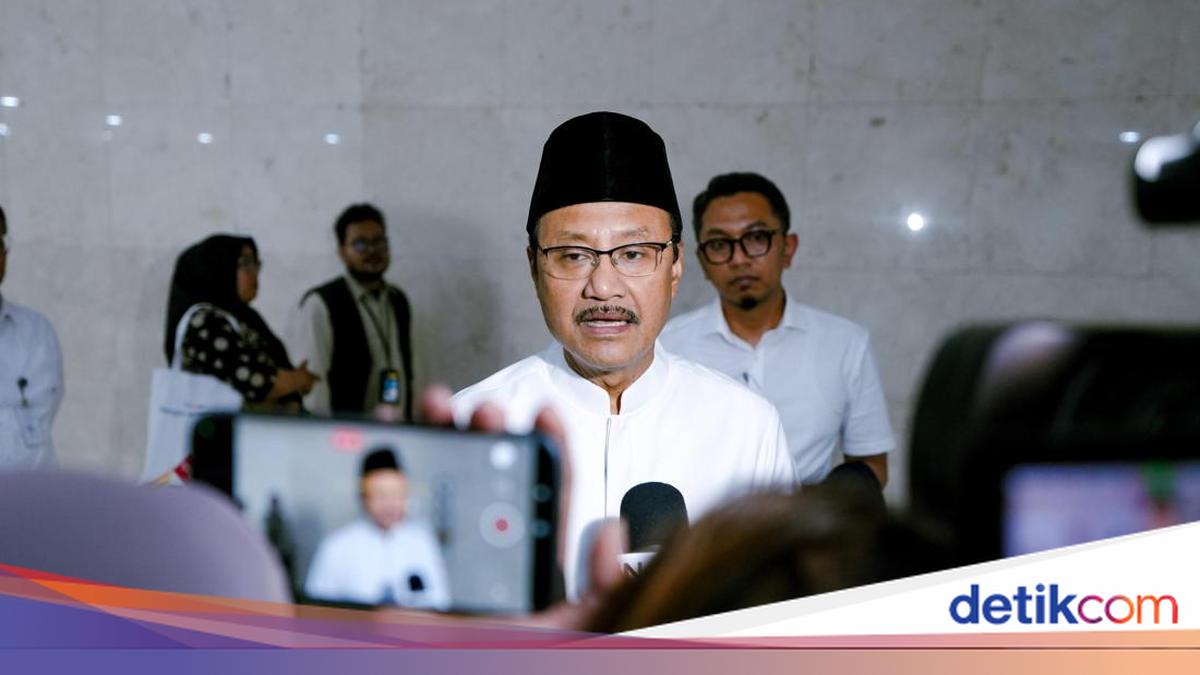
The Minister of Social Affairs, Saifullah Yusuf (Gus Ipul), has ensured that the Single Social and Economic Data (DTSEN) is being continuously updated to reflect the current conditions of the community as a reference for the distribution of social assistance (bansos). The government is also providing opportunities for the public to correct data through several provided channels.
“First and foremost, I want to convey that the government is open, following the direction of President Prabowo, for all of us to collectively present more accurate data,” said Gus Ipul in a statement on Wednesday (2/9/2026).
He made these remarks while accompanied by the Deputy Minister of Social Affairs, Agus Jabo Priyono, at the Ministry of Social Affairs office in Central Jakarta.
According to him, the DTSEN is currently in the process of consolidation. The government continues to refine the data by performing synchronisation, validation, and verification across various data sources.
One such source includes additional data from the National Population and Family Planning Board (BKKBN), which is currently being processed by Statistics Indonesia (BPS). The results of the recently completed socio-economic census will also be part of the data refinement process.
“I am confident our data will become increasingly accurate. New data from BKKBN recently arrived, which requires a form of synchronisation, validation, and re-verification. This is currently being handled by BPS,” explained Gus Ipul.
To increase the accuracy of the DTSEN decile data, the public can participate by submitting corrections if any data is found to be inaccurate. Corrections can be made through several channels, including the WhatsApp Centre at 08877-171-171, the Command Centre at 171, the Cek Bansos application, as well as through local governments, particularly village administrations.
For formal channels at the village level, data operators are available using the SIKS-NG application. Data from villages can then be forwarded hierarchically to district/city social services, provincial governments, and finally to the Ministry of Social Affairs to be passed on to BPS.
“This is a daily mechanism that can be used by all of us, through both formal channels and participatory routes,” explained Gus Ipul.
Gus Ipul added that the government is also open to dialogue with experts regarding the methods used to compile the DTSEN, including the basis for determining deciles. This step is considered vital so that the data determination process can be understood transparently and continuously improved.
“The government, specifically BPS and the Ministry of Social Affairs, is open to discussing and engaging in dialogue with experts openly, so that all parties better understand the basis used by BPS to determine deciles,” said Gus Ipul.
Furthermore, Gus Ipul noted that data updates are conducted periodically according to the type of assistance programme. For recipients of the National Health Insurance (JKN) premium assistance (PBI) via BPJS Kesehatan, updates are performed monthly. Meanwhile, recipients of the Family Hope Program (PKH) and Basic Food Assistance (Sembako) are updated every three months.
“Since these are monthly or quarterly processes, they can still be significantly improved and corrected,” explained Gus Ipul.
Regarding the Program Indonesia Pintar (PIP), Gus Ipul explained that the determination of recipients falls under the authority of the Ministry of Primary and Secondary Education (Kemendikdasmen).
“For social assistance, our data was processed two or three months ago, so it is already in motion. There are also scholarships, but the determination lies with Kemendikdasmen. It is not the Ministry of Social Affairs; you may confirm the details regarding PIP with them,” concluded Gus Ipul.