
Gus Ipul Says Two Issues Could Spark Debate at NU Congress
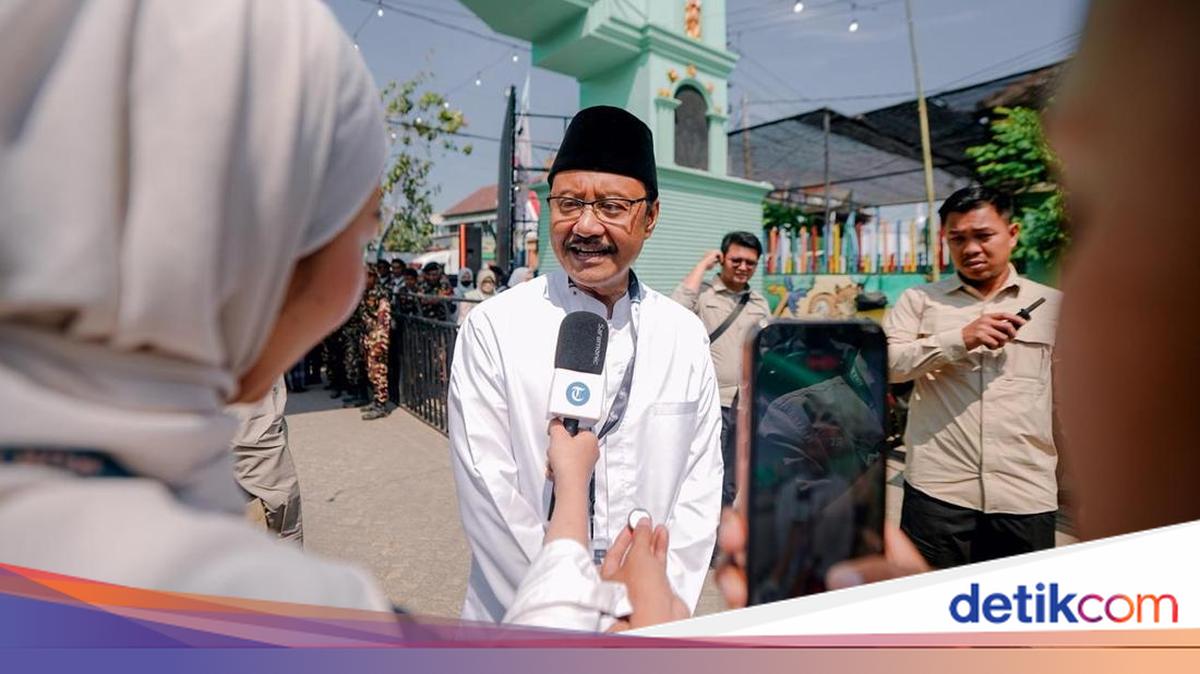
Saifullah Yusuf, known as Gus Ipul, chairman of the 35th NU Congress organising committee and secretary general of PBNU, said there are at least two issues that could potentially spark quite dynamic debate. The two issues are the election system for the PBNU chairman and provisions regarding concurrent positions among board members.
‘Alhamdulillah, today the first plenary session began to discuss the Congress rules of procedure. We are following its development. After that, there will be an accountability report, followed by commission sessions,’ he said in a written statement on Friday (28/8/2026).
According to Gus Ipul, discussions at the commission level are likely to take time. A number of materials within them had previously been discussed at the National Conference of Religious Scholars and the Nahdlatul Ulama Grand Conference (Munas-Konbes NU).
One of them concerns the mechanism for electing the PBNU chairman. In the materials brought to the Congress, there is an option to maintain the mechanism that has been in use so far as well as an idea for a new mechanism.
Under the mechanism used so far, prospective candidates who obtain a certain amount of support can proceed to the nomination stage by fulfilling the applicable provisions. These provisions include obtaining the approval of the Rais Aam.
Meanwhile, there is also a proposal for another mechanism. In that option, each regional and branch board, as vote holders, proposes five names, and the names with the most support are then processed according to the mechanism determined by the Congress.
‘This is an option. Of course, everything depends on the Congress decision,’ he said.
In addition to the chairman election system, the Congress will also discuss rules on concurrent positions within the NU leadership. According to him, one of the questions to be discussed is whether the prohibition on concurrent positions applies only to certain positions as per current provisions, or is extended to other board members.
‘There are proposals, there are dynamics. Of course, everything will depend on the congress participants. These are still aspirations previously discussed at the Munas-Konbes level,’ he said.
He stressed that all draft materials brought to the Congress have gone through a tiered discussion process. The materials are not something that emerged suddenly ahead of the Congress.
‘The existing draft materials went through a process. Some were discussed at PBNU, then at Munas-Konbes, and after that brought to the Congress. Later they will be discussed in commissions, especially the Organisation Commission. It will certainly be interesting,’ explained Gus Ipul.
Although he expects debate to occur, Gus Ipul said differences of opinion are normal in the Nahdlatul Ulama tradition.
‘We are accustomed to differences, we are accustomed to debating,’ he said.
However, he reminded that all these dynamics should continue to take place in an atmosphere of brotherhood and joy, in line with the spirit of the 35th NU Congress.
‘As we all hope, especially Bahrul Ulum Islamic Boarding School, whatever happens, however sharp the differences, we must remain joyful,’ he said.
Gus Ipul reminded that this Congress is taking place within a pesantren environment that has a very strong historical bond with the founders of NU. Bahrul Ulum Islamic Boarding School is a pesantren nurtured by one of the founders and main driving forces of NU, KH Abdul Wahab Hasbullah.
Not far from the Congress venue are also the graves of KH Hasyim Asy’ari and KH Bisri Syansuri.
‘We are in the embrace of the founders, at the pesantren of Mbah Wahab Hasbullah. Hopefully this will be a source of encouragement, inspiration and motivation for Congress participants,’ he said.
He expressed hope that the debates taking place during the Congress would ultimately produce the best decisions for the future of Nahdlatul Ulama.
‘So after we debate, we remain in a joyful atmosphere. From that joy, hopefully blessings will come. In the end, we can all say: Alhamdulillah,’ he concluded.