
Gus Ipul Says Article 34 of the 1945 Constitution Underpins Social Affairs Ministry’s Work
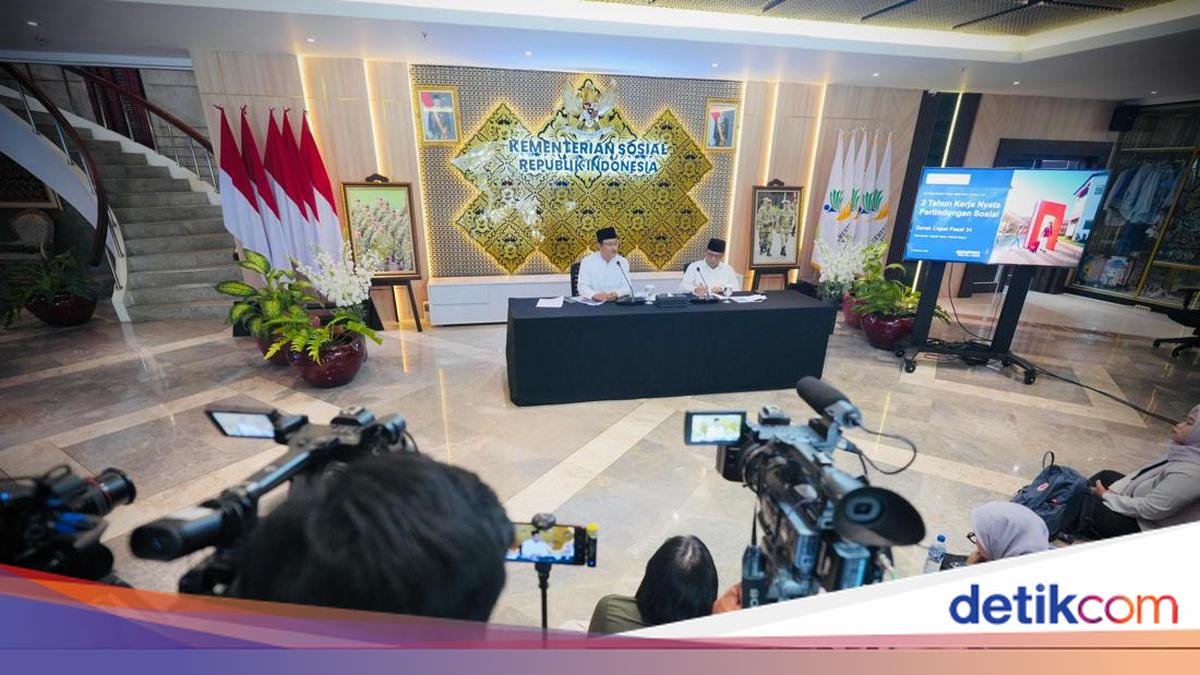
Social Affairs Minister Saifullah Yusuf, known as Gus Ipul, said Article 34 of the 1945 Constitution provides the constitutional mandate and framework for the Ministry of Social Affairs’ work during its first two years under President Prabowo Subianto. The mandate has been translated into measurable social protection policies and programmes, ranging from social rehabilitation and social security to social empowerment.
He said one of the ministry’s duties was to help the president implement the constitutional mandate so that people—particularly the poor and neglected children—receive protection and opportunities to improve their welfare.
“The constitutional mandate is set out in Article 34 of the 1945 Constitution: the state shall care for the poor and neglected children. This is a constitutional mandate, and the President always reminds us that one of the Social Affairs Ministry’s duties is to help him implement Article 34,” Gus Ipul said in a written statement on Saturday (24 October 2026).
Gus Ipul made the remarks at a press conference titled ‘Two Years of the Social Affairs Ministry’s Performance’ at the ministry’s office in Central Jakarta on Friday (23 October).
He explained that the president had also instructed the ministry to base all social protection programmes on accurate data. That data is used to identify beneficiaries and ensure social assistance reaches the right people. Once protection needs have been met, programmes should also focus on empowerment to help families escape poverty.
“The mandate is to have accurate data and ensure social assistance—and its recipients—are properly targeted,” he said.
He outlined two main approaches to improving the welfare of poor families. The first is to reduce household expenditure through social assistance and subsidies. The second is to increase family incomes through empowerment programmes that strengthen people’s capabilities and independence.
Under the first approach, the government provides various forms of social assistance, including the Family Hope Programme (PKH), non-cash food assistance (BPNT), regular basic food assistance, and support through health insurance and food assistance programmes run by other agencies. These measures are intended to help families meet their basic needs while easing household expenses.
“Social assistance and subsidies are fundamentally intended to reduce family expenditure. This includes, for example, scholarships for the poorest families, among other things,” Gus Ipul said.
The second approach aims to raise incomes through social empowerment. Gus Ipul said it focuses on three areas: improving skills, strengthening assets and widening access. These are important to opening up economic opportunities for beneficiary families, enabling them to progress gradually towards greater independence.
He said the president attached great importance to community empowerment. Social assistance should therefore be followed by measurable empowerment programmes so that beneficiaries do not remain dependent on aid, but instead gain the capacity to improve their quality of life.
“What we provide is measurable and intended to help families move up,” he said.
Alongside reducing expenditure and increasing incomes, the government is seeking to break the intergenerational transmission of poverty. One way is to provide free education for children from disadvantaged families through Sekolah Rakyat, a programme initiated by President Prabowo.
He said access to education was expected to give children greater opportunities to develop their potential, pursue their aspirations and build a better future.
“Sekolah Rakyat is intended to prevent the transmission of poverty,” Gus Ipul said.
Gus Ipul added that swift action under Article 34 of the 1945 Constitution was not merely a policy formulation, but a framework requiring joint effort. The Social Affairs Ministry cannot work alone, he said, making coordination and collaboration with other ministries, agencies and regional governments essential to ensure programmes are effective and reach those in need.
“That is broadly the mandate the President has given the Social Affairs Ministry, which we have formulated as part of ‘Fast Action Article 34’. The concept is clear; now we must implement it together with ministries, agencies and regional governments,” he said.
“We have now worked for two years under the President’s full direction to carry out this constitutional mandate and the mandate from the President,” Gus Ipul concluded.
Source: jawawa.id (https://jawawa.id/newsitem/gus-ipul-says-article-34-of-the-1945-constitution-underpins-social-affairs-ministrys-work-1792810284)
Originally published by detikcom (https://news.detik.com/berita/d-8721726/gus-ipul-ungkap-pasal-34-uud-1995-jadi-landasan-program-kerja-di-kemensos), translated from Indonesian