
Gus Ipul Confirms Third-Quarter Social Assistance to Be Disbursed on 20 July, Strengthened by Empowerment Programmes
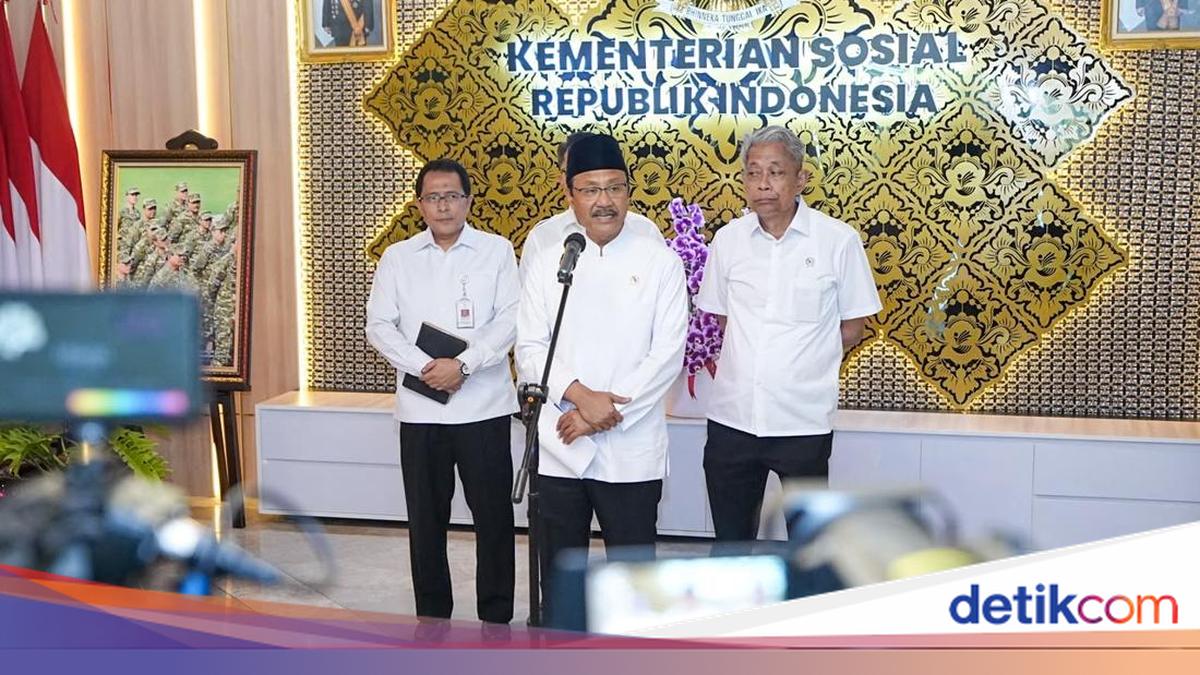
Minister of Social Affairs Saifullah Yusuf, known as Gus Ipul, has announced that the Family Hope Programme (PKH) and Non-Cash Food Assistance (BPNT), also known as sembako assistance, for the third quarter of July–September 2026 will begin to be distributed on 20 July.
“We are currently processing the third-quarter social assistance; yesterday we received the latest data from BPS, and we are now cleansing it. God willing, it will be completed within the next two or three days, and at the very latest distribution will begin on the 20th,” Gus Ipul said in a written statement on Monday (13 July 2026).
He made the remarks during a press conference at the Ministry of Social Affairs office in Jakarta, accompanied by Deputy Minister of Social Affairs Agus Jabo Priyono.
Gus Ipul explained that, according to the latest data, there are existing beneficiary families (KPM) who will continue to receive assistance, as well as those who will no longer receive it. There are also new recipients, all depending on the data updating process that has been carried out.
In this regard, Gus Ipul expressed appreciation for regional governments that have proactively conducted data updates, making the data more accurate and ensuring the assistance reaches the right targets. The three most active provinces in data updating are West Java, Central Java and East Java, while Bekasi City has carried out the highest number of data updates.
“This shows that regional governments truly care about the updating process, because we must acknowledge that the data we receive comes from the regions, and it is the regions that know best the objective conditions of their residents,” he said.
The data updating process begins at the neighbourhood and community unit (RT/RW) level, then continues to village or sub-district data operators through deliberation, before being passed on to the local Social Affairs Office. It is then formally determined by the Regent or Mayor and submitted to the Ministry of Social Affairs.
From the Ministry, the data is forwarded to Statistics Indonesia (BPS) for verification and validation, and every three months the verified updated data is returned to the Ministry for the distribution of social assistance.
“The essence of this updating is to ensure that assistance is received by those who are entitled to it,” he added.
Beyond data updating, Gus Ipul said the distribution of assistance will be followed up with an empowerment programme, in line with the paradigm shift of “Temporary Assistance, Permanent Empowerment”.
“After it has been received by those entitled, it will be followed up with an empowerment programme. This is the new approach from President Prabowo, so it is not only about giving assistance, but strengthening it with empowerment, so that these families can measurably move up a class,” said Gus Ipul.
The Ministry of Social Affairs continues to strengthen the empowerment programme, with a target of pushing more than 150,000 beneficiary families to join the programme this year. “We hope that next year they will no longer receive assistance, but will instead be developing businesses that yield greater returns than what they received through social assistance,” he explained.
Gus Ipul revealed there are three forms of empowerment to be provided according to the assessment of each beneficiary family: skills enhancement, strengthening access, and strengthening assets.
“We will first see what they need — perhaps they need skills improvement, or additional assets such as a place to run a business, or thirdly, opening access, possibly through cooperation with many parties,” he concluded.