
Gus Dur's Wife and Other Figures Meet Sultan of Yogyakarta to Discuss Law and Asset Forfeiture Bill
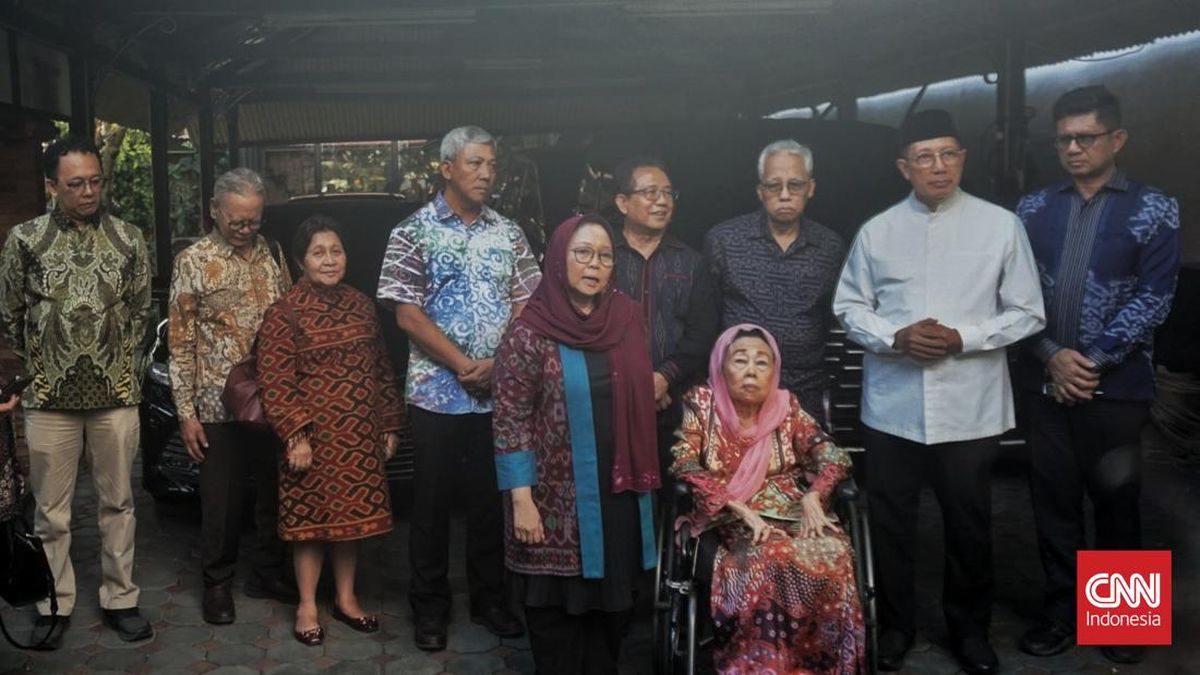
A number of figures from the Gerakan Nurani Bangsa (GNB) movement met with the Governor of the Special Region of Yogyakarta and King of the Yogyakarta Palace, Sri Sultan Hamengku Buwono X, at the Kilen Palace in Yogyakarta on Thursday (23/7). The closed meeting, which lasted about three hours, discussed various national issues.
GNB figures in attendance included Sinta Nuriyah Wahid, the wife of the late fourth President of the Republic of Indonesia Abdurrahman Wahid (Gus Dur); Alissa Wahid, a prominent Gusdurian figure and Gus Dur’s eldest daughter; and former Chairman of the Communion of Churches in Indonesia (PGI) Reverend Gomar Gultom. Also present were former Minister of Religious Affairs Lukman Hakim Saifuddin, former Komnas HAM member Beka Ulung Hapsara, former KPK leaders Erry Riyana Hardjapamekas and Laode M Syarif, as well as academics and intellectuals including M Amin Abdullah, A Setyo Wibowo SJ, and Ery Seda.
After the meeting, Alissa stated that GNB met the Sultan considering the Yogyakarta Palace’s significant role in the history of the Indonesian nation. “In fact, [Yogyakarta] once served as the temporary capital during critical times for Indonesia; the Yogyakarta Palace has always made a substantial contribution,” Alissa said. “We also know that in ’98, for instance, Sri Sultan [HB X] was one of the declarators for the Ciganjur Declaration, among other things,” she added.
Sunan Kalijaga State Islamic University academic M Amin Abdullah said one of the topics discussed was the Asset Forfeiture Bill, which GNB considers a priority agenda. “Because that is the source of all problems. If that is resolved, God willing, everything else will follow. So that is his hope and the hope of all of us,” Amin said.
The meeting also discussed the importance of accountability for state administrators. Government accountability is deemed insufficient if it is only delivered to the House of Representatives (DPR), but must also be conveyed to the public. Lukman Hakim stated that before meeting Sri Sultan, GNB had first held discussions with the fifth President of Indonesia, Megawati Soekarnoputri, and several other national figures. In this series of meetings, they conveyed various aspirations and concerns gathered from the public.
According to Lukman, the various inputs indicate a decline in public trust towards various institutions. “So there is distrust not only towards state institutions and our law enforcement apparatus, but in almost all sectors and fields of our social life,” said Lukman, who also served as Deputy Speaker of the People’s Consultative Assembly (MPR) for the 2009-2014 period. He said the causes of declining public trust are very complex. However, in the meeting with Sri Sultan, attention was focused on two things: consistency in law enforcement and public accountability. “And he was very concerned about these two things so that they can be enforced more consistently, so that public trust can be restored as hoped,” he said.
In addition to consistent law enforcement, the figures also discussed the importance of strengthening the integrity of law enforcement officers, from the police, prosecutors, the Corruption Eradication Commission (KPK), to the judiciary. Integrity, honesty, and exemplary conduct are considered prerequisites for restoring public trust in the law enforcement process. The issue of Papua also received attention during the meeting between GNB figures and Sri Sultan. The figures assessed that resolving various issues, particularly those related to public policy, requires better dialogue and communication so that public trust can be built.
The results of the meeting with Sri Sultan and the series of GNB dialogues with various national figures will be compiled into a national message, planned for delivery next month. To date, GNB has also noted several other issues requiring attention. These include the need for better governance through comprehensively designed policies, an evaluation of several government priority programmes facing planning and implementation problems, and the suboptimal implementation of regional autonomy. Furthermore, GNB highlighted the weak law enforcement system leading to rampant corruption cases, the strong influence of politics in state administration, and the increasing involvement of defence and security apparatus in the civilian domain. These various issues are considered to have contributed to the decline in public trust in the state and its institutions.