
Gunung Ungaran Geothermal Plant Has Significant Potential but Must Protect Water and Involve Stakeholders
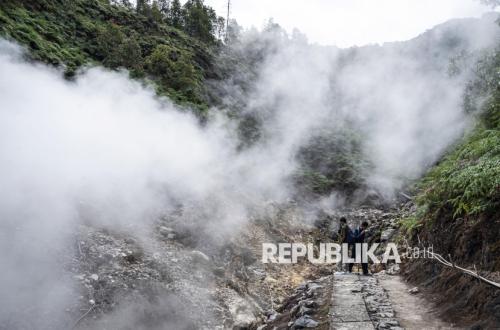
JAKARTA — Development of the Gunung Ungaran Geothermal Power Plant (PLTP) in Central Java should take environmental, social and cultural heritage preservation into account. Data-based studies and community involvement are considered essential to ensure that renewable energy use can proceed alongside protection of the area.
Ali Ahmudi Achyak, executive director of the Center for Energy Security Studies (CESS), said geothermal development was part of Indonesia’s efforts to increase the use of new and renewable energy (EBT), meet its net-zero emissions (NZE) target and strengthen energy security.
“Geothermal energy has significant potential because it can generate electricity relatively consistently and does not depend on weather conditions or the time of day,” said Ali, who is also head of the Research Group on Energy Security for Sustainable Development (RESSED) at the University of Indonesia’s Centre for Development Studies, on Friday (9 October 2026).
He said the Gunung Ungaran project was still at an early stage. “For that reason, discussions about this project should not focus only on its potential electricity output, but also on how all aspects relating to the area are understood through studies before it proceeds to the next stages of development,” he said.
Ali added that it was reasonable for communities around Mount Ungaran to be concerned about water sources, forests and wildlife, farmland, tourist areas and cultural heritage sites such as Gedong Songo Temple. “These aspects are, in fact, an important part of assessing geothermal development as a whole,” he said.
The project should therefore be developed in stages, taking into account technical study findings, environmental conditions, social considerations, spatial planning and applicable regulations. “With this approach, decisions at every stage will be based on clear information,” he said.
Mount Ungaran is a volcanic area with geothermal resource potential. In simple terms, geothermal energy is heat stored within the Earth that can be harnessed to generate electricity.
“Utilising it involves managing the underground reservoir, drilling production and injection wells, building power-generation facilities, pipelines, access roads and other supporting infrastructure. The fluids that have been used are reinjected into the reservoir through injection wells,” he said.
Geothermal development, therefore, cannot be considered in isolation, but must be placed in the context of the wider area. “This approach creates scope to use Mount Ungaran’s energy potential responsibly, while continuing to take account of the environmental, social and cultural characteristics of the area,” he said.
Ali further explained that water was integral to the daily lives of communities around Mount Ungaran. Springs, rivers, wells and other water sources serve household and agricultural needs and support ecosystems.
“During geothermal development, the condition of water sources is one of the aspects assessed through baseline data. This includes, among other things, spring and river flows, water quality, groundwater levels, rainfall patterns, hydrogeological conditions and how communities use water,” he said.
Ali said a geothermal power plant also required a reliable water supply to support electricity generation. “The continued operation of the plant is therefore directly linked to the management and sustainable availability of water resources. This requirement is incorporated into water-resource planning and management, and continuity of supply must be ensured through measured management, monitoring of hydrological conditions and compliance with applicable regulations,” he said.
Baseline data provide a picture of conditions in the area before work begins and serve as a point of comparison for monitoring at later stages. This makes it possible to understand hydrological conditions using data and developments observed in the field.
A data-based approach means that discussion of water need not be limited to concerns or assumptions, but can be grounded in measured hydrological conditions. The plant’s need for a continuous water supply is itself an important reason to ensure that water resources are managed carefully and sustainably.
“Geothermal development can therefore proceed while keeping the protection of water sources a priority. At the same time, the plant’s need for a continuous water supply creates a shared interest in safeguarding water resources over the long term,” he said.
Protecting plants and wildlife
Mount Ungaran has not only energy potential but also a diversity of plant and animal life. The condition of land cover and habitats is therefore part of the assessment for developing facilities such as roads, well pads, pipelines and other supporting infrastructure.
Information about conditions in the area provides a basis for planning and locating facilities. This allows infrastructure requirements at the surface to be considered alongside the environmental conditions of the area.
Source: jawawa.id (https://jawawa.id/newsitem/gunung-ungaran-geothermal-plant-has-significant-potential-but-must-protect-water-and-involve-stakeholders-1791546768)
Originally published by Republika (https://ekonomi.republika.co.id/berita/tmn0ll487/pltp-gunung-ungaran-potensi-energi-besar-tetapi-perlu-perhatikan-air-dan-libatkan-banyak-pihak), translated from Indonesian