
Gunung Mas Waste Bank Converts Plastic Waste into Resident Savings
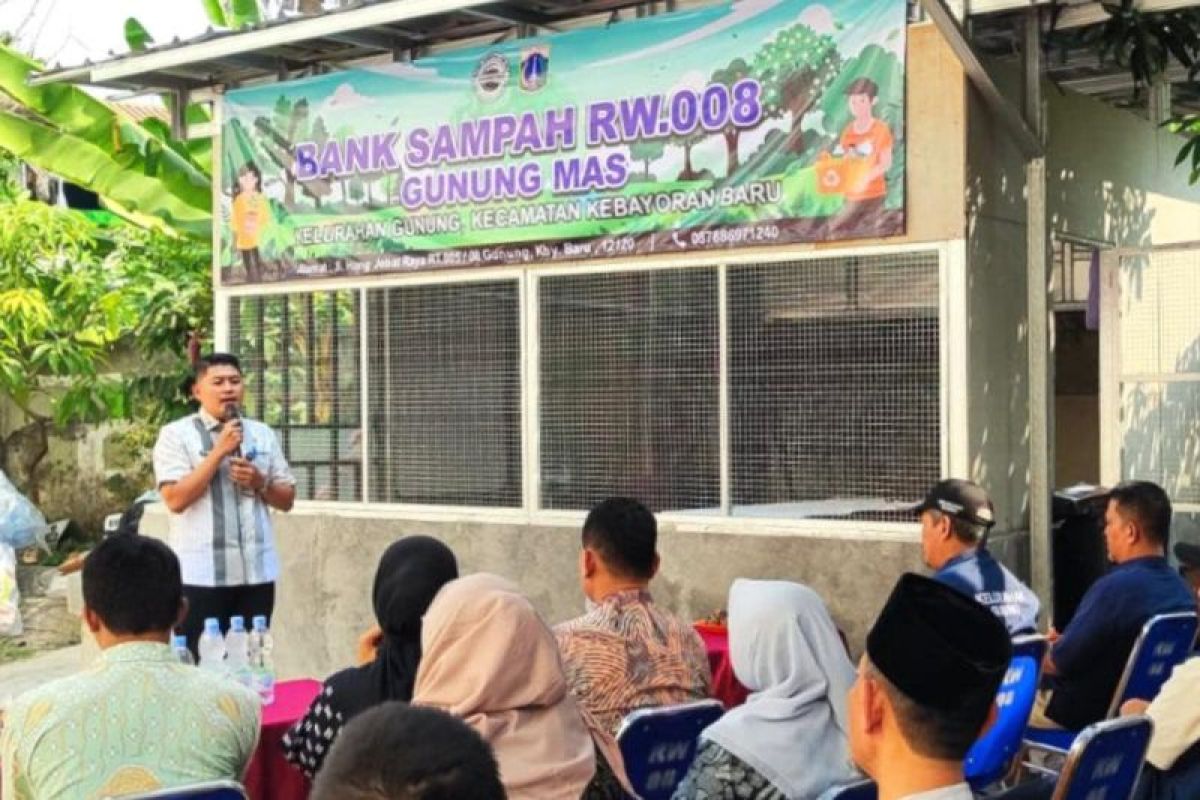
Jakarta (ANTARA) - The Gunung Mas Waste Bank, located in RW 08, Gunung Village, Kebayoran Baru District, South Jakarta, is transforming plastic waste into resident savings as an effort to encourage a circular economy and increase public awareness regarding waste sorting.
“Through this waste bank, we are encouraged to change our perspective on waste. Something that has long been considered worthless or often ignored can, in fact, become something useful and economically valuable,” said the Head of Gunung Village, Andika Eka Saputra, in Jakarta on Friday.
Andika stated that the presence of the Gunung Mas RW 08 Waste Bank is expected to serve not only local residents but also be open to customers from other RW areas. In addition to serving as a place to deposit waste, the location can also function as an educational centre for the community.
Through the waste bank mechanism, waste is collected, weighed, and converted into economic value that can be directly felt by the community, whether for household needs or as savings that can be withdrawn when required.
“I wish to express my highest appreciation to the waste bank management, the RW Head, and their staff, who have shown extraordinary spirit in realising this programme,” he said.
In addition to the waste bank, he continued, the presence of waste sorting sites such as jumbo biopores and modern ‘teba’ (refuse pits) around the location has increased the effectiveness of waste management in RW 08.
“Waste management or sorting from the source is crucial because, starting from early August, the Environmental Agency will prioritise the collection of residual waste and hazardous waste (B3). Therefore, sorting organic and inorganic waste at the household level is our collective responsibility,” he said.
He added that the presence of the waste bank is also expected to act as a catalyst for addressing issues in other environments, as some areas within the RW 08 vicinity still lack a dedicated waste bank.
“Therefore, the presence of the RW 08 Waste Bank is expected to not only serve local residents but also be open to customers from other RWs. Thus, our efforts to overcome shared problems can be successfully realised,” he said.
Meanwhile, Faisal, a staff member of the Kebayoran Baru District Environmental Unit, mentioned that besides having a waste management facility, changes in resident behaviour regarding waste sorting are vital in addressing environmental waste issues. He urged residents to be more prudent and selective regarding the use of containers that can lead to waste accumulation, such as shopping bags or food and beverage plastics that do not decompose if not processed.
“My hope for the future is that the RW 08 Waste Bank can be developed with more interesting innovations, so that residents become increasingly enthusiastic about managing and sorting their waste,” he said.
Furthermore, the Head of RW 08 Gunung Village, Dirwantoro, revealed that before the construction of the Gunung Mas Waste Bank building, waste weighing was conducted in his backyard. However, due to high resident enthusiasm for waste management, the old location could no longer accommodate inorganic waste. Consequently, through a joint initiative with the local management, a more adequate waste bank facility was established.
“Alhamdulillah, the enthusiasm of residents here for waste management is quite high. During each weighing session, we can generate 200-300 kilograms of waste from 40 customers,” he said.
Source: jawawa.id (https://jawawa.id/newsitem/gunung-mas-waste-bank-converts-plastic-waste-into-resident-savings-1785488457)
Originally published by Antara (Indonesian) (https://www.antaranews.com/berita/5674196/bank-sampah-gunung-mas-ubah-sampah-plastik-jadi-tabungan-warga), translated from Indonesian