
Gulingan Village in Badung Allocates Rp 4 Billion for Waste Management
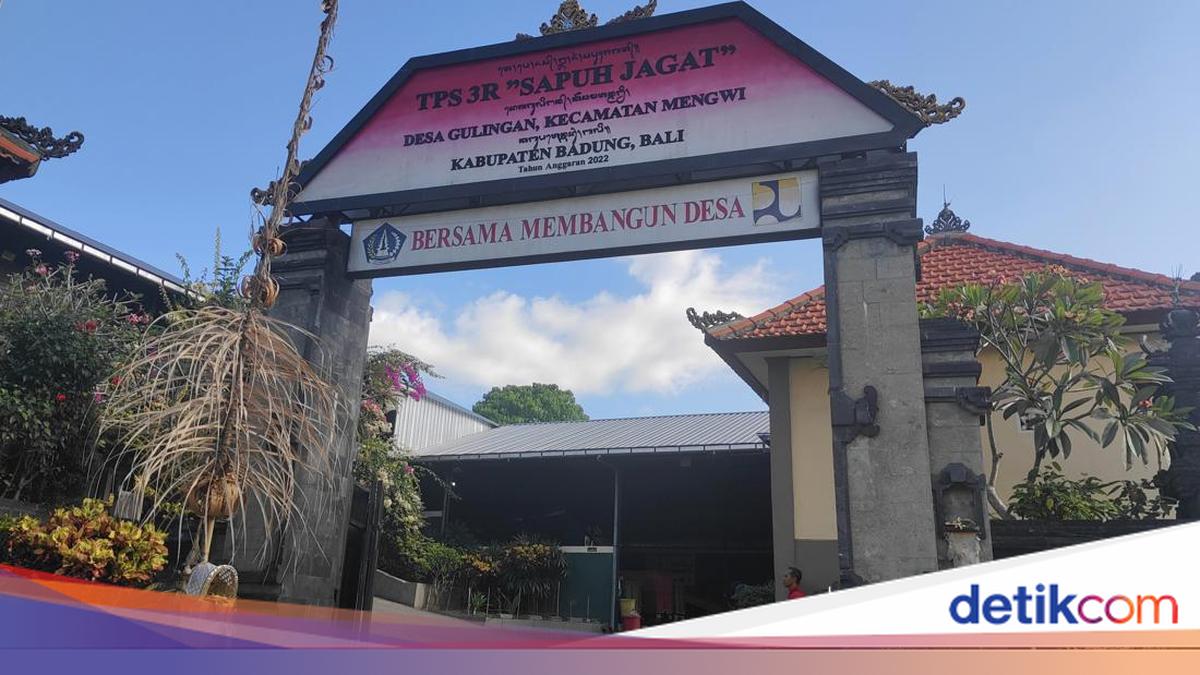
The village government of Gulingan in Mengwi District, Badung, is striving to resolve its waste problem without a burning machine or incinerator. A total of Rp 4 billion has been allocated from the Gulingan Village Revenue and Expenditure Budget (APBDes) to implement the reduce, reuse and recycle (3R) concept.
“We are consistent on this — we do not use an incinerator here, so that we do not deviate from the 3R concept,” said the Head of Gulingan Village (Perbekel), I Ketut Winarya, when met at the Sapuh Jagat 3R waste processing site (TPS3R) in his village on Wednesday (8/7/2026).
Winarya revealed that the village government funds all production, including routine operations, staff, equipment mobilisation and personal allowances, requiring Rp 4 billion from the APBDes each year.
The funds are allocated to the operations of the Sapuh Jagat 3R Waste Processing Site (TPS3R), which has been running since April 2022. The budget is considered proportionate to the waste management burden from 2,229 registered family heads, or more than 8,700 residents of Gulingan Village, who generate around 6.7 tonnes of waste per day.
“So before I explain how much waste from residents we transform to the TPS — this TPS3R has stood since its construction in 2021, and we began operating it in April 2022. From our analysis of daily waste generation, we are at almost 6.7 tonnes,” Winarya explained.
187 Hygiene Cadres Manage Waste Digitally
To optimise the operational budget, the Gulingan village government formed a special task force working on the front line. A total of 187 environmental hygiene cadres (kesling) have been deployed to monitor waste sorting at the household, banjar, subak and primary school levels using a digital system.
“The function of the kesling cadres covers all of Gulingan, across each banjar, the subak and primary schools — they monitor the movement of waste sorting, including at the waste bank. The system is now digitalised to track waste, and the cadres consist of customary heads, civil servants, community representatives and institutions,” Winarya elaborated.
This intensive digital-based monitoring has succeeded in cutting bureaucratic channels for waste collection from a rigid schedule to a dynamic on-demand system. When residents’ waste-sorting bags are full, they simply contact their local kesling cadre, and the collection fleet comes directly to their location.
“So when the bags are full, residents just contact the kesling — we no longer wait for a schedule. We simply collect, weigh, transport and pay,” Winarya said.