
Guiding the 100 GW PLTS Initiative Through the Lens of Pancasila Economics
The world is caught in an unavoidable whirlwind of energy transformation. Global pressure for decarbonisation is no longer merely an environmental narrative but has become a geopolitical and geo-economic instrument that determines a nation’s competitiveness in the 21st century.
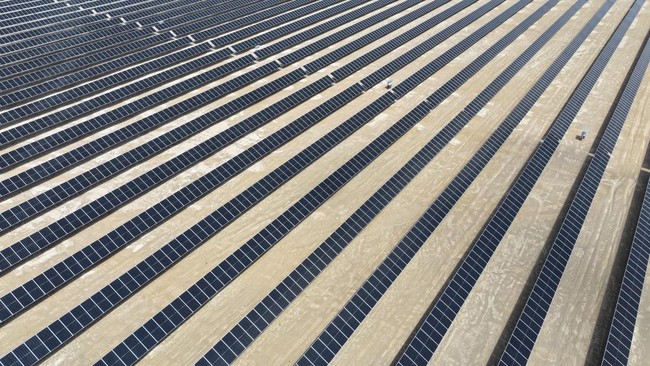
In this rapidly moving national context, President Prabowo Subianto has staked out a highly ambitious yet strategic vision in the form of building solar power plant (PLTS) infrastructure with a capacity of 100 GW.
This vision is not merely a technical matter to meet renewable energy mix targets on paper. It is a proclamation of sovereignty amid the fragility of the global fossil fuel supply chain. However, to prevent this giant initiative from turning into a lighthouse project that burdens the state coffers or repeats past structural failures, its implementation must be guided through the lens of Pancasila Economics combined with modern industrial organisation logic.
The essence of Pancasila Economics, as affirmed in Article 33 of the 1945 Constitution, states that branches of production that are vital to the state and dominate the livelihood of the people must be controlled by the state. Energy clearly lies at the heart of that mandate.
Generating electricity means fuelling civilisation, productivity, and the pulse of the economy. Therefore, the 100 GW PLTS initiative must not be seen as a free-for-all space for wild energy market liberalisation. It must become a moment for the state to take the lead role in orchestrating strategic resources for the greatest prosperity of the people.
A key understanding to prioritise is that energy transition is not just about replacing coal with photovoltaic panels. Energy transition is a process of redesigning market structures so that economic benefits are not concentrated in a handful of large corporations. Without the right market design, green projects can give birth to new inequalities in a more modern guise.
It is at this point that the Green Industrial Organisation framework becomes crucial. The greatest structural risk in massive-scale energy development is the emergence of inefficiencies due to overly monopolistic market structures, or conversely, uncoordinated market fragmentation. The 100 GW PLTS initiative needs to be fortified with precise regulatory architecture to prevent greenwashing, rent-seeking, and the formation of new oligarchies in the clean energy industry.
A modern industrial organisation approach will ensure production cost efficiency from upstream to downstream without sacrificing affordable electricity tariffs for the public. Failure to structure the market from the outset will have serious consequences. Green projects that should be solutions could instead create new fiscal burdens through leaky subsidies, uncompetitive tariffs, or large-scale dependence on imported technology.
From the equity perspective upheld by Pancasila Economics, economic growth must go hand in hand with distributive justice. Therefore, the development of 100 GW of solar energy demands vertical and horizontal integration based on healthy business competition, yet still prioritising national interests. Vertical integration means the state, through state-owned enterprises (BUMNs) and measured strategic partnerships, must be able to control the supply chain from upstream to downstream.
This control encompasses processing silica sand into solar panel components, module manufacturing, energy storage systems, and distribution to the outermost regions of the Archipelago. This aligns with the spirit of industrial downstreaming that the government is strengthening. Indonesia must not revert to being a consumption market for foreign technology. Downstreaming the green energy industry must be a main pillar of the 100 GW PLTS to ensure economic value added remains and circulates domestically.
However, the most complex puzzle of this transition vision lies in funding and fiscal resilience. The capital needs to finance a project of this magnitude cannot be borne conventionally by the state budget (APBN). Therefore, one breakthrough that needs to be promoted is the establishment of a Sovereign Green Fund. This independent financing instrument can be built through mechanisms such as windfall taxes on lump-sum profits from fossil commodities, particularly coal.
For decades, the fossil sector has made significant contributions to state revenues. Yet the same sector has also left considerable environmental and social burdens. Implementing a windfall tax is a form of intergenerational justice.
Non-renewable natural wealth extracted today must be converted into foundational capital for building clean energy infrastructure for future generations. By capitalising on excess profits from fossil commodities during high-price periods, the state can build a sturdy, sovereign transition funding bridge that is not held hostage by foreign debt vulnerable to exchange rate fluctuations.
Governance of the 100 GW PLTS must also avoid the trap of rigid and counterproductive bureaucracy. Cross-sector collaboration between technical ministries, BUMNs, national private sector, global investors, and local governments needs to be woven into a transparent investment ecosystem. In Pancasila economic democracy, public participation is not an add-on but a core element of development.
Therefore, the solar energy initiative must open opportunities for local energy cooperatives, village-owned enterprises, and local actors to participate in medium- and small-scale projects. This decentralisation is essential so that energy sovereignty is not just claimed in the capital but truly felt down to the villages. The distributed nature of solar energy is a comparative advantage that can be leveraged to strengthen regional electricity supply resilience.
From the perspective of the global industrial economy, another threat that must be anticipated
Source: jawawa.id (https://jawawa.id/newsitem/guiding-the-100-gw-plts-initiative-through-the-lens-of-pancasila-economics-1777596793)
Originally published by CNBC Indonesia (https://www.cnbcindonesia.com/opini/20260501071214-14-731452/mengawal-inisiatif-plts-100-gw-melalui-lensa-ekonomi-pancasila), translated from Indonesian