
Guangzhou's Electric Bus Battery Recycling Innovation Eyes Investment in Indonesia
Not only does China boast rapid growth in the number of electric vehicles (EVs), but it is also devising solutions for managing electric batteries that could become hazardous waste if not handled properly.
One such innovation comes from the Guangzhou-based transport company, Guangzhou Public Transport Group Ltd. The firm has introduced various technologies to extend the lifespan of EV batteries while enabling eco-friendly electricity storage.
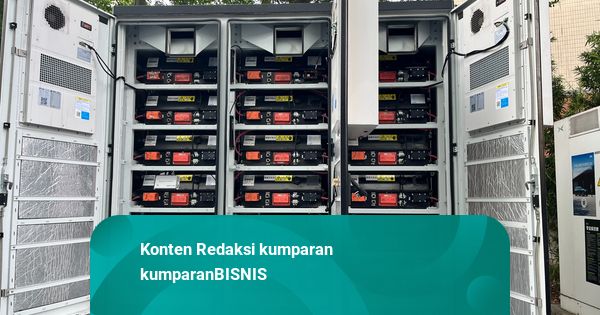
Through the Energy Storage System (ESS), the company reuses and recycles batteries from retired electric buses as energy storage for solar panels or photovoltaic (PV) systems.
Deputy General Manager of Guangzhou Public Transport Group New Energy Development Co., Ltd, Du Zhiwei, stated that China leads the world in solar panel energy storage solutions and contributes to green and low-carbon development.
“China can now recycle used batteries and integrate them into ESS. For example, for household use or electric vehicles. So, these used batteries can be reused for another 3-4 years,” he told journalists in Guangzhou, China, as quoted on Saturday (2/5).
His company, Du continued, is the largest provider of battery charging products and services in Guangzhou, particularly for public transport, in this city within the Greater Bay Area (GBA).
In addition to providing charging for public transport vehicles during the day, these facilities and services are also available to private vehicles at night. This is one of the company’s key strengths.
“These facilities benefit not only public transport but also private car owners. Besides providing charging services, we also offer Solar PV energy storage and B2G services,” Du explained.
Targeting Electric Battery Recycling Investment in Indonesia
When asked about potential expansion to Indonesia, Du mentioned that discussions are underway with several companies interested in developing similar technology in the country.
“We feel honoured to have received visits from Indonesian companies last year and the year before. They showed great interest in such charging services,” Du revealed.
Du explained that in some countries, the electricity grid system is not yet comprehensively developed. Thus, this Chinese technology is expected to aid in solar panel development and energy storage.
Moreover, the company, with over 88 years of experience in charging production, solar panels, and operations of public buses and taxis, hopes to bring its technology to Southeast Asian countries such as Thailand, Vietnam, and the Philippines.
This plan aligns with the momentum of the global fossil energy crisis caused by the escalation of war in the Middle East, making the implementation of electric vehicles and battery storage increasingly urgent.
“We are very pleased to visit Southeast Asia. As we know, the recent war has caused much tension in fossil fuel supplies. This has affected the quality of life in many areas, and living costs have also risen,” Du emphasised.
According to his notes, every one watt of electricity production from batteries can release 100 kilograms of carbon emissions into the air. He assessed that without targeted technology, electric vehicle use would still cause air pollution.
Even after their lifespan ends or expires, the company collects those batteries and processes them through several stages to remove toxic elements or polluting fluids inside the batteries.
“We will also recycle the metal parts of the batteries, creating a complete cycle and supporting green development,” Du added.
The ESS developed by the company, which began implementation in 2023, has a capacity of 1,000 kilowatt-hours (kWh) using batteries from retired electric buses, making it the first such technology in China’s public transport sector.
The configuration is built with batteries from 40 of the company’s electric buses that have been in use for over 10 years. These batteries are retired and can be reused.
With a charging power of 500 kilowatts, it takes two hours to fully charge and two hours to discharge. The system is connected to rooftop solar power plants, charging stations, and an integrated green microgrid.
Charging can be done at night outside peak hours when electricity prices are low, around RMB 0.3 per kWh, and power discharge to charging stations during the day at peak times when prices are higher, over RMB 1.2 per kWh, creating a difference of RMB 1 per kWh.
Not only that, the ESS developed by the company also has lower investment costs than new batteries, with a breakeven point of just 4-5 years, faster than new batteries which take more than 6 years.
The company estimates savings of around RMB 4 billion over a 12-year operational cycle. When batteries retire from the ESS, the company will process or recycle them to produce metal raw materials.
Currently, the company operates nearly 12,000 electric buses, 10,135 electric taxis, and 15 hydrogen-powered buses in Guangzhou. It also has around 6,498 charging poles and 125 charging stations available not only for public transport but also for private vehicles.
Source: jawawa.id (https://jawawa.id/newsitem/guangzhous-electric-bus-battery-recycling-innovation-eyes-investment-in-indonesia-1777744245)
Originally published by kumparan.com (https://kumparan.com/kumparanbisnis/inovasi-daur-ulang-baterai-bus-listrik-di-guangzhou-lirik-investasi-di-ri-27Jr9BJrOzx), translated from Indonesian