
GSIH 2026 Launched, Makassar Takes Part in Global Digital Ecosystem
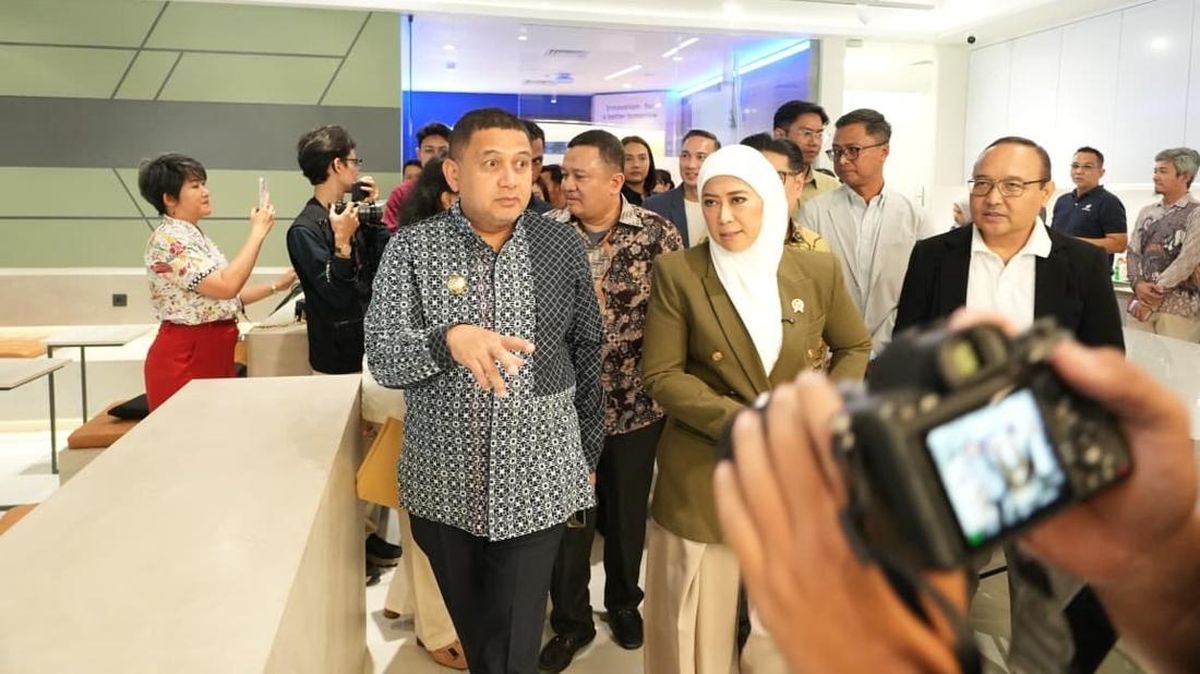
Makassar Mayor Munafri Arifuddin has brought the city into the development of the national digital ecosystem through its participation as one of ten hub cities in the Garuda Spark Innovation Hub (GSIH) Global Hub 2026.
GSIH 2026 was officially launched by the Ministry of Communication and Digital Affairs (Komdigi) at GSI BSD, Biomedical Campus BSD City, Tangerang, Banten, on Wednesday (26/8). The launch was opened directly by Minister of Communication and Digital Affairs Meutya Hafid.
Munafri attended alongside Head of the Makassar Communication and Informatics Office (Diskominfo), Muhammad Roem; Head of Public Relations and Public Communication Information (IKP), Abdullah; Head of the Protocol and Leadership Communication Section (Prokopim) of Makassar City, Andi Ardhy Rahadian Sulham; and Head of the Protocol Sub-section, Ari Pahlawan Sofyan.
After attending the launch, Munafri said his presence was part of an effort to see first-hand the development of Indonesia’s digital ecosystem, which prioritises connectivity, collaboration, innovation, and competitiveness.
“We are here to witness a new step in building an Indonesian digital ecosystem that is connected, collaborative, and globally competitive,” said Munafri.
According to him, GSIH is not merely a gathering space for technology actors, but can serve as a platform that brings together various forces within the digital ecosystem to produce innovations and solutions that have a real impact on society.
He assessed that the concept has strong relevance to the development of the Makassar Creative Hub (MCH), which has been directed as a collaborative space for young people, MSME actors, creative workers, and various communities engaged in the creative and digital economy.
On that occasion, activities at the Makassar Creative Hub also witnessed the series of GSIH launch events through screens set up in Makassar.
Munafri said the existence of MCH is an important asset for Makassar to build connectivity among actors within the creative and digital economy ecosystem.
“In Makassar, we have the Makassar Creative Hub as a collaborative platform for young people, MSME actors, digital spaces, and creative economy practitioners. This must continue to be developed,” he said.
According to him, collaboration is key because technological development cannot proceed in isolation. Ideas, creativity, technology, the business world, industry, government, and society must all be part of one mutually reinforcing ecosystem.
“This is where the importance of collaboration lies. Ideas meet technology, innovation meets industry, and collaboration can produce real solutions for society while driving the growth of Indonesia’s digital economy,” he explained.
Munafri also welcomed the presence of GSIH. According to him, the concept opens opportunities for cities across Indonesia, including Makassar, to connect with a broader innovation network.
He emphasised that developing the digital ecosystem requires a division of roles and responsibilities among all parties.
“The most important thing in this ecosystem is sharing responsibility. Because the future of the digital ecosystem is not only the government’s responsibility, but our collective responsibility,” said Munafri.
With Makassar’s inclusion as one of the ten GSIH hub cities, Munafri hopes that opportunities for collaboration, digital talent development, innovation, creative economy, and technology-based MSME strengthening in Makassar will become increasingly open.
The Makassar City Government, he said, will continue to encourage the creation of collaborative spaces capable of bringing together government, communities, business actors, academics, industry, and the younger generation to create innovations relevant to society’s needs.
“This step strengthens Makassar’s development direction as a city that is adaptive to technological developments and able to play a role in the national digital economy ecosystem,” he concluded.