
Growth on Paper, Squeezed at Home as Corruption Cuts the Public's Heart
Indonesia’s economy today presents two realities. On paper, growth looks convincing. Yet in many households, life feels increasingly squeezed. People struggle to find decent work, incomes often fail to keep pace with needs, prices continue to rise, and some middle-class families have lost their economic cushion.
Statistics Indonesia (BPS) recorded the economy growing 5.61 percent year-on-year in the first quarter of 2026. This figure deserves appreciation. However, the economy contracted 0.77 percent compared to the previous quarter. The highest growth on the expenditure side came from government consumption, which surged 21.81 percent. The quarterly contraction at the start of the year may be influenced by seasonal patterns, but the data serves as a reminder that we cannot read the economy solely from one annual growth figure.
Economic growth is not the ultimate goal. It only becomes meaningful when it generates decent jobs, increases real incomes, strengthens purchasing power, and provides families with a sense of security. The most important question is not simply how high the economy grows, but who enjoys that growth and what kind of jobs are being created.
In February 2026, Indonesia’s labour force reached 154.91 million people. A total of 147.67 million were recorded as employed, whilst 7.24 million remained unemployed. The open unemployment rate fell to 4.68 percent. This is a positive development, but it is not yet sufficient to conclude that Indonesia’s labour market is healthy. Under the BPS definition, a person who works at least one hour in a week is already categorised as employed. Of all those employed, 25.97 percent are part-time workers and 7.27 percent are underemployed. Converted, that amounts to around 38.35 million part-time workers and 10.74 million underemployed individuals. In total, approximately 49.09 million people work fewer than 35 hours per week. They are not officially unemployed, but being classified as ‘working’ does not automatically mean having sufficient income, stable employment, or adequate social protection. The underemployed are still seeking or willing to accept additional work. This is where the open unemployment rate fails to fully capture the pressures felt by society.
The employment structure remains fragile. As of February 2026, informal workers numbered 87.74 million, whilst formal workers totalled only 59.93 million. Thus, around 59.4 percent of the working population is engaged in informal activities. The informal sector is not always negative, but it is often associated with uncertain incomes, low productivity, limited labour protections, and weak old-age security. The average wage for labourers in February 2026 was Rp3.29 million per month. However, this figure only reflects the wages of the labourer group, not the incomes of the majority of informal workers.
Meanwhile, annual inflation in June 2026 still reached 3.34 percent, with the Consumer Price Index at 111.89. Slowing inflation does not mean prices are falling; prices generally remain higher than the previous year. This pressure is also reflected in the middle class. According to BPS mapping for the 2019-2024 period, 9.48 million people exited the middle-class group. By September 2024, the middle class numbered 48.41 million people, whilst the aspiring middle class reached 138.31 million and the vulnerable poor group totalled 68.51 million. The middle class and aspiring middle class together account for 81.49 percent of public consumption. When these groups weaken, the national consumption engine loses power.
Difficulties in obtaining diesel fuel in several regions are also not merely anecdotal. On 17 July 2026, the Downstream Oil and Gas Regulatory Agency (BPH Migas) acknowledged queues for fuel in North Sumatra. BPH Migas stated the problem was not a quota limitation but rather distribution that needed improvement. After supply and fleet capacity were strengthened, the queues were reported to have begun easing. For drivers, fishermen, farmers, and business operators, several hours of queuing means lost time, lost income, and lost business certainty.
MBG and Kopdes Have Not Yet Addressed the Root Problems
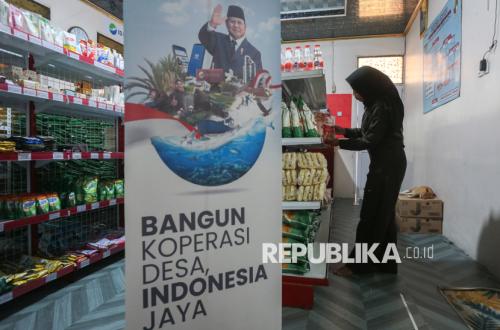
The government has stated that the Free Nutritious Meals (MBG) programme has created 1.2 million jobs in kitchens. The government also mentioned that 1,061 Merah Putih Village Cooperatives (Kopdes) that are already operating have absorbed around 18,000 workers. The total is approximately 1.218 million jobs, equivalent to roughly 0.79 percent of the national labour force. This figure should not be dismissed, but neither should it be accepted without scrutiny. It originates from government administrative reports, not from specific identification within the BPS National Labour Force Survey. The public needs to know how many of these are genuinely new jobs, how many are full-time, what the wages are, how many are formal, how many are permanent, and how many workers were previously employed elsewhere.
MBG is fundamentally a nutrition improvement programme. Its success should primarily be measured by food quality, food safety, targeting accuracy, nutritional status improvement, and budget efficiency. Job creation can be an additional benefit, but MBG cannot replace a strategy of industrialisation and expansion of productive employment. Similarly, Kopdes will not become an economic force simply by having a legal entity, a board, a building, and workers. Cooperatives need markets, sound capital, professionalism, governance, and business activities that genuinely arise from members’ needs. Without these, Kopdes risk becoming administrative projects dependent on budget allocations.
With 7.24 million unemployed, 10.74 million underemployed, around 38.35 million part-time workers, and 87.74 million informal workers, MBG and Kopdes have not yet delivered a significant impact as an answer to the structural problems of the labour market. Indonesia still needs labour-intensive industrialisation.
Source: jawawa.id (https://jawawa.id/newsitem/growth-on-paper-squeezed-at-home-as-corruption-cuts-the-publics-heart-1784541311)
Originally published by Republika (https://analisis.republika.co.id/berita/tigvmt472/pertumbuhan-di-atas-kertas-sesak-di-rumah-tangga-saat-korupsi-mengiris-hati-masyarakat), translated from Indonesian