
Groundwater Crisis, a Moving Threat
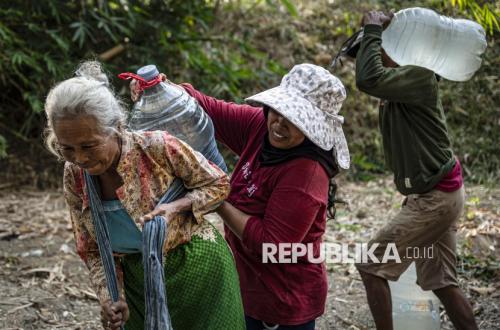
One day, perhaps our children will ask why the roads in Jakarta, Semarang, or parts of other coastal areas are increasingly lower than sea level. They may think the cause is solely climate change or rising sea levels. In fact, the answer is close to our daily lives: for decades we have taken too much water from underground, while giving nature almost no opportunity to replenish it.
The groundwater crisis does not arrive like a flood or an earthquake. It moves slowly, silently, and is almost invisible. Yet its impacts are very real. The land sinks several centimetres each year, seawater seeps into residents’ wells, the cost of obtaining clean water continues to rise, and the risk of flooding grows.
This paradox should serve as an alarm for us. Indonesia is not actually poor in water. What we are facing is a crisis in water management. Major cities are growing very quickly, while nature’s capacity to store water continues to shrink.
Concrete replaces soil, buildings replace green open spaces, and rainwater that should seep into the earth becomes runoff that disappears into the sea a few hours later. The groundwater crisis is no longer merely an environmental issue, but has developed into an economic, social, and even urban safety problem.
Jakarta is the most worrying example. The need for clean water continues to rise, while piped water services have not been able to reach the entire population. This situation means households, office buildings, hotels, apartments, and industries still depend on groundwater.
The Ministry of Energy and Mineral Resources has recorded that Jakarta’s clean water needs reach around 846 million cubic metres per year. On the other hand, piped services have not been able to meet all needs, so the shortfall is met through groundwater extraction. As a result, the groundwater table continues to fall, seawater intrusion occurs, and land subsidence takes place, especially in North Jakarta.
What needs to be examined is that the biggest problem is not simply the reduced volume of groundwater, but the chain of impacts it causes. First, land subsidence is becoming more widespread.
Recent research by BRIN together with a number of international researchers published in 2025 shows that Jakarta still faces serious challenges from land subsidence closely linked to excessive groundwater extraction. The study also evaluates the groundwater-free zone policy as one of the control strategies.
Land subsidence causes roads to crack, buildings to suffer damage, pipe networks to rupture, and increases the risk of tidal flooding. Various international studies even place Jakarta as one of the major cities with the fastest land subsidence rates in the world.
Second, groundwater quality is declining. In coastal areas, seawater is beginning to enter aquifers, causing many community wells to become brackish. This condition has long occurred in North Jakarta, Semarang, and a number of other coastal areas.
Third, the cost of providing clean water is becoming more expensive. When groundwater quality declines, people must buy refillable water or install additional treatment facilities. Industry must also make larger investments to obtain raw water that meets standards.
Fourth, inequality in water access is increasing. High-income groups can buy water from various sources, while low-income groups depend more on shallow wells, which are the most vulnerable to drought and pollution.