
Groundbreaking of Plantation Downstreaming Strengthens Added Value and National Resilience
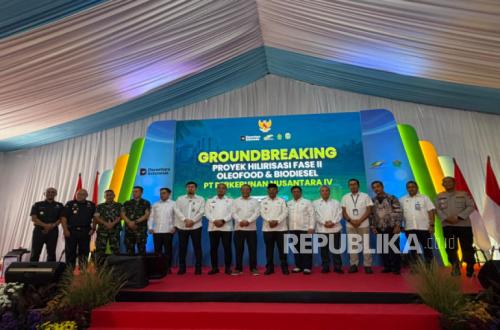
President Prabowo Subianto inaugurated the groundbreaking of 13 National Downstreaming Projects Phase II, centred in Cilacap on Wednesday, 29 April 2026. The event was conducted in a hybrid format and connected to several strategic locations across various regions, including the Sei Mangkei Special Economic Zone (KEK), which participated virtually. This step signifies a tangible acceleration of the national downstreaming agenda, particularly in the plantation sector as a crucial foundation of Indonesia’s economy. The downstreaming programme is directed towards strengthening industries based on natural resources, increasing domestic added value, and bolstering national resilience in energy, food, and the economy. The plantation sector is a primary focus because it has long been dominated by exports of raw materials, such as crude palm oil (CPO), coconuts, and spice commodities. Agriculture Minister Andi Amran Sulaiman emphasised that plantation downstreaming is a key strategy for transforming the national economic structure. “We can no longer just be exporters of raw materials. Downstreaming is the path to increasing added value, expanding employment opportunities, and strengthening farmers’ welfare,” he stated. According to Minister Amran, upstream-downstream integration will create an efficient production system while strengthening national food and energy resilience. Rosan Roeslani also conveyed that the development of these 13 projects in the second phase is a continuation of the initial phase of national downstreaming that has been underway. This phase serves as an important foundation for expanding the ecosystem of domestic resource-based industries. “The government ensures that Indonesia’s natural wealth is no longer exported raw but processed into high added-value products that can enhance global competitiveness,” he said. One of the strategic projects in this phase is the development of palm oil processing facilities in the KEK Sei Mangkei. This project symbolises the transformation of plantation downstreaming, particularly for palm oil, towards a more modern, integrated, and sustainable industry. Meanwhile, the development of downstream palm oil industry in KEK Sei Mangkei is focused on processing CPO into oleofood products, food industry raw materials, and biodiesel. This project not only increases the added value of palm commodities but also strengthens the implementation of the national mandatory bioenergy programme. Director of Plantation Product Downstreaming, Kuntoro Boga, emphasised that the construction of these facilities is a concrete step in strengthening the integrated plantation downstreaming ecosystem from upstream to downstream. “Sei Mangkei has a strategic position as a growth centre for palm-based industries in western Indonesia. This downstreaming will increase economic value while strengthening national energy resilience,” he stated. On approximately 10 hectares of land, several downstream industrial facilities will be built in stages. One of them is an oleofood factory producing margarine and shortening using non-hydrogenated crystallisation technology, resulting in healthier food products. This factory is planned to have a capacity of 35,000 tonnes per year and is targeted to operate by the end of 2027. In addition, a Cocoa Butter Substitute (CBS) and Cocoa Butter Equivalent (CBE) factory with a capacity of 25,000 tonnes per year is targeted to operate in 2028. These products have strategic value in the food and chocolate industries, both for domestic and export markets. Downstreaming strengthening is also directed towards building a biodiesel factory with a capacity of around 450,000 tonnes per year, targeted to start operating in 2028. The production of fatty acid methyl ester (FAME) is very important in the context of global tensions marked by geopolitical strains and fluctuations in fossil fuel prices. The existence of this factory is expected to bridge the national biodiesel production gap and support the implementation of the B50 programme or higher. More broadly, the government is also promoting downstreaming of other plantation commodities in various regions. In Central Maluku, for example, the nutmeg processing industry into oleoresin is being developed. Meanwhile, the integrated coconut industry is directed to produce high-value products such as MCT oil, coconut flour, and activated carbon. In Morowali, the development of an integrated agroindustry ecosystem is part of the strategy to strengthen region-based economic growth. From all the projects being implemented, it is estimated that up to around 600,000 jobs will be created. The investment value that has been realised, including outside the first and second phases, reaches around $26 billion USD, demonstrating the great potential of downstreaming as a driver of the national economy. Through synergy between the government, industry, and stakeholders, plantation downstreaming is expected to become the main lever for regional economic growth, increased exports, and strengthening of the national industry based on sustainable natural resources.