
Groundbreaking of Legok Nangka Waste-to-Energy Plant Hailed as Strategic Solution to Waste Crisis
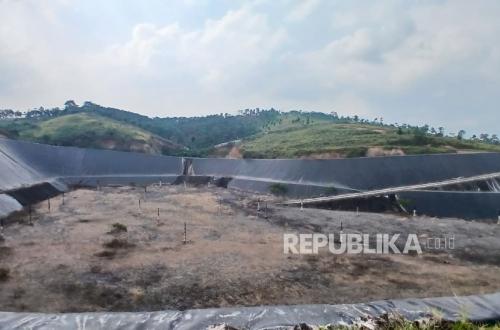
Deputy Minister of Energy and Mineral Resources (ESDM) Yuliot Tanjung stated that the groundbreaking of the Legok Nangka Waste-to-Energy (PSEL) project marks a significant milestone in urban waste management efforts to address the daily waste accumulation crisis. This initiative aims to create a cleaner and healthier environment whilst realising energy transformation through new and renewable energy derived from waste processing.
‘We express our appreciation to the Governor of West Java for the support and commitment that has accelerated the development of the Legok Nangka PSEL Project as a strategic solution for waste management and sustainable energy provision,’ Yuliot said during the groundbreaking ceremony in Cempakamekar, Padalarang, West Bandung Regency, West Java, on Wednesday (29/7/2026).
Yuliot also commended PT Jabar Environmental Solution for initiating and contributing to the construction of a waste-to-energy plant using environmentally friendly technology. He noted that this would serve as a driver and a learning model for other regions in developing similar PSEL facilities.
‘We also extend our appreciation to the Japanese Government for encouraging Japanese companies to invest in the waste-to-energy sector, namely Sumitomo Corporation and Hitachi Zosen Corporation, in partnership with the national company PT Energia Prima Nusantara,’ Yuliot said.
Yuliot explained that the PSEL is a direct instruction from President Prabowo Subianto to comprehensively resolve urban waste problems before 2029 through an upstream-to-downstream scheme, turning waste into an energy source. He added that the national mandate also includes a target for waste-to-energy development in the 2025–2029 National Medium-Term Development Plan (RPJMN).
‘Nationally, Indonesia still faces significant challenges in waste management. In 2025, waste generation reached 56.63 million tonnes,’ he revealed.
Yuliot noted that the biggest problem arises when daily waste generation turns into unmanaged accumulation downstream. He stated that around 63.3 per cent of waste is managed through transportation systems to final processing sites (TPA), waste banks, or integrated waste processing facilities (TPST). Meanwhile, approximately 35.67 per cent, equivalent to 20.2 million tonnes of waste, remains unmanaged. This waste ends up being burned in the open, dumped into rivers, or accumulates as illegal dumpsites that pollute the environment.