
Groundbreaking for Waste-to-Electricity Project to Begin in June, Here Are the Locations
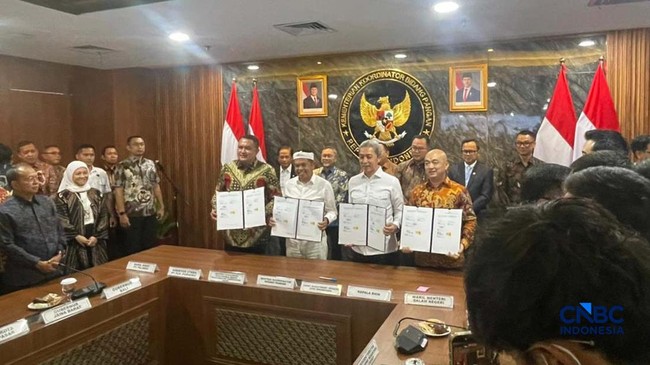
The government will begin constructing the Waste-to-Electricity Processing (PSEL) project. Groundbreaking will start at several locations in June. It is hoped that once all projects are completed, they will be able to process 7,000 tonnes of waste per day. Head of the Presidential Staff Office Muhammad Qodari stated that the five projects will be located in Bekasi, Yogyakarta, Greater Bogor, Denpasar, and Greater Bandung. He said that the projects in Bekasi, Yogyakarta, Greater Bogor, and Greater Denpasar are mandated by Presidential Regulation Number 109 of 2025. Meanwhile, the project in Greater Bandung is mandated by Presidential Regulation Number 35 of 2018. “The target input capacity for waste can reach more than 1,000 tonnes per day per location,” Qodari said, quoting an official statement on Thursday (23/4/2026). Furthermore, he detailed the capacity and service areas for each project. The first project is PSEL Greater Denpasar, planned to handle 1,200 tonnes of waste per day and serve the City of Denpasar and Badung Regency. Second, PSEL City of Bekasi is expected to process 1,400 tonnes per day. Meanwhile, the third project is PSEL Greater Bogor with a capacity of 1,500 tonnes per day. Then, the fourth project is PSEL Greater Yogyakarta with a capacity of 1,000 tonnes per day. This project, which will serve the City of Yogyakarta, Sleman Regency, and Bantul Regency, had its tender announced in early April. Fifth, PSEL Greater Bandung is planned to have the largest capacity, namely 1,853 to 2,131 tonnes per day, and will serve six regions: Bandung City, Bandung Regency, West Bandung Regency, Cimahi City, Sumedang Regency, and Garut Regency. “In addition, there is also a project in Palembang City, where construction progress is now at 74 percent, with an operational target of October 2026,” he added. Qodari said this groundbreaking is expected to support the target of developing PSEL in 30 locations or agglomerations in 61 regencies/cities across Indonesia by 2029. If all are realised, the waste-to-energy processing capacity could reach 33,000 tonnes per day, equivalent to almost 23 percent of the total national waste generation in 2029. He added that this step not only addresses the waste processing crisis, which currently stands at 141,296 tonnes per day, but also supports Indonesia’s energy transition towards new and renewable energy (EBT). “This reaffirms the government’s commitment through PSEL as a solution for waste management as well as a step towards low-carbon development and a circular economy,” he stated.